


If you ask ten people for the best safari route for birders in Kenya, you will usually get ten versions of the same answer. Visit the famous places, move quickly, and collect as many species as possible. That sounds efficient, but in the field it often underperforms.
In our 15 years of field operation across East Africa, we see this mistake most often with birders who try to compress too much geography into too few mornings. Kenya rewards birding depth, not map speed. The country is exceptionally rich because its habitats shift fast across altitude, rainfall, and landform. If your route ignores that structure, species count can still be decent, but detection quality and trip satisfaction usually drop.
In field terms, the best Kenya birding route is less about famous park labels and more about sequencing habitats in a logical gradient. A strong safari is not defined by one dramatic sighting, but by repeated high-quality field sessions.
At Bobu Africa, we usually treat three nights per core habitat zone as the practical baseline for serious birding quality in Kenya. Three nights usually means six prime field sessions.
This does not mean every trip needs nine or twelve nights. It means quality comes from enough repeated access to each habitat type. One transfer day often costs two prime wildlife windows, and those are usually the windows where birding performance is highest.
Kenya is one of the few places where a single itinerary can move from highland forest to alkaline lakes to semi-arid scrub and produce meaningful turnover in species profile. The route design should mirror that ecological staircase.
A practical gradient for many birders is:
- Highland and edge habitats around Nairobi and central Kenya
- Rift Valley freshwater and alkaline lake systems
- Arid and semi-arid north in Samburu (Kenya) and nearby conservancies
- Optional western forest extension in Kakamega (Kenya) for forest specialists
The exact order can vary by season and flight logistics, but the principle stays stable. Shift habitats with purpose, not by brochure order.
Recommended route structures by trip length
Seven to eight nights
For travelers with limited time, prioritize two habitat blocks plus one transition zone.
Suggested structure:
- Nairobi area highland warm-up one night
- Rift Valley lakes three nights
- Samburu (Kenya) three nights
- Return buffer one night if needed
This gives strong diversity while keeping transfer load manageable.
Ten to twelve nights
This is the strongest range for balanced birding and safari quality.
Suggested structure:
- Nairobi and central highland edge one to two nights
- Naivasha and Nakuru or Bogoria and Baringo three to four nights
- Samburu (Kenya) and nearby dry-country habitats three to four nights
- Optional Mara ecosystem two to three nights for mixed mammal and open-country birding depth
Fourteen plus nights
Add a western forest component.
Suggested addition:
- Kakamega (Kenya) two to three nights for forest guild contrast
Longer trips should still avoid excessive one-night stops. Extra days are most valuable when they increase repeated field access, not transfer complexity.
Place-by-place route logic
- Nairobi highland gateway
Nairobi is not only an arrival city. It can provide a useful first field calibration for both optics and pace.
Functional role:
- Adjust to altitude and light
- Run first session for common highland and edge species
- Test camera and optics workflow before deeper route
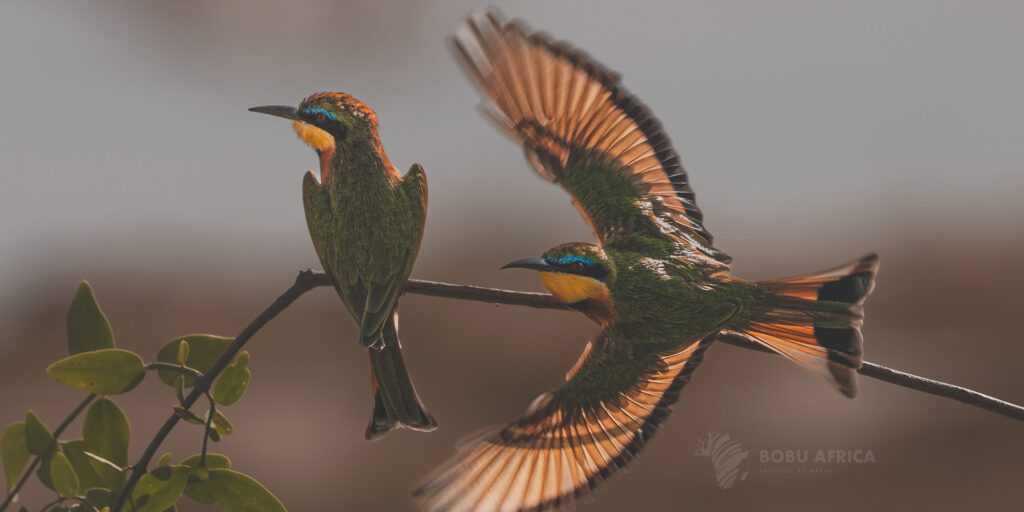
For mixed groups, Nairobi also helps smooth jet lag so the first core birding block performs better.
Lake Naivasha and nearby wetlands
Naivasha is a productive transition area and often a practical starting point in Rift Valley routing.
Functional role:
- Freshwater wetland species and shoreline diversity
- Raptor observation opportunities
- Easier pace for first full birding days
Naivasha works well when paired with nearby escarpment or grassland edges for species turnover.
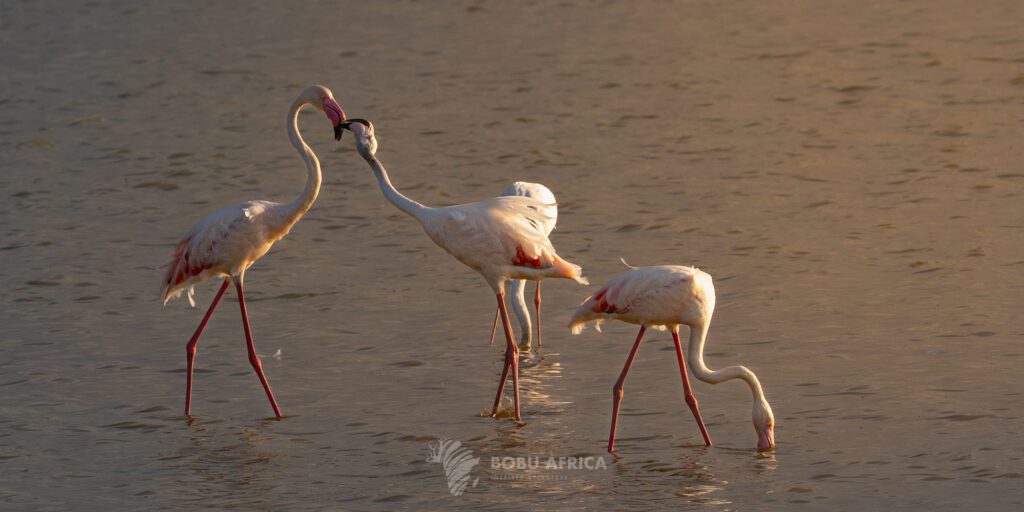
Lake Nakuru or Lake Bogoria and Lake Baringo corridor
This corridor can provide one of the highest birding returns per day if paced correctly.
Functional role:
- Alkaline and freshwater contrast
- Strong waterbird and shoreline opportunities
- Dry-scrub interfaces around Baringo for different guilds
Trade-off logic:
If you include both Nakuru and Baringo in a short itinerary, keep at least two nights in the corridor. A same-day rush between points can dilute both locations.
- Samburu (Kenya) and arid north
Samburu is often where a Kenya birding route becomes distinctive.
Functional role:
- Arid and semi-arid specialists
- Open-country scanning with strong morning clarity
- Excellent mixed safari value for groups that also want mammals
In real safari planning, Samburu usually means early starts and patient scanning over broad terrain. Midday heat can reduce activity in some sectors, so split-day rhythm becomes critical.
Maasai Mara (Kenya) as optional extension
Mara is usually marketed for mammals, but it can add value for open-grassland and raptor-focused days when included strategically.
Functional role:
- Broad savanna context
- Mixed-interest group compatibility
- High-quality guiding infrastructure in many areas
In the Mara ecosystem, location matters more than room glamour when field hours are limited. If birding is central, choose location and guide profile first.
Kakamega (Kenya) for forest specialists
Kakamega changes the route from strong to truly comprehensive for many dedicated birders.
Functional role:
- Forest guild contrast missing from dry and lake blocks
- High-value extension for experienced birders
Trade-off logic:
Kakamega adds major value for specialist goals, but it requires enough nights and realistic transfer planning. If total trip time is short, forcing Kakamega can weaken the whole route.
Season strategy for birding routes in Kenya
There is no single perfect month for all birding styles. Season choice should match your priorities.
General field guidance:
- Dry windows can improve road reliability and route predictability
- Green and shoulder periods can improve habitat mood and some activity patterns
- Transitional months can be excellent for mixed photography and birding texture
For bird photographers, season is less about headline spectacle and more about full-trip consistency in light, access, and field rhythm.
Practical baseline by traveler type
- Dedicated birders
Baseline:
- Ten to twelve nights
- Three core habitat blocks
- Private guide with proven birding depth
Birders plus wildlife photographers
Baseline:
- Ten nights minimum
- Split-day structure every full field day
- At least one dry-country block and one wetland block
Mixed-interest premium groups
Baseline:
- Eight to ten nights
- Two major birding zones plus one flexible safari zone
- Strong guiding and low-friction camp logistics
Family or first-time birding travelers
Baseline:
- Seven to nine nights
- Fewer moves, longer stays
- Easy-access habitats first, then specialist zones
Practical field sessions and timing
Birding performance in Kenya often depends more on timing discipline than on total distance covered.
Use this daily structure when possible:
- Dawn to mid-morning for peak detection and vocal activity
- Midday for rest, transfer, and data or image management
- Late afternoon to dusk for second high-value session
Do not spend every midday in motion unless logistics demand it. Constant movement creates hidden fatigue and weaker late sessions.
Transfer strategy and hidden losses
One of the biggest route errors is underestimating transfer drag. Even when roads are workable, long transfer days reduce attentiveness and cost key light windows.
Practical rule:
- If a transfer consumes dawn and dusk in the same day, count it as a high-cost day and reduce non-essential moves elsewhere.
Use short strategic flights where they protect field quality, especially on longer itineraries. The goal is not luxury for its own sake. The goal is preserving birding windows.
Guide profile and vehicle setup
For birding routes, guide profile can matter more than adding one extra destination.
Guide qualities to prioritize:
- Strong bird call recognition and habitat reading
- Ability to pace mixed groups without losing specialist quality
- Clarity in explaining detection strategy, not just naming sightings
Vehicle practicalities:
- Stable viewing positions and enough space for optics
- Flexible stop logic with safety and ethics intact
- Clear communication rhythm between guide and guests
At Bobu Africa, we usually brief guides by habitat objective each day. That improves focus and reduces random driving.
Packing and preparation for route efficiency
Birding routes perform better when field friction is low.
Practical preparation list:
- Lightweight optics setup you can hold for long sessions
- Layered clothing for cool dawn and warmer midday
- Waterproof protection for optics in shoulder or green periods
- Notebook or digital logging workflow
- Simple hydration and snack planning for long morning blocks
For photographers in birding groups:
- Carry one flexible lens setup for scanning and quick response
- Avoid heavy constant lens swapping during active windows
- Prioritize stable technique over maximum focal length obsession
Common planning mistakes and corrections
- Mistake one: Trying to include every famous bird location in one trip.
- Correction: Build a two or three habitat route and protect six to ten prime sessions in each major block.
- Mistake two: Using a mammal-first guide for a birding-first trip.
- Correction: Assign a guide with birding depth and mixed-group communication skill.
- Mistake three: Spending too many dawn hours in transit.
- Correction: Re-sequence nights so dawn sessions occur from inside productive zones.
- Mistake four: Choosing camps by room style over field access.
- Correction: Prioritize proximity to target habitats and flexible early departure support.
- Mistake five: Running one-night stops across multiple zones.
- Correction: Use three-night baseline per core habitat whenever possible.
A field-smart sample itinerary for ten nights
This is a planning model, not a fixed template.
- Day 1: Nairobi arrival and light highland orientation session
- Day 2 to 4: Rift Valley block based around Naivasha and lake-edge habitats
- Day 5 to 6: Baringo and nearby dry-scrub interfaces for species turnover
- Day 7 to 9: Samburu (Kenya) for arid north specialists and mixed safari depth
- Day 10: Return buffer and optional short final session depending on logistics
Why this works:
- Clear habitat progression
- manageable transfer pattern
- enough repeated dawn sessions in each block
- good balance for birders and mixed-interest travelers
Where Kenya beats many birding destinations?
Kenya is unusually strong because route diversity is accessible without crossing international borders. You can design a professional-grade birding safari with high ecological turnover while keeping logistics coherent.
In real safari planning, best route usually means best sequence. It does not mean maximum map coverage.
If the route holds this logic, Kenya can deliver both breadth and quality for serious birders, wildlife photographers, and premium travelers looking for a crafted field experience rather than a generic tour pattern.
What is the best safari route for birders in Kenya?
The best route is a habitat-gradient itinerary that protects repeated dawn and dusk sessions across at least two core birding zones, with three nights as the practical baseline per major habitat block.
If you only remember one decision rule, use this one.
Choose fewer moves, stronger guide fit, and more prime sessions. That combination consistently outperforms faster routes with longer species wish lists on paper.
FAQ
Q: How many nights do I need for a serious birding safari in Kenya
A: For most dedicated birders, ten to twelve nights is the practical range for strong results. A useful rule is three nights per core habitat block, which usually gives six prime field sessions in each zone.
Q: Is it better to include Maasai Mara or Kakamega on a Kenya birding route
A: It depends on your objective. Maasai Mara adds open-savanna value and works well for mixed wildlife groups. Kakamega adds major forest-specialist depth. If time is short, choose the one that best fills your habitat gap rather than forcing both.
Plan Your Journey
If you are shaping a Kenya birding safari, Bobu Africa can help you build a habitat-led route with clear night-count thresholds, realistic transfer pacing, and guide pairing that protects your most valuable field sessions.