what to pack for safari

What to pack for a Kenyan Safari : Safari packing list

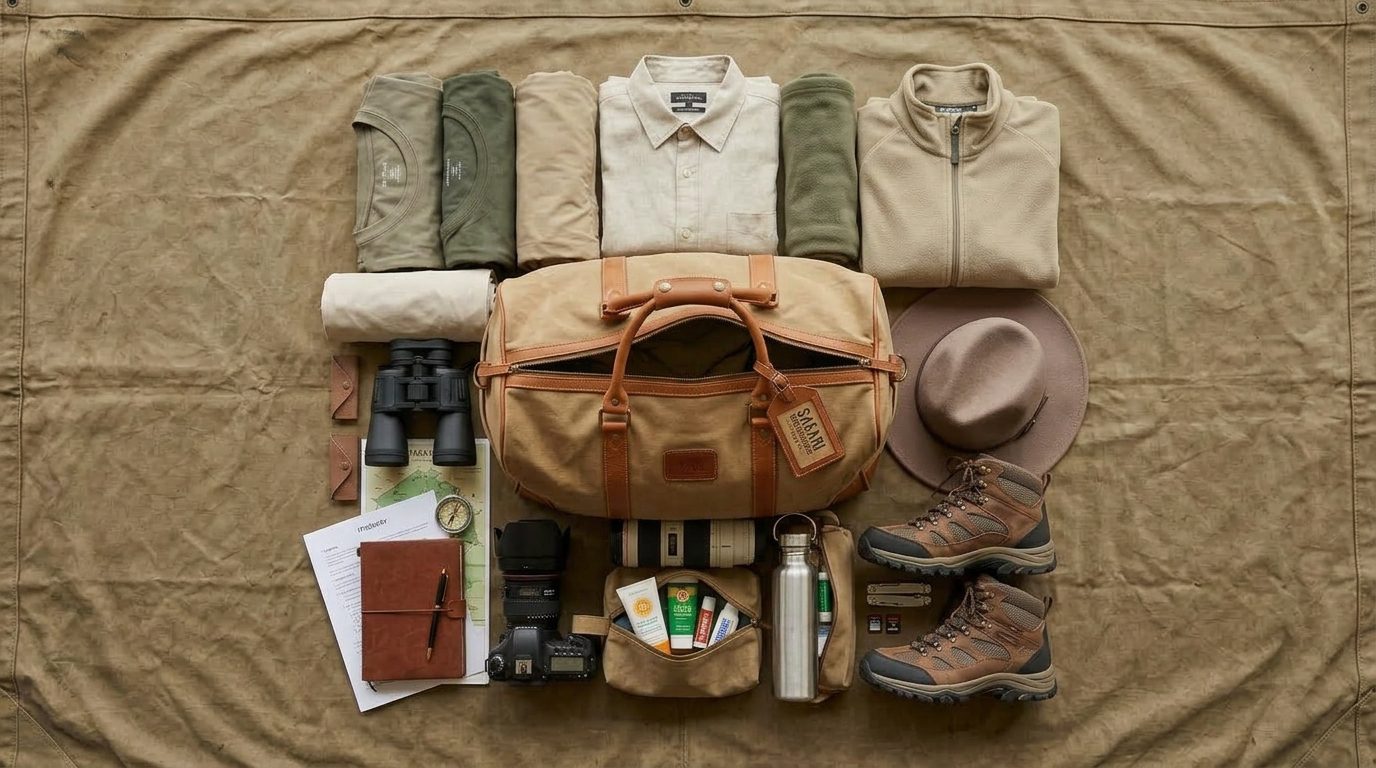
What to Pack for a Kenya Safari: Complete Packing Guide There’s a particular kind of excitement that comes with packing for your first (or fifth) African safari and a particular kind of anxiety too. Get it right, and you’ll spend your days comfortable, camera-ready, and free to focus on the wildlife in front of you. Get it wrong, and you’ll spend your trip wishing you’d brought a warmer layer or better shoes. Here’s everything you need to pack for a safari in Kenya, from clothing to camera gear. Dress for the bush, not the runway Safari style has a purpose behind it. Choose loose, breathable fabrics in neutral, earthy tones khaki, olive, sand, and stone all blend naturally into the landscape and stay cooler under the sun than darker or brighter colors. A note on camouflage prints specifically: they’re associated with military and security forces across East Africa, so it’s best to leave them at home. Mornings on game drives can be surprisingly cold before the sun climbs, so layering is essential. A lightweight fleece or windbreaker over a long-sleeve shirt handles the chill at dawn, then peels off easily once temperatures rise. Aim to pack: Most camps offer next-day laundry service, so there’s rarely a need to overpack. Footwear that can handle dust, dew, and long days Unless your itinerary includes a walking safari, you don’t need heavy hiking boots. A pair of comfortable, closed-toe shoes with good grip sneakers or classic safari boots will carry you through most game drives. If bush walks are on the schedule, sturdier boots are worth the extra weight in your bag. Pack a pair of sandals or flip-flops too, for evenings back at camp. Sun protection is non-negotiable The equatorial sun is intense, even on overcast days. A wide-brimmed hat, quality sunglasses, and a high-SPF sunscreen are essentials, not extras. If you wear contacts, bring a backup pair of prescription glasses dust on the road can make lenses uncomfortable. Optics and photography gear This is where a safari either becomes a trip of a lifetime or a trip of near-misses. A few guidelines: Easy to forget, hard to do without A few items travelers consistently leave off their list: One packing rule above all: pack light Light aircraft connecting Nairobi to remote safari camps typically enforce a 15kg luggage limit, combined for carry-on and checked bags. Soft-sided duffel bags pack down better than hard suitcases for this reason, and layering lets you cover a wide temperature range without hauling a full wardrobe. Then continue your journey to the Maasai Mara, Amboseli, or the Kenyan coast. Pack the khaki. Dust off the long lens. And leave every single logistical detail to us.At Bobu Africa, we don’t believe in rushed itineraries, strict schedules, or crowded tourist convoys. We design bespoke, private luxury safaris built entirely around you. Whether you are a photographer chasing the perfect golden-hour light, or a traveler seeking absolute solitude in the bush, our expert guides know exactly where to take you. Your only job is to witness it. We handle the rest from hand-picking exclusive, world-class camps that match your comfort level, to ensuring your private vehicle is perfectly positioned for the shot or the sighting. We move at your pace. Africa is calling. Start designing your private masterpiece today.

Read more

Where to Eat in Nairobi: Fine Dining, Local Eats & Chinese Restaurants

Nairobi’s dining scene ranges from world-class fine dining to authentic Chinese cuisine and casual local eats. For international visitors, the best restaurant depends entirely on the occasion and your location in the city. Here is a precise guide to the top culinary experiences in Kenya’s capital. 🍽️ Fine Dining, Views & Romance INTI (Westlands) occupies the 20th floor of One Africa Place, offering a 360-degree view of Nairobi’s skyline through its distinctive dome-shaped architecture. The menu centers on Nikkei cuisine—a Japanese-Peruvian fusion—with standout dishes like the Inti Crab Sushi and various ceviche preparations. The polished but lively atmosphere and sunset views make it particularly suited to couples and business dinners. Tatu Restaurant (CBD) sits inside the historic Fairmont The Norfolk and specializes in fresh seafood, premium cuts of meat, and vegetarian options. The restaurant features a patio overlooking a tropical garden, making alfresco dining a highlight of the experience. Reviewers single out the lobster ceviche and rack of lamb as exceptional, with service described as warm and highly professional. Jiko at Tribe Hotel (Gigiri) is a contemporary African dining room with floor-to-ceiling windows that flood the space with natural light. The menu presents a diverse range of African dishes, with reviewers consistently praising both the quality and presentation of the food. It is the most convenient fine-dining option for travelers staying around Village Market or Gigiri. The Talisman (Karen) is a garden-setting restaurant that works perfectly for couples seeking a relaxed, romantic evening. The View (Mövenpick) offers panoramic city views and is ideal for a first or final night in Kenya. Sikia (Upper Hill) provides formal international fusion and is highly practical for business meetings in that district. 👨‍👩‍👧‍👦 Families, Casual Eats & Local Food Nairobi Street Kitchen operates as a food-hall concept with multiple vendors under one roof. It is the most practical choice when children and adults want completely different meals, offering a lively and accessible dining environment. For families, prioritizing location over cuisine is essential, as Nairobi traffic can quickly turn a short drive into an inconvenience. Mama Oliech is the go-to spot for casual local food, famous for serving fresh fried tilapia, ugali, and sukuma wiki. For street food, choose busy vendors with high turnover where food is cooked fresh in front of you. Essential Kenyan dishes to try include chapati, pilau, nyama choma (grilled meat), samosas, and mandazi. 🌱 Vegan & Vegetarian Shayona (Parklands) is a pure vegetarian restaurant specializing in Indian and Indo-Chinese cuisine with several vegan options. Coffee & Plant (Westlands) is a dedicated vegan restaurant and deli covering breakfast, lunch, and dinner. If you have strict dietary requirements, inform the restaurant before ordering to ensure separate preparation. 🥢 Authentic Chinese Dining Nairobi has a well-established Chinese dining scene, ranging from Cantonese fine dining to authentic Sichuan noodles. (Panari Sky Centre) is located inside the Panari Hotel complex on Mombasa Road, serving 100% authentic Cantonese, Sichuan, and Anhui cuisine. It features VIP rooms and decor that makes you feel like you are “doing business in China,” making it particularly suitable for corporate dinners. Signature offerings include roasted lamb leg and Anhui-style stinky mandarin fish, with moderate pricing at KES 500–1,500 per person. For You Chinese (Lavington) is Nairobi’s most popular Chinese restaurant, boasting over 7,000 Google reviews. The menu covers Cantonese-style dining, dim sum, Peking duck, and dumplings, with har gow and char siu bao receiving particular praise. The setting is family-friendly with a children’s play area, though pricing is upscale at KES 2,500–5,000+ per person. Spicy Road (Golf Course) specializes in Sichuan hot pot with proper mala broth, offering an interactive dining experience where guests cook their own ingredients. The restaurant holds a strong reputation among Chinese expats, validating its authenticity. Mid-range pricing runs KES 1,500–2,500 per person. Chengdu Noodles (Kilimani) serves authentic Sichuan hand-pulled noodles with Sichuan peppercorns and chilli oil. At KES 500–1,000 per person, it is one of the most affordable authentic Chinese spots in the city. Taste of China (Parklands) offers 12th-floor city views paired with reliable dim sum, while Peter Dong (Westlands) provides a calm, poolside atmosphere with authentic flavors. 🌍 Planning Your Safari from Nairobi? Your dining choices can easily become part of your itinerary. Enjoy the city’s culinary scene, explore Nairobi National Park, and then continue your journey to the Maasai Mara, Amboseli, or the Kenyan coast.

Read more

Yellow Fever Vaccine : Entry Requirements, Certificate and Exemptions

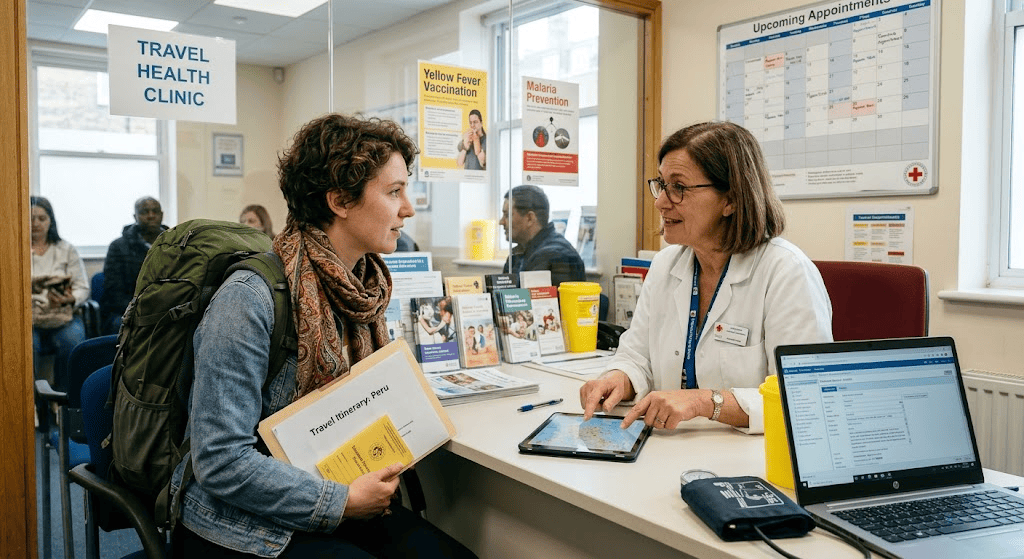
Planning a trip to Kenya? Understanding yellow fever vaccination requirements can help you prepare for a safe and smooth journey. Do I need a yellow fever vaccine to enter Kenya? Travellers arriving directly from the United States generally do not need a yellow fever vaccination certificate to enter Kenya. However, Kenya requires a valid International Certificate of Vaccination or Prophylaxis (ICVP), commonly known as the yellow card, for qualifying travellers arriving from countries with a risk of yellow fever transmission. Check the latest requirements with the Kenya Ministry of Health before departure. Is vaccination recommended for travel in Kenya? The vaccine is recommended for most travellers aged 9 months and older visiting areas of Kenya at risk of yellow fever transmission. Vaccination is generally not recommended for travellers whose itineraries are limited to Nairobi, Mandera, Wajir, Garissa and specified coastal counties, subject to individual risk assessment. Entry requirements and medical recommendations are different. Consult a travel-health professional to assess your itinerary. When does the yellow fever certificate become valid? Your certificate becomes valid 10 days after your first vaccination and remains valid for life under international regulations. A routine booster is not required for entry simply because 10 years have passed. Keep your original, properly completed certificate with your travel documents. What if I cannot receive the vaccine? People with certain medical conditions, severe allergies or weakened immune systems may not be suitable for vaccination. Pregnant travellers and adults aged 60 or older should seek individual medical advice. If vaccination is medically contraindicated and your itinerary requires a certificate, consult an authorized vaccination provider about a medical waiver. Acceptance depends on the relevant authorities, so confirm the procedure before travelling. How can I prepare for my trip? Before departure: Important: Requirements may change. Confirm current rules before travelling and seek medical advice for decisions about vaccination.

Read more
Nairobi National Park

Nairobi Day Tour: Wildlife, Culture & City Experiences

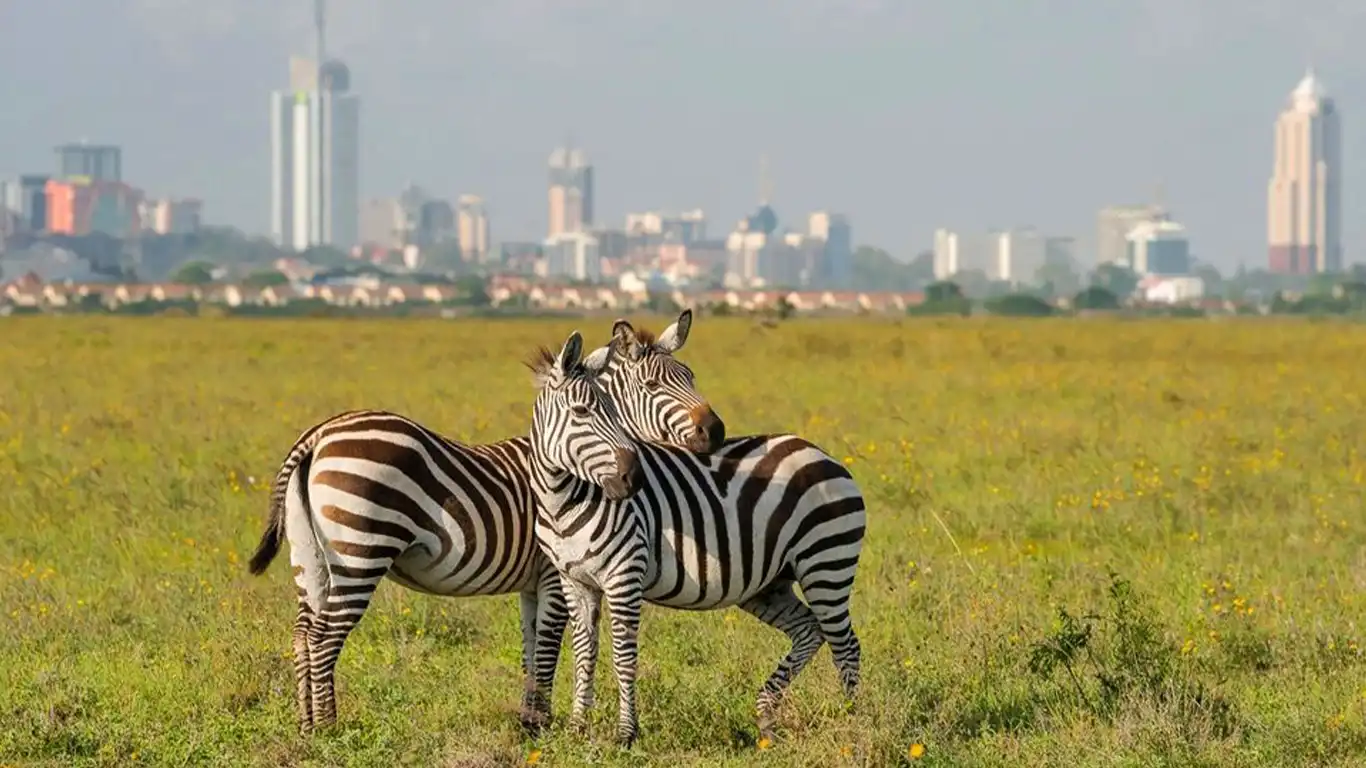
Nairobi Day Tour Planning a Nairobi day tour? Kenya’s capital offers an unusual combination of wildlife, conservation, history, culture, food and modern city life, all within a relatively compact travel experience. A Nairobi day tour can take you from a morning game drive in Nairobi National Park to close-up encounters with Rothschild’s giraffes, conservation experiences with rescued elephants, historic sites in the city center, or cultural attractions in Karen. With the right itinerary, you can experience several sides of Nairobi in a single day without traveling to a distant safari destination. For travelers from the with limited time in Kenya, a Nairobi day tour is especially useful before or after a safari, during a short stay in the capital, or as an organized excursion during a long Nairobi airport layover. Why Take a Nairobi Day Tour? Most international flights to Kenya route through Jomo Kenyatta International Airport (JKIA), and most safari itineraries begin or end in Nairobi. That makes the city a near-unavoidable stop — and a genuinely rewarding one if you use the time well. A Nairobi day tour is worth taking if you: Unlike a rushed airport transfer, a guided day tour uses a private vehicle and an experienced driver-guide to sequence stops efficiently, which matters in a city where traffic can make or break your schedule. 1. Nairobi National Park Safari The only national park located inside a capital city anywhere in the world, Kenya Wildlife Service calls it the “World’s Only Wildlife Capital.” An early-morning or afternoon game drive here can turn up lions, black rhinos, buffalo, giraffes, zebras, wildebeest, cheetahs, and over 400 bird species, all with the Nairobi skyline as a backdrop. Sightings aren’t guaranteed, that’s part of a genuine safari but the park’s density of wildlife this close to a major city is genuinely unusual. 2. Giraffe Centre Nairobi Home to the conservation program for the endangered Rothschild’s giraffe. A raised feeding platform lets you feed and observe giraffes at eye level, one of the most photographed wildlife encounters in Nairobi. Ideal for families, first-time visitors, and photographers, and easily combined with other Karen-area stops. 3. Sheldrick Wildlife Trust Nairobi Nursery Sheldrick Wildlife Trust offers a very different experience from a traditional safari. The organization is known for its work rescuing and rehabilitating orphaned elephants and other wildlife. The public nursery experience has specific visiting arrangements, so travelers should confirm availability and current visiting requirements before building it into a Nairobi day tour. 4. Karen Blixen Museum The Karen Blixen Museum offers an opportunity to explore a significant chapter of Kenya’s colonial-era history and the story associated with the Danish author of Out of Africa. Located in Karen, the former farmhouse and surrounding grounds provide a quieter contrast to central Nairobi. It is particularly easy to combine the museum with the Giraffe Centre and other attractions in the Karen area. For travelers interested in history, literature, photography or the cultural history behind Kenya’s early tourism narratives, this can be a worthwhile addition to a Nairobi day tour. 5. Nairobi National Museum The Nairobi National Museum is one of the city’s most valuable stops for travelers who want context before heading into Kenya’s wildlife destinations. Its collections explore human evolution, archaeology, history, culture, art, biodiversity and natural heritage. For a first-time visitor, the museum helps connect the Kenya seen on safari with the deeper story of the country itself. You can learn about Kenya’s peoples and cultures, explore its natural history and understand why East Africa is so important to the study of human evolution. Nairobi Snake Park One of the advantages of visiting the Nairobi National Museum is that you can also include the Nairobi Snake Park in your itinerary. The Snake Park features live reptiles and amphibians as well as an aquarium, providing a closer look at some of Kenya’s less frequently encountered wildlife. This can be particularly interesting for families and children because it adds a more visual and interactive wildlife component to a museum visit. If you plan to visit both attractions, consider purchasing the combined Nairobi National Museum/Snake Park ticket, which is priced lower than purchasing the two admissions separately under the current 2026 fee schedule. 7. Local Craft Experiences Craft experiences offer an opportunity to see Kenyan artisans at work and purchase locally produced souvenirs. Kazuri is particularly associated with handmade ceramic beads and pottery, while Nairobi and the surrounding Karen area offer several other craft and art experiences.A craft stop works well at the end of a wildlife or cultural itinerary, especially for travelers looking to purchase meaningful souvenirs rather than mass-produced items. 8. Kenyatta International Convention Centre (KICC) Standing prominently in Nairobi’s Central Business District, the Kenyatta International Convention Centre is one of the city’s most recognizable landmarks. The building is particularly significant for visitors interested in Nairobi’s modern history, architecture and skyline. Its distinctive tower has become one of the defining visual symbols of the capital and is frequently featured in photographs of Nairobi. For travelers interested in photography, the KICC area provides an opportunity to see Nairobi from a distinctly urban perspective. The surrounding CBD also gives visitors a glimpse into the city’s commercial rhythm, with government offices, banks, businesses, hotels, shops and pedestrian streets concentrated within a relatively compact area. A city tour can therefore use KICC as a starting point for understanding modern Nairobi and its development as East Africa’s major commercial and business hub. 9. Nairobi Markets, Shopping & Local Experiences A Nairobi day tour does not have to revolve entirely around museums and wildlife. Travelers can also explore local markets, artisan products, galleries and shopping areas to experience the creative and commercial side of the city. Depending on the day and your interests, your guide can help incorporate opportunities to look for: For travelers looking for meaningful souvenirs, a guided shopping experience can also make it easier to distinguish locally made products from mass-produced tourist merchandise. Best Nairobi Day Tour Itineraries The best itinerary depends on your time, interests,

Read more
tira-polka-dot-zebra-in-masai-mara-kenya

Polka-Dotted Zebra: The Rare Spotted Zebra of Kenya’s Maasai Mara

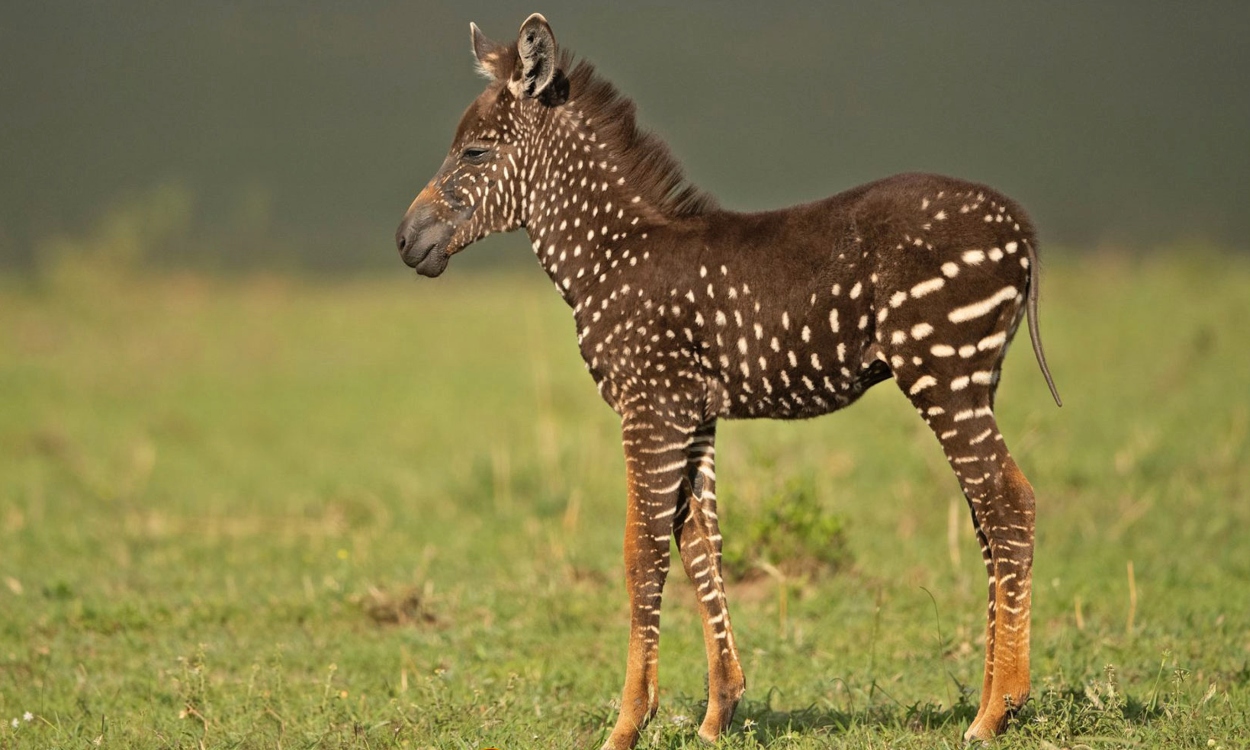
Discover Tira, the rare polka-dotted zebra photographed in Kenya’s Maasai Mara. Learn about its genetics, stripes, habitat, survival and where spotted zebras occur. Polka-Dotted Zebra: Meet the Rare Spotted Zebra of the Maasai Mara Imagine driving across the golden plains of Kenya’s Maasai Mara, surrounded by hundreds of familiar black-and-white zebras. Then, among the striped herd, you notice something that seems almost impossible, a tiny zebra with a dark coat covered in white polka dots. That is exactly what happened in September 2019. A young plains zebra was photographed in the Maasai Mara National Reserve with an extraordinary coat pattern unlike the familiar stripes of the animals around it. The foal was discovered by Maasai guide and photographer Antony Tira, after whom the animal was named. Photographer Frank Liu later captured some of the images that introduced the remarkable zebra to a worldwide audience. The animal became known simply as Tira, the polka-dotted zebra. But Tira was not a new species of zebra, nor was he a cross between a zebra and another animal. He was a plains zebra (Equus quagga) with an exceptionally rare pigmentation and stripe-pattern abnormality. Scientists have discussed this type of unusual coloration using terms such as pseudomelanism, although geneticist Greg Barsh has noted that “spotted” or “partially spotted” may be more precise descriptions because pseudomelanism is not a clearly defined biological category in this context. And that is what makes the story fascinating: Tira’s strange appearance offers scientists a glimpse into how one of Africa’s most recognizable animal patterns develops. What Is a Polka-Dotted Zebra? A polka-dotted zebra is not a separate zebra species. It is a zebra with an abnormal coat pattern in which the normal striping process is disrupted, producing spots, unusually concentrated dark areas, or other irregular patterns. The famous Maasai Mara animal, Tira, was a plains zebra, the most widespread of the three living zebra species. Instead of developing the conventional pattern of alternating dark and light stripes, much of Tira’s body was dark, with conspicuous white spots and a few incomplete stripes. This distinction is important. There are three living zebra species: Tira belonged to the first group. So, if you ever hear someone describe him as a new species, that is incorrect. He was an extraordinary individual variation within a species that normally has stripes. Where Was the Famous Polka-Dotted Zebra Found? Tira was discovered in the Maasai Mara National Reserve in southwestern Kenya, close to the Mara River, in September 2019. The Maasai Mara forms part of the larger Mara-Serengeti ecosystem, one of Africa’s most important wildlife landscapes. The ecosystem extends across the Kenya-Tanzania border and supports enormous populations of wildebeest, zebras, gazelles, predators and other wildlife. Tira was reportedly only about a week old when he was first photographed. He remained extremely close to his normally striped mother, just as a young zebra would ordinarily remain close to its mother for protection. His unusual appearance immediately attracted attention from guides, photographers, researchers and visitors. But there is an important part of Tira’s story that is sometimes lost in viral posts. Why Did Tira Have Polka Dots Instead of Stripes? This is where the story becomes particularly interesting. Zebra coloration begins with melanocytes, specialized pigment-producing cells involved in producing melanin. The dark hairs of a normal zebra contain melanin, while the lighter hairs lack the dark pigmentation. Researchers studying Tira proposed that the problem was not necessarily that he lacked melanocytes. Instead, the cells may have failed to establish the normal pattern that produces the characteristic zebra stripes. In other words, the zebra’s biological “stripe-making system” appears to have gone off-script. Rather than producing regular bands, pigment distribution resulted in an unusual spotted pattern. Scientists have also documented other abnormalities in zebra coat patterns, including melanistic individuals with unusually concentrated dark striping and spotted animals with disrupted stripes. So Tira was not simply a “black zebra with white paint spots.” His appearance was the result of a rare biological variation in how pigmentation and pattern formation developed. Are Polka-Dotted Zebras Rare? Extremely. Spotted and unusually patterned zebras have been documented before, including examples in Botswana’s Okavango Delta and elsewhere in Africa. Researchers have also documented other forms of abnormal zebra pigmentation and striping. However, these animals are sufficiently uncommon that a polka-dotted zebra appearing in the Maasai Mara became an international wildlife story almost immediately. Researchers have suggested that unusual coat patterns may be associated with genetic factors, and studies of plains zebra populations have raised questions about the relationship between population structure, genetic diversity, inbreeding and stripe-pattern abnormalities. That does not mean that every unusual zebra is the result of inbreeding. Rather, genetic research suggests that population structure and reduced genetic diversity can be relevant factors worth investigating. Why Do Zebras Have Stripes in the First Place? For more than a century, scientists have debated why zebras evolved their extraordinary black-and-white coats. Several hypotheses have been proposed, including: Modern research has provided particularly strong evidence for the biting-fly hypothesis. A landmark study published in Nature Communications found strong associations between zebra striping and the geographic distribution of biting flies, particularly tabanids, while finding less consistent support for camouflage, predator avoidance, heat management and social-interaction explanations. More recent scientific reviews, however, emphasize that the evolutionary story may be more complicated. A 2025 review concluded that deterring biting flies currently has the strongest empirical support, while noting that no single hypothesis completely explains every aspect of zebra striping. That is an important distinction for a scientifically responsible article: We have strong evidence for some functions of zebra stripes, but scientists are still investigating exactly why the pattern evolved in the particular form we see today. Could Tira’s Missing Stripes Have Made Survival More Difficult? Potentially, yes. A zebra’s survival depends on its ability to remain with the herd, avoid predators, find food and water, and reproduce. Researchers raised concerns that an unusually patterned individual could stand out from a group of normally striped zebras, potentially making it easier

Read more
Kenya Visa Application

Kenya eTA Application Process: A Complete 16-Step Guide for Travelers

Planning a safari, holiday, business trip or family visit to Kenya? Before boarding your flight, most international travellers need to complete Kenya’s Electronic Travel Authorisation (eTA) process. The Kenya eTA application is completed online through the official Government of Kenya platform. The process is designed to collect your personal information, passport details, travel plans, accommodation information and supporting documentation before you travel. While the application is straightforward, there are several stages where travellers need to enter information carefully. A mistake in your passport number, name, travel dates or supporting documents can create unnecessary delays. In this guide, we take you through the Kenya eTA application process step by step, from opening the official website to receiving your approved authorisation. Important: Kenya’s immigration requirements can change. Always verify the latest requirements directly through the official Kenya eTA portal before submitting an application. What Is the Kenya eTA? The Kenya Electronic Travel Authorization, commonly known as the Kenya eTA, is an online travel authorization that eligible foreign visitors obtain before travelling to Kenya. It is applied for electronically rather than through a traditional embassy visa application. The official Government of Kenya platform states that visitors who require an eTA must have an approved authorisation before starting their journey to Kenya. (Kenya eTA) An approved eTA, however, does not automatically guarantee admission into Kenya. Final admission remains subject to immigration clearance at the point of entry. Before You Start Your Kenya eTA Application Before opening the application, prepare everything you are likely to need. An approved eTA, however, does not automatically guarantee admission into Kenya. Final admission remains subject to immigration clearance at the point of entry. Required documents and information A valid passport At least six months of passport validity from your planned arrival date At least one blank passport page A selfie or passport-style photograph An active email address A telephone number Your flight or travel itinerary Arrival and departure information Accommodation booking confirmation A valid payment method Additional documentation may be required depending on the purpose of your visit. For example, business travellers may need an invitation letter and company registration documents, while travellers visiting family may need an invitation letter and identification documents from their host. (Kenya eTA) Step by Step Kenya eTA Application Process Step 1: Visit the Official Kenya eTA Website Begin your application through the official Government of Kenya Electronic Travel Authorisation website. Official Kenya eTA Application Portal The homepage provides options to: Apply for an eTA Check an existing application Learn about eligibility Read the application requirements Access frequently asked questions The official portal is operated under Kenya’s Directorate of Immigration Services within the State Department for Immigration and Citizen Services. (Kenya eTA) Important warning Be cautious when searching online for “Kenya visa” or “Kenya eTA.” There are third-party websites that may offer application assistance or charge additional service fees. If you are completing the application yourself, use the official Government of Kenya platform. Step 1 — Click “Apply Now” Begin your application from the official Kenya eTA website. The Government of Kenya specifically directs applicants to visit the official eTA portal and click “Apply Now.” Step 2 — Choose Your Traveller Category You will first distinguish between: Tourists & Visitors Diplomats For a normal safari, holiday, business trip or other visit to Kenya, the Tourists & Visitors option is the relevant pathway. Diplomats and holders of Diplomatic/Service/Official passports follow the diplomatic pathway. Step 3 — Declaration & Consent The applicant reads the Declaration of Consent and confirms that they understand and agree to the terms. This is particularly important because the official declaration states that the information provided will be used to determine eligibility to travel and that false or incomplete information may result in rejection. It also makes clear that an approved eTA does not itself constitute the final authority to enter Kenya. Step 4 — Select Your Country of Residence Select the country where you currently live and pay taxes. Country of Residence: [Select Country] Step 5 — Select Application Type You then choose whether you are submitting: Individual Application Group Application If you’re travelling as a family, couple or group, the official FAQ confirms that you can select Apply as a Group. However, each traveller still requires an individual eTA. Step 6 — Passport Information This is one of the stages where your screenshot will be particularly useful. Enter your passport information and carefully counter-check the information against the details automatically picked up by the system on the right-hand panel. Do not simply assume the automatically detected information is correct. Compare it carefully with your passport before proceeding. Check: Full name Passport number Nationality Date of birth Passport issue date Passport expiry date The official requirements state that the passport should generally have at least six months’ validity from the planned arrival date and at least one blank page. Step 7 — Upload Your Selfie / Photo Upload the required selfie or passport-type photograph. The official Kenya eTA requirements list a selfie or passport-type photo among the documents required for travellers. Step 8 — Provide Your Traveller Information This is where the applicant enters their personal/contact information. ⚠️ PAY SPECIAL ATTENTION TO YOUR EMAIL ADDRESS Make sure the email address you provide is correct and accessible. Your application communications and approved eTA document are sent electronically, so an incorrect email address can cause unnecessary problems. The official system sends application confirmation, payment confirmation where applicable, and the eventual approval/refusal notification by email. Enter your information exactly and accurately. Step 9 — Trip Information The traveller provides details about the planned trip, including: Reason for travel = TourismArrival details – Host country arrival flight detailsDeparture details – Host country departure flight details For a safari traveller, this information should correspond with the actual travel arrangements. The official requirements include details of the traveller’s arrival and departure itinerary. Step 10 — Is Your Trip Financed by a Third Party? This is a separate question in the application and should absolutely have its

Read more
Kenya Safari

Best Time to Visit Kenya for Safari | 2026/2027 Kenya Safari Seasons Guide

The best time to visit Kenya for a safari is generally from July to October during the dry season, when wildlife viewing is at its peak and the famous Great Wildebeest Migration arrives in the Maasai Mara. During these months, animals gather around rivers and waterholes, vegetation is thinner, and safari conditions are ideal for spotting the Big Five, photographing wildlife, and witnessing dramatic predator encounters. However, Kenya is a year-round safari destination, and the best time depends on what you want to experience. Kenya’s diverse landscapes, from the Maasai Mara grasslands and Amboseli’s elephant country to Samburu’s arid wilderness and the Indian Ocean coastline, offer incredible wildlife experiences throughout the year. Understanding Kenya’s Safari Seasons Unlike countries with four traditional seasons, Kenya’s climate is mainly influenced by rainfall patterns rather than temperature changes. The country experiences two main dry seasons and two rainy seasons, each offering unique safari opportunities. January – March: The Season of New Life The beginning of the year is one of Kenya’s most rewarding safari periods, especially for travelers interested in newborn wildlife, photography, and predator encounters. During January and February, the southern Serengeti and Ndutu plains in Tanzania experience the famous calving season, while Kenya’s Maasai Mara, Amboseli, Samburu, and Laikipia regions continue offering excellent wildlife viewing. The landscape is still green from the previous rains, creating beautiful photographic conditions. Young animals begin their first steps into the world, attracting predators such as lions, cheetahs, and hyenas. Why Visit Kenya Between January and March? April – June: Kenya’s Green Season The long rains arrive between April and June, transforming Kenya’s landscapes into vibrant green wilderness areas. While some travelers avoid this period because of rainfall, experienced safari travelers know this season offers exceptional rewards. The parks are quieter, accommodation prices are often more attractive, and photographers enjoy dramatic skies, lush scenery, and excellent wildlife photography opportunities. Rain usually falls in short afternoon showers rather than continuous downpours, meaning safari activities can still continue comfortably. Why Visit Kenya Between April and June? July – October: Kenya’s Peak Safari Season For many travelers, July to October represents the ultimate time for a Kenya safari. The weather is dry, wildlife gathers around permanent water sources, and the legendary Great Wildebeest Migration reaches the Maasai Mara. Millions of wildebeest, zebras, and gazelles cross from Tanzania’s Serengeti into Kenya, creating one of nature’s greatest spectacles. This period offers some of the most dramatic safari moments on Earth—from Mara River crossings and predator hunts to vast herds stretching across golden plains. Why Visit Kenya Between July and October? November – December: The Short Rains and Green Transformation The short rains arrive toward the end of the year, bringing fresh vegetation and transforming Kenya’s landscapes once again. This period offers a beautiful balance: excellent wildlife viewing, fewer visitors, green scenery, and fantastic birding opportunities. Many safari experts consider November one of Kenya’s hidden gems.

Read more
Angama Mara - Luxury Camp in Masai Mara

Luxury Camps in Maasai Mara (2026/2027 Guide)

Among the best luxury camps in Maasai Mara are Angama Mara, Mara Plains Camp, Mahali Mzuri, Mara Bushtops, and Sala’s Camp. These exclusive safari camps offer exceptional wildlife viewing, luxurious accommodation, world-class guiding, and unforgettable experiences in one of Africa’s most iconic wilderness destinations. Whether you are planning a Great Migration safari, honeymoon, photography journey, or luxury family adventure, these camps represent the highest standards of comfort, service, and authentic safari experiences in the Maasai Mara. One of the greatest advantages of the Maasai Mara is the diversity of luxury accommodation available. Some camps overlook the famous Mara River, placing guests in prime position for dramatic wildebeest crossings during the migration season. Others are hidden within private conservancies such as Mara North, Naboisho, and Olare Motorogi, where limited vehicle numbers, off-road driving, guided walking safaris, and night game drives offer an exclusive wildlife experience unavailable inside the national reserve. Choosing the right luxury camp can significantly enhance your safari. Are you planning a romantic honeymoon? Looking for front-row seats to the Great Migration? Traveling with family? Passionate about wildlife photography? Or perhaps you’re searching for the ultimate all-inclusive safari retreat? Each camp offers something unique, and understanding these differences will help you make the most of your journey. 1. Angama Mara – Luxury Above the Great Rift Valley Perched high on the edge of the Oloololo Escarpment, Angama Mara is more than a luxury safari lodge—it is one of Africa’s most iconic safari destinations. Named after the Swahili word Angama, meaning “suspended in mid-air,” the lodge commands breathtaking panoramic views over the Maasai Mara, where endless golden plains stretch toward the horizon. Few places in Africa offer such a dramatic setting, making Angama Mara a favorite for honeymooners, photographers, and discerning travelers seeking an unforgettable safari experience. The lodge occupies the same escarpment where scenes from the award-winning film Out of Africa were filmed, adding a sense of romance and history to every stay. Every suite is designed to maximize these spectacular views, with floor-to-ceiling glass walls that blur the line between indoors and the African wilderness. Guests can wake to the sight of giraffes wandering across the plains below or enjoy a quiet evening watching the sun disappear beyond the horizon from the comfort of their private deck. Beyond its stunning location, Angama Mara is renowned for delivering one of the finest luxury safari experiences in Kenya. Personalized service, exceptional cuisine, world-class guiding, and meticulous attention to detail ensure every guest enjoys a safari tailored to their interests. Whether you dream of tracking the Big Five, witnessing the Great Migration, floating over the Mara in a hot-air balloon, or simply relaxing with uninterrupted views of the savannah, Angama Mara delivers an experience that is both elegant and deeply connected to nature. Bobu Africa Expert Insight If you’re celebrating a honeymoon, anniversary, or milestone birthday, Angama Mara is difficult to surpass. The combination of breathtaking scenery, impeccable hospitality, and exceptional wildlife creates a safari experience that feels both intimate and unforgettable. For travelers seeking a balance of luxury, romance, and world-class game viewing, Angama Mara consistently ranks among the finest safari lodges in Africa. 2. Mara Plains Camp – The Ultimate Exclusive Safari Experience Hidden within the wildlife-rich Olare Motorogi Conservancy, bordering the Maasai Mara National Reserve, Mara Plains Camp is widely regarded as one of Africa’s most exclusive safari camps. Combining refined luxury with extraordinary wildlife viewing, the camp offers an intimate safari experience where guest numbers are deliberately kept low, ensuring privacy, personalized service, and exceptional guiding. Unlike camps located inside the main reserve, Mara Plains Camp enjoys the advantages of a private conservancy. Guests can experience off-road driving, guided walking safaris, and thrilling night game drives—activities that are generally restricted within the national reserve. This flexibility allows guides to spend more time observing wildlife without the crowds, making Mara Plains Camp a dream destination for photographers and seasoned safari enthusiasts. The camp itself blends seamlessly into the surrounding forest, with beautifully crafted tented suites overlooking the Ntiakitiak River. Rich hardwood furnishings, handcrafted décor, deep copper bathtubs, and expansive decks create an atmosphere of understated elegance, while the sounds of hippos, birds, and distant lions remind guests that they are immersed in one of Africa’s greatest wilderness areas. Bobu Africa Expert Insight For travelers who value exclusivity over crowds, Mara Plains Camp is one of the finest safari camps in East Africa. The ability to enjoy off-road wildlife viewing, night drives, and intimate encounters with some of Africa’s most iconic species makes this camp particularly appealing to photographers and repeat safari visitors. It delivers a luxury experience that is authentic, immersive, and consistently exceptional. 3. Mahali Mzuri – Sir Richard Branson’s Award-Winning Safari Retreat Nestled within the Olare Motorogi Conservancy, just north of the Maasai Mara National Reserve, Mahali Mzuri is one of Kenya’s most celebrated luxury safari camps. Owned by Sir Richard Branson’s Virgin Limited Edition, the camp combines sophisticated contemporary design with an intimate wilderness experience, making it one of the most sought-after safari destinations in Africa. The name Mahali Mzuri translates from Swahili as “beautiful place,” and it lives up to its name in every sense. Perched on a hillside overlooking rolling plains that serve as a major route for the Great Wildebeest Migration, the camp offers front-row seats to one of nature’s greatest spectacles while maintaining the exclusivity of a private conservancy. Unlike larger safari lodges, Mahali Mzuri accommodates only a small number of guests, creating an atmosphere of privacy and personalized hospitality. Every aspect of the experience has been carefully curated—from luxurious tented suites and exceptional dining to expertly guided safaris and attentive service. Whether you’re celebrating a honeymoon, a special anniversary, or simply fulfilling a lifelong safari dream, Mahali Mzuri delivers an experience that effortlessly blends elegance with adventure. 4. Mara Bushtops – Ultra-Luxury in the Heart of the Mara For travelers seeking uncompromising luxury, Mara Bushtops consistently ranks among the finest safari camps in East Africa. Located within its own
Read more
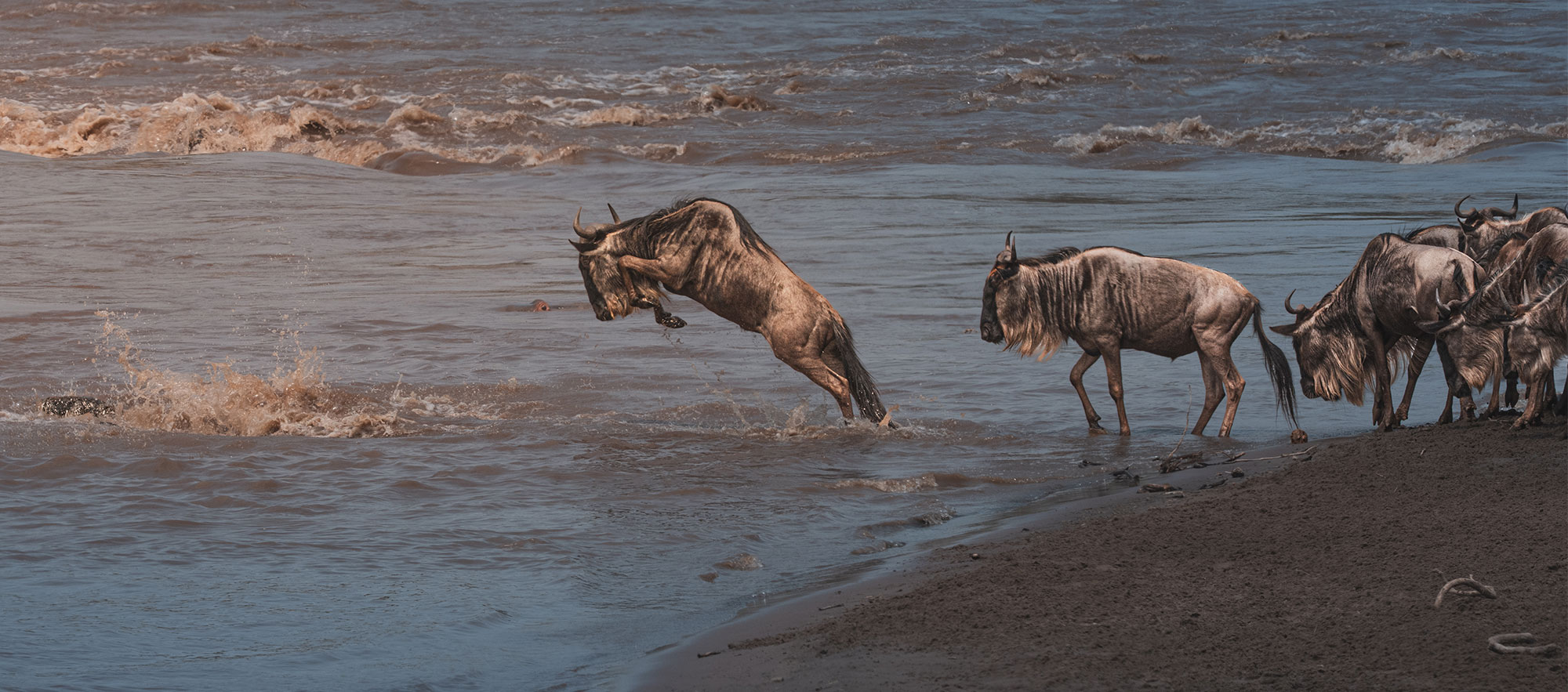
Mara River Crossing

Best Places to Witness the Great Wildebeest Migration

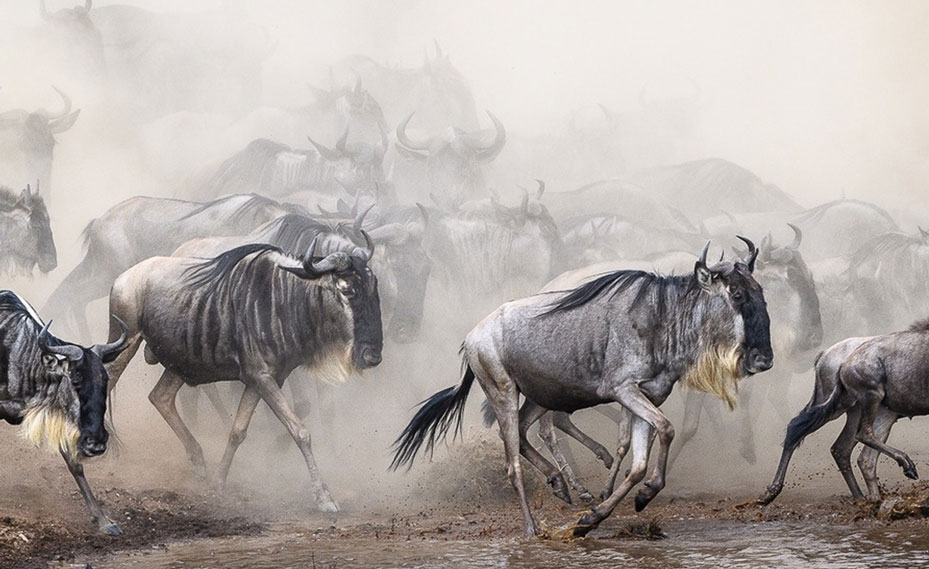
The Great Wildebeest Migration stretches across nearly 30,000 square kilometres of the Serengeti-Maasai Mara ecosystem, making it one of the largest wildlife movements on Earth. Because the migration is constantly following rainfall and fresh grazing, there is no single location where visitors can see it year-round. Instead, different regions come alive at different times of the year, each offering a unique chapter of this extraordinary journey. Whether your dream is to witness thousands of newborn calves taking their first steps, photograph dramatic river crossings, or enjoy endless plains covered with grazing herds, choosing the right destination—and the right time—is the key to an unforgettable migration safari. Here are the best places to experience the Great Wildebeest Migration. 1. Ndutu Plains – Where New Life Begins Few places capture the beginning of the migration cycle quite like the Ndutu Plains. Located between the Southern Serengeti and the Ngorongoro Conservation Area, this vast landscape becomes the heart of the migration from December through March, when millions of wildebeest settle on the nutrient-rich volcanic grasslands. The short grass found in Ndutu is exceptionally rich in calcium and phosphorus, making it the ideal feeding ground for pregnant females. Every year, between late January and February, the plains become one of the world’s largest natural maternity wards as nearly half a million calves are born within just a few weeks. For visitors, Ndutu offers intimate wildlife encounters unlike anywhere else in Africa. Lions, cheetahs, hyenas, and jackals closely follow the herds, creating exceptional opportunities to witness predator-prey interactions. The open grasslands also make wildlife photography easier, allowing unobstructed views across endless plains teeming with life. If your goal is to experience the miracle of birth, dramatic predator action, and lush green landscapes, Ndutu is undoubtedly one of the finest places to witness the Great Migration. Best time to visit: December to March, with peak calving in February. 2. Central Serengeti (Seronera) – The Heart of the Ecosystem Often referred to as the beating heart of Serengeti National Park, the Central Serengeti, particularly the Seronera Valley, is one of the few areas where wildlife viewing is exceptional throughout the year. As the migration moves north during March, April, and May, thousands of wildebeest and zebras pass through this region on their journey toward the Western Corridor. Although the herds may not remain for long, the area’s permanent rivers support an abundance of resident wildlife, ensuring outstanding game viewing regardless of the migration’s exact location. Seronera is especially famous for its healthy populations of lions, leopards, cheetahs, elephants, and hippos. The combination of resident wildlife and migrating herds makes it one of the best destinations for travellers hoping to experience both the migration and the Big Five in a single safari. For photographers, the granite kopjes, acacia-dotted plains, and winding rivers create a diverse range of scenic backdrops that perfectly capture the essence of the Serengeti. Best time to visit: March to June. 3. Western Corridor – Following the Great Columns As the long rains come to an end, the migration gradually enters the Western Corridor, a vast stretch of woodland, open plains, and river systems extending toward the Grumeti River. Between May and June, this region hosts some of the largest concentrations of migrating wildebeest as scattered herds merge into immense columns stretching for kilometres across the landscape. It is here that visitors begin to appreciate the true scale of the Great Migration. The Western Corridor is also home to the Grumeti River, where the first significant river crossings may occur. Although these crossings are generally smaller and less frequent than those at the Mara River, they remain dramatic, particularly because of the enormous Nile crocodiles that inhabit the river year-round. Compared to the northern Serengeti, the Western Corridor receives fewer visitors, offering a quieter and more exclusive safari experience while still delivering remarkable wildlife encounters. Best time to visit: May to June. 4. Northern Serengeti – The Stage for the Mara River Crossings For many travellers, the Northern Serengeti is the ultimate migration destination. Between July and October, this remote wilderness becomes the setting for the legendary Mara River crossings, one of the most iconic wildlife spectacles on Earth. Areas such as Kogatende, Lamai, and Wogakuria provide front-row seats to the migration as thousands of wildebeest gather nervously along the riverbanks before attempting the dangerous crossing into Kenya’s Maasai Mara. The drama is intense. Nile crocodiles wait beneath the water, lions patrol nearby grasslands, and the steep riverbanks test every animal’s determination. Yet despite the danger, the overwhelming majority of the herds successfully continue their journey, driven by an instinct older than history itself. Beyond the river crossings, the Northern Serengeti offers breathtaking scenery, excellent predator sightings, and a sense of remoteness that makes every safari feel exclusive. Best time to visit: July to October. 5. Maasai Mara National Reserve – Where the Migration Reaches Its Peak Crossing into Kenya, the Maasai Mara National Reserve hosts the migration from approximately July through October, depending on rainfall. During this period, vast herds spread across the reserve’s rolling grasslands, taking advantage of abundant grazing before eventually returning to Tanzania. The Maasai Mara is renowned for its extraordinary predator density. Lion prides, cheetahs, leopards, and spotted hyenas thrive on the seasonal abundance of prey, making this one of the best places in Africa to witness dramatic wildlife interactions. Although many visitors come hoping to see a Mara River crossing, the reserve offers much more than this single event. Endless wildlife-filled plains, exceptional Big Five sightings, beautiful acacia woodlands, and spectacular African sunsets make every game drive memorable. For first-time safari travellers, the Maasai Mara combines world-famous wildlife with relatively easy access, making it one of Africa’s premier safari destinations. Best time to visit: July to October.

Read more
The Great Migration 2026/2027

Great Migration Calendar : Complete Month-by-Month Guide

January – The Herds Gather on the Emerald Plains As the first rains breathe life into the southern Serengeti, the endless golden plains transform into a lush carpet of emerald grass. This seasonal renewal draws more than 1.5 million wildebeest, accompanied by hundreds of thousands of zebras and gazelles, into the fertile short-grass plains around Ndutu, the Southern Serengeti, and the eastern reaches of the Ngorongoro Conservation Area. Rich volcanic soils, formed thousands of years ago from the eruptions of the Ngorongoro Highlands, produce grasses packed with calcium and phosphorus—nutrients essential for heavily pregnant wildebeest preparing to give birth. Unlike the dramatic river crossings that dominate wildlife documentaries, January is a month of anticipation. The migration slows, allowing the herds to spread across the open plains where fresh grazing is abundant. Everywhere you look, thousands of animals feed peacefully, conserving energy for the demanding weeks ahead. It is a remarkable reminder that the Great Migration is not simply about movement, but about survival, renewal, and the timeless rhythm of nature. Towards the end of the month, the first calves begin to arrive. Within minutes of birth, they struggle to their feet, instinctively learning to stand and run in a landscape where hesitation can be fatal. This synchronized birthing strategy has evolved over thousands of years, ensuring that predators are overwhelmed by sheer numbers rather than being able to focus on individual newborns. For predators, January marks the beginning of a season of abundance. Lions patrol the plains, cheetahs scan the horizon from termite mounds, and spotted hyenas move between the scattered herds under the cover of dawn and dusk. Black-backed jackals wait patiently for vulnerable calves, while vultures circle high above, ever alert to opportunities created by the constant struggle between predator and prey. Witnessing these interactions offers a profound understanding of the delicate balance that sustains one of Africa’s greatest ecosystems. For photographers, January is among the most rewarding months of the year. The short grass provides uninterrupted views across the plains, making it easier to capture dramatic wildlife scenes. Morning mist, afternoon thunderstorms, and golden evening light combine to create spectacular photographic conditions, while the vibrant green landscapes offer a striking contrast to the dark coats of the wildebeest and the golden hues of hunting lions. Every game drive presents opportunities to document powerful stories of new life, family bonds, and the relentless challenges of survival. Birdwatchers are equally rewarded during this period. Seasonal wetlands attract an impressive diversity of resident and migratory species, from elegant Secretary Birds striding through the grasslands to soaring Steppe Eagles and colourful Lilac-breasted Rollers. The abundance of insects, fresh vegetation, and water creates ideal conditions for birdlife, making January one of the finest months for combining a migration safari with exceptional birding. With warm days averaging between 26 and 29°C (79–84°F), cool mornings, and occasional short showers, the weather remains comfortable for game drives. The rain is rarely disruptive; instead, it enhances the beauty of the landscape, settles the dust, and often produces dramatic skies that elevate both wildlife viewing and photography. If your dream safari is less about crowds and more about experiencing the quieter, more intimate beginnings of the Great Migration, January is an exceptional time to visit. It is a season defined by promise, a moment when the plains are full of expectation, predators prepare for opportunity, and thousands of newborn calves begin their first chapter in one of the world’s greatest wildlife spectacles. February – New Life Across the Southern Plains If January is a season of anticipation, February is the celebration of new life. Across the sweeping short-grass plains of Ndutu, the southern reaches of Serengeti National Park, and the eastern boundary of the Ngorongoro Conservation Area, the Great Wildebeest Migration reaches one of its most extraordinary and emotionally captivating chapters. The landscape, nourished by the seasonal rains and enriched by ancient volcanic soils, becomes the birthplace of an entire generation. Within a remarkably short period of just two to three weeks, nearly half a million wildebeest calves are born. On peak days, more than 8,000 calves can enter the world in a single day, making this one of the largest synchronized birthing events on the planet. The sheer scale is almost impossible to comprehend until you witness it firsthand. Everywhere across the plains, newborn calves wobble uncertainly on slender legs, while protective mothers instinctively encourage them to stand. Within minutes, they are taking their first tentative steps. Within hours, they are capable of running with the herd—an evolutionary necessity in a landscape where danger is never far away. This remarkable synchronization is no coincidence. It is one of nature’s most effective survival strategies. By giving birth within such a compressed timeframe, the wildebeest overwhelm predators with an abundance of prey. While lions, cheetahs, hyenas, leopards, jackals, and raptors enjoy one of the richest hunting seasons of the year, the vast number of calves ensures that most survive those vulnerable first weeks. It is a powerful reminder that the Great Migration is not merely a journey across East Africa but an intricate ecological process that has evolved over thousands of years. For predators, February is a month of opportunity. Lion prides establish territories across the southern plains, where vulnerable calves provide a reliable food source. Cheetahs thrive in the open landscape, using the short grasses to spot young animals from a distance before accelerating into breathtaking high-speed pursuits. Spotted hyenas patrol tirelessly, often competing fiercely with lions over fresh kills, while black-backed jackals quietly search the fringes of the herds for isolated calves or afterbirth. Above the plains, vultures circle patiently alongside Martial Eagles, Tawny Eagles, and Bateleurs, each playing a vital role in the ecosystem’s natural cycle. Yet February is not defined solely by predator-prey encounters. It is equally a month of abundance and renewal. The southern Serengeti is at its most beautiful, with vibrant green grasslands stretching towards the horizon beneath dramatic skies shaped by passing rain showers. Seasonal pans and wetlands support an

Read more