



The most common mistake in birding itinerary design is easy to recognize on paper. Too many parks, too many transitions, too much confidence in famous names, and not enough respect for what makes birding work in the field. The route looks impressive. The safari often feels thinner than expected once it begins.
East Africa is bird-rich enough to hide bad planning for a while. A traveler can still see good birds on a poorly shaped route, just as a photographer can still come home with a few strong frames from a rushed trip. But there is a difference between a safari that produces sightings and one that consistently delivers high-quality birding sessions. That difference is almost always built before the journey starts.
How we design high-success birding itineraries comes down to one principle above all: protect field rhythm first. If the route breaks the best hours, mixes incompatible habitats badly, or keeps moving before an area has been worked properly, the birding weakens no matter how attractive the itinerary sounds in theory.
A high-success itinerary is less about coverage and more about usable time
Many travelers still assume that a stronger itinerary means seeing more places. In standard tourism logic, that makes sense. In birding logic, it often does not.
In real safari planning, more stops usually mean more logistical drag. You lose time to check-outs, road positioning, flights, airstrip transfers, park gates, lunch timing, rooming, and the hidden fatigue that builds when the trip never settles into a rhythm. For birders, every one of those frictions competes directly with dawn and dusk.
One transfer day often costs two prime wildlife windows. That is one of the simplest planning truths in East Africa, and one of the most ignored. A route that adds one extra region may also remove two of your most valuable birding sessions. The trade-off is not abstract. It is visible in the final quality of the trip.
That is why we do not design birding journeys by asking how many famous names we can fit in. We start by asking where the best field sessions will come from, how many we can protect, and which habitats are worth repeating in good light.
We begin with habitat function, not destination prestige
Birding itineraries work best when places are chosen for what they do, not only for how well known they are.
Maasai Mara (Kenya) may be an important part of a mixed safari, but it does not solve the same birding need as Samburu (Kenya). Amboseli (Kenya) is not simply another scenic stop with elephants and Kilimanjaro views. It gives a very different habitat mix, with open plains, wetlands, and acacia zones that shape birding differently from northern dry-country systems. Ndutu (Tanzania) works differently again, especially when short-grass plains, seasonal movement, and open visibility change the structure of the day.
A high-success itinerary needs geographic variety, but only when that variety improves function. We ask what the traveler actually needs from the route. Dry-country specialists. Rift Valley wetland depth. Open-plains raptors. Riverine woodland. Marsh birding. Bird photography from a vehicle. Mixed safari balance between mammals and birds. Once those functions are clear, the destinations become easier to choose.
In field terms, a strong birding itinerary is less about collecting famous parks and more about sequencing habitats that produce useful sessions.

We protect the first and last sessions before we polish the middle
Most safari planning discussions spend too much time on the middle of the day and not enough on the edges, even though the edges are often where birding quality is made.
At Bobu Africa, we usually treat the first and last field sessions of each day as the most valuable birding windows. That is our practical baseline. Morning gives cleaner sound, lower wind, better movement, and more workable light. Late afternoon often restores activity after the flatness of midday, especially around water, woodland edges, and feeding lines.
This matters because itineraries are often judged by nights, not by field windows. That is misleading. Three nights usually means six prime field sessions. Two nights usually means four. One night in a transit-heavy stop may effectively mean only two, and if arrival and departure timing are poor, even those can be compromised.
That is why we prefer to think in sessions, not nights alone. Nights are accommodation logic. Sessions are field logic. Birding success follows the second one.
We would rather understate the map than overstate the safari
A lot of travel planning is driven by fear of omission. Clients worry that if they skip a famous ecosystem, the trip will somehow feel incomplete. Operators sometimes respond by making the map busier than the field reality can support.

We usually take the opposite view. A route that does slightly less, but does it properly, often performs far better than one trying to impress with range.
In our 15 years of field operation across East Africa, we see this mistake most often: travelers accept too many moves because the itinerary sounds richer on paper, then discover the birding never stays long enough in one habitat to deepen.
This is especially important for photographers and dedicated birders. One clean second attempt at a target species in the right light is often more valuable than one rushed first encounter in poor conditions followed by a transfer. For birders, familiarity with an area compounds. The second morning is usually smarter than the first. The third can be where the itinerary starts paying back properly.
Guide quality matters as much as park choice
There is no such thing as a truly high-success birding itinerary with weak guiding depth. The route can be excellent and still underperform if the guide cannot translate habitat, timing, and local movement into actual sightings.
A specialist birding guide changes itinerary value in three ways. First, they help choose where extra time is worth spending. Second, they make each session more efficient by reading habitat and activity quickly. Third, they know when not to waste time on low-value detours.
That last point matters more than many travelers realize. Good guides do not simply find birds. They protect the shape of the day.
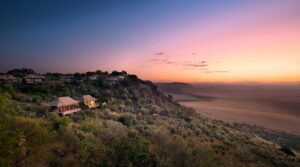
In the Mara ecosystem, location matters more than room glamour when field hours are limited. The same logic applies to guiding. A beautiful camp paired with mediocre birding depth may be a weaker choice than a less showy base paired with excellent field intelligence.
We design for repeatable quality, not checklist inflation
Bird-rich travel can easily become checklist-driven. That is not always wrong, but it can distort planning if used as the only standard of success.
For many travelers, especially photographers and premium experience-led guests, the real measure of success is not the raw species total. It is the consistency of the field experience. Were the sessions calm and well-timed? Did the landscapes feel legible? Did the guide know when to hold a patch and when to move? Did the route produce a satisfying mix of easy abundance and more deliberate target work?
A strong safari is not defined by one dramatic sighting, but by repeated high-quality field sessions. That sentence matters because it changes how the itinerary is built. It pushes us toward depth, pacing, and habitat integrity rather than novelty for its own sake.
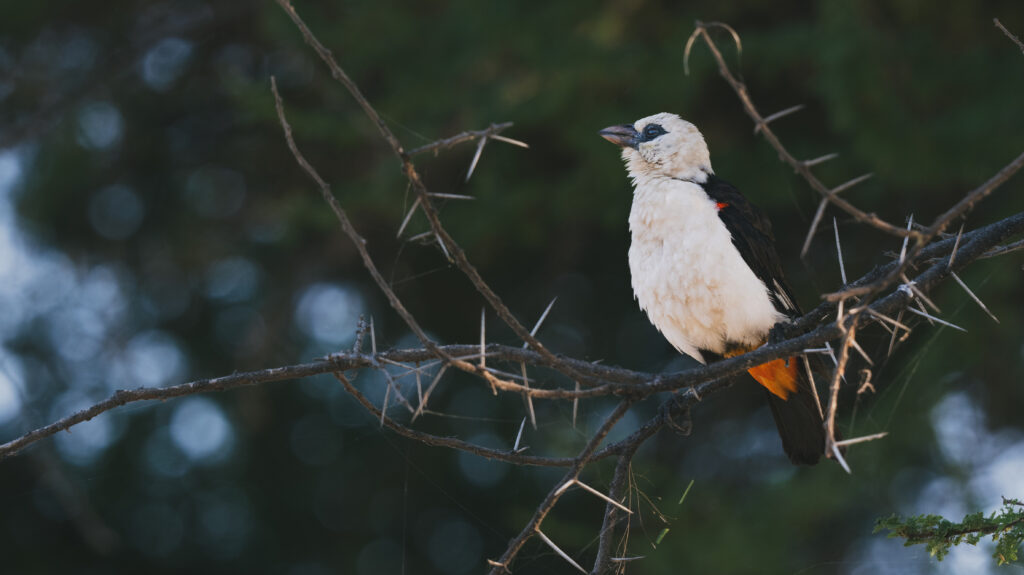
For photographers, this is even more important. Bird photography is less about headline spectacle and more about full-trip consistency. A single rare bird seen badly may be exciting for a list. Several days of clean, well-positioned opportunities often matter much more in the final edit.
We separate mixed safaris from confused safaris
Many clients want both strong mammal viewing and meaningful birding. That is absolutely possible. The challenge is not that these goals conflict all the time, but that they can be combined lazily.
A mixed safari works when the route acknowledges both priorities honestly. A confused safari happens when birding is promised everywhere but protected nowhere. The days become mammal-led by default, with birds treated as whatever happens to appear from the vehicle.
When designing a mixed journey, we identify where birding should lead the schedule and where it can ride alongside broader wildlife viewing. Wetlands, river edges, woodland mornings, dry-country specialist zones, and certain transfer sections may deserve explicit birding priority. Other sessions may be more flexible.
This creates a cleaner internal logic. The guest knows which parts of the trip are built for focused birding and which are more general safari time. That clarity tends to improve satisfaction because the itinerary stops pretending every hour can serve every purpose equally well.
We pay close attention to lodge position, not only lodge style
Accommodation matters, but in birding design its location often matters more than its polish.
A camp with excellent access to the right habitat at the right hour can outperform a more luxurious property that sits too far from the productive zone. This is especially true when the route depends on early starts, wetland access, forest-edge timing, or reaching a specific landscape before wind and heat flatten the session.
That does not mean comfort should be ignored. It means comfort should be layered around field logic, not substituted for it.
At Bobu Africa, we usually build birding journeys from field structure outward. First protect the habitats, drive times, guide quality, and prime sessions. Then layer comfort around that. The reverse order often creates a more elegant-looking itinerary and a weaker safari.
We design differently for birders, photographers, and premium naturalists
Not every high-success itinerary looks the same. Success depends on the traveler.
For dedicated birders
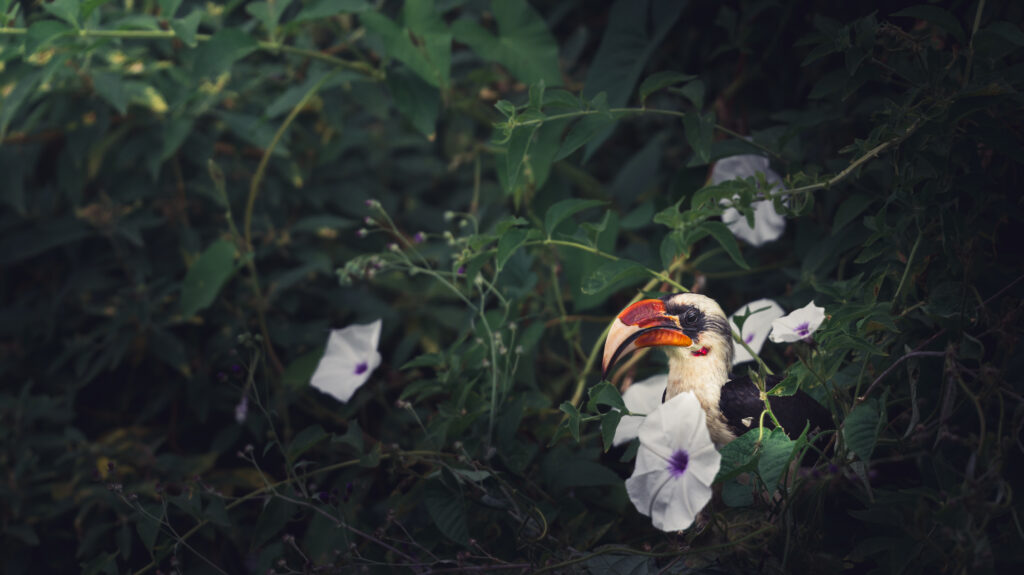
We prioritize habitat diversity with enough staying power in each zone. Target species, seasonal specialties, and the guide’s local strength matter heavily. We avoid routes that move before the area has truly been worked.
For wildlife photographers
We place more weight on clean light, repeatable positioning, slower sessions, and lower transition fatigue. A photographic itinerary often benefits from fewer bases and more patience around habitats that produce sustained opportunities.
For premium travelers with broad natural history interest
We look for birding depth without making the journey feel technical or narrow. Interpretation matters as much as species count. The route should feel elegant, legible, and grounded, with enough time for the landscape to open properly rather than flashing past as a sequence of branded destinations.

Practical advice if you are planning a birding safari
A few questions will immediately tell you whether an itinerary is likely to perform well.
- How many actual prime field sessions does the route create?
- How many transfer days or half-transfer days are included?
- Is each destination there for a birding reason, or just because it is famous?
- Do you have at least three nights in your most important habitat?
- Is the guide a true birding guide or a general safari guide with lighter bird knowledge?
- Is the route built for your priorities, or is it trying to satisfy every possible safari expectation at once?
If birding is central to the trip, three nights in one key area is often a strong baseline. That usually means six prime field sessions, enough for weather variation, a second attempt at target birds, and a much better feel for the ecosystem.
If the route is moving every one or two nights, it may still be enjoyable, but it is less likely to become a genuinely high-success birding safari.
The deeper logic behind our itinerary design
Birding success is rarely accidental. It looks accidental from the guest seat because the route is doing its job quietly. The vehicle reaches the right edge at the right hour. The guide knows why a marsh deserves one more pass. The second morning in camp reveals what the first one only hinted at. The traveler feels that the journey is flowing, when in fact it has been built carefully to create that impression.
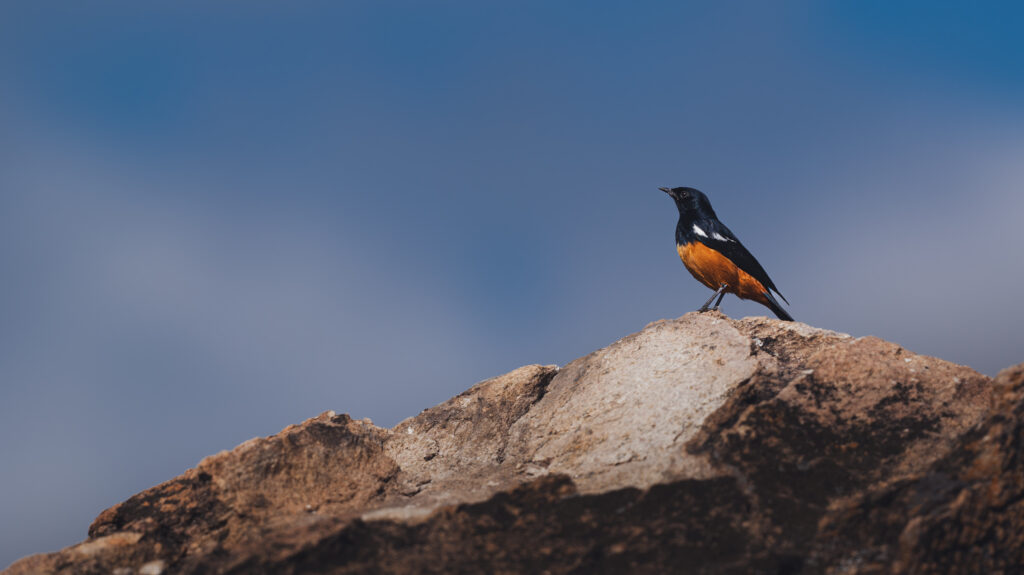
That is how we think about itinerary design at Bobu Africa. Not as a list of attractions, but as a sequence of protected opportunities. The aim is to give each habitat enough room, each key session enough respect, and each traveler a route that behaves intelligently in the field.
High-success birding itineraries are not necessarily the busiest. Very often, they are the ones that know what to leave out.
FAQ
How many nights should I spend in one area for a serious birding safari?
Three nights is a strong practical baseline for one key birding ecosystem. That usually gives you six prime field sessions, which is enough for better habitat coverage, cleaner timing, and second attempts at important species.
Is it better to visit more parks or stay longer in fewer places?
For birding, staying longer in fewer well-chosen places is often more productive. More parks may look richer on paper, but extra transfers usually reduce the best field windows.
Can a mixed safari still work well for birders?
Yes, if the route is honest about priorities. A mixed safari works when certain sessions are explicitly protected for birding rather than assuming birds will somehow fit into a mammal-first schedule.
What matters more, the lodge or the guide?
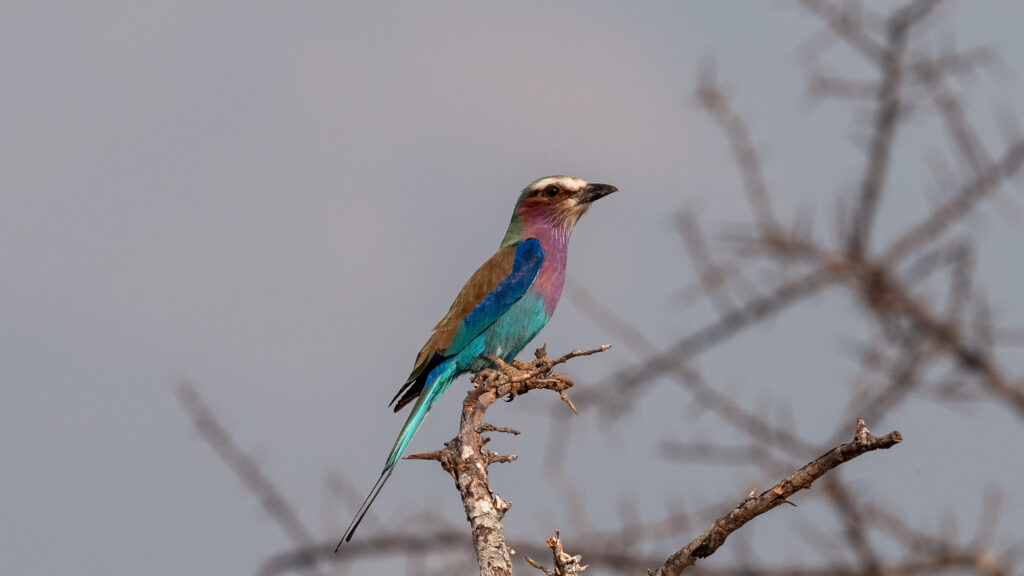
Both matter, but if birding quality is the goal, guide depth and lodge position usually matter more than room glamour. A well-located camp with the right specialist guide will often outperform a more luxurious but poorly positioned option.
FAQ
Q: How many nights should I spend in one area for a serious birding safari?
A: Three nights is a strong practical baseline for one key birding ecosystem. That usually gives you six prime field sessions, which is enough for better habitat coverage, cleaner timing, and second attempts at important species.
Q: Is it better to visit more parks or stay longer in fewer places?
A: For birding, staying longer in fewer well-chosen places is often more productive. More parks may look richer on paper, but extra transfers usually reduce the best field windows.
Plan Your Journey
If you want a birding journey that does more than connect famous names on a map, Bobu Africa can design the route around habitats, guiding depth, photographic logic, and protected field sessions. The result is a safari shaped as a professional field solution, not a generic circuit.