Where to Eat in Nairobi: Fine Dining, Local Eats & Chinese Restaurants

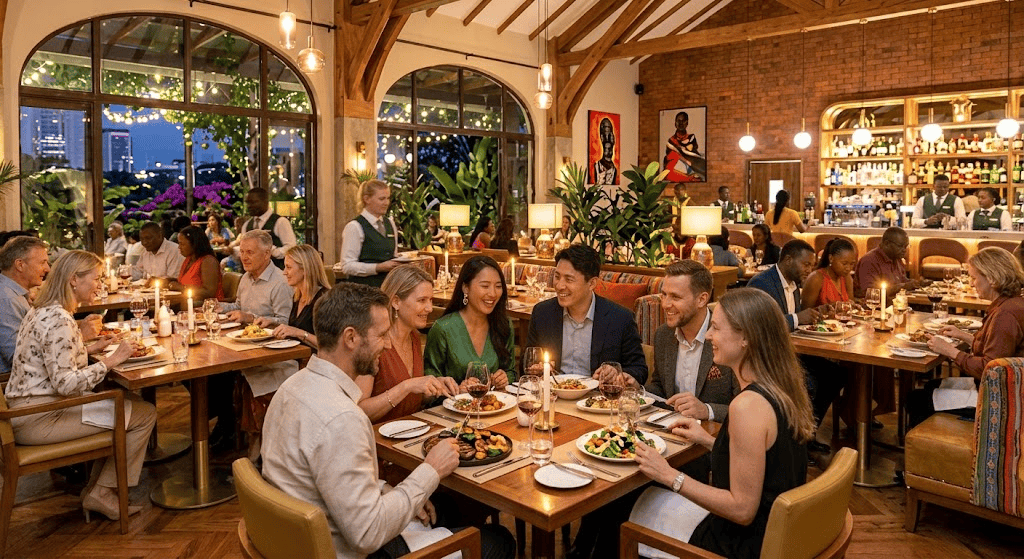
Nairobi’s dining scene ranges from world-class fine dining to authentic Chinese cuisine and casual local eats. For international visitors, the best restaurant depends entirely on the occasion and your location in the city. Here is a precise guide to the top culinary experiences in Kenya’s capital. 🍽️ Fine Dining, Views & Romance INTI (Westlands) occupies the 20th floor of One Africa Place, offering a 360-degree view of Nairobi’s skyline through its distinctive dome-shaped architecture. The menu centers on Nikkei cuisine—a Japanese-Peruvian fusion—with standout dishes like the Inti Crab Sushi and various ceviche preparations. The polished but lively atmosphere and sunset views make it particularly suited to couples and business dinners. Tatu Restaurant (CBD) sits inside the historic Fairmont The Norfolk and specializes in fresh seafood, premium cuts of meat, and vegetarian options. The restaurant features a patio overlooking a tropical garden, making alfresco dining a highlight of the experience. Reviewers single out the lobster ceviche and rack of lamb as exceptional, with service described as warm and highly professional. Jiko at Tribe Hotel (Gigiri) is a contemporary African dining room with floor-to-ceiling windows that flood the space with natural light. The menu presents a diverse range of African dishes, with reviewers consistently praising both the quality and presentation of the food. It is the most convenient fine-dining option for travelers staying around Village Market or Gigiri. The Talisman (Karen) is a garden-setting restaurant that works perfectly for couples seeking a relaxed, romantic evening. The View (Mövenpick) offers panoramic city views and is ideal for a first or final night in Kenya. Sikia (Upper Hill) provides formal international fusion and is highly practical for business meetings in that district. 👨‍👩‍👧‍👦 Families, Casual Eats & Local Food Nairobi Street Kitchen operates as a food-hall concept with multiple vendors under one roof. It is the most practical choice when children and adults want completely different meals, offering a lively and accessible dining environment. For families, prioritizing location over cuisine is essential, as Nairobi traffic can quickly turn a short drive into an inconvenience. Mama Oliech is the go-to spot for casual local food, famous for serving fresh fried tilapia, ugali, and sukuma wiki. For street food, choose busy vendors with high turnover where food is cooked fresh in front of you. Essential Kenyan dishes to try include chapati, pilau, nyama choma (grilled meat), samosas, and mandazi. 🌱 Vegan & Vegetarian Shayona (Parklands) is a pure vegetarian restaurant specializing in Indian and Indo-Chinese cuisine with several vegan options. Coffee & Plant (Westlands) is a dedicated vegan restaurant and deli covering breakfast, lunch, and dinner. If you have strict dietary requirements, inform the restaurant before ordering to ensure separate preparation. 🥢 Authentic Chinese Dining Nairobi has a well-established Chinese dining scene, ranging from Cantonese fine dining to authentic Sichuan noodles. (Panari Sky Centre) is located inside the Panari Hotel complex on Mombasa Road, serving 100% authentic Cantonese, Sichuan, and Anhui cuisine. It features VIP rooms and decor that makes you feel like you are “doing business in China,” making it particularly suitable for corporate dinners. Signature offerings include roasted lamb leg and Anhui-style stinky mandarin fish, with moderate pricing at KES 500–1,500 per person. For You Chinese (Lavington) is Nairobi’s most popular Chinese restaurant, boasting over 7,000 Google reviews. The menu covers Cantonese-style dining, dim sum, Peking duck, and dumplings, with har gow and char siu bao receiving particular praise. The setting is family-friendly with a children’s play area, though pricing is upscale at KES 2,500–5,000+ per person. Spicy Road (Golf Course) specializes in Sichuan hot pot with proper mala broth, offering an interactive dining experience where guests cook their own ingredients. The restaurant holds a strong reputation among Chinese expats, validating its authenticity. Mid-range pricing runs KES 1,500–2,500 per person. Chengdu Noodles (Kilimani) serves authentic Sichuan hand-pulled noodles with Sichuan peppercorns and chilli oil. At KES 500–1,000 per person, it is one of the most affordable authentic Chinese spots in the city. Taste of China (Parklands) offers 12th-floor city views paired with reliable dim sum, while Peter Dong (Westlands) provides a calm, poolside atmosphere with authentic flavors. 🌍 Planning Your Safari from Nairobi? Your dining choices can easily become part of your itinerary. Enjoy the city’s culinary scene, explore Nairobi National Park, and then continue your journey to the Maasai Mara, Amboseli, or the Kenyan coast.

Read more
Angama Mara - Luxury Camp in Masai Mara

Luxury Camps in Maasai Mara (2026/2027 Guide)

Among the best luxury camps in Maasai Mara are Angama Mara, Mara Plains Camp, Mahali Mzuri, Mara Bushtops, and Sala’s Camp. These exclusive safari camps offer exceptional wildlife viewing, luxurious accommodation, world-class guiding, and unforgettable experiences in one of Africa’s most iconic wilderness destinations. Whether you are planning a Great Migration safari, honeymoon, photography journey, or luxury family adventure, these camps represent the highest standards of comfort, service, and authentic safari experiences in the Maasai Mara. One of the greatest advantages of the Maasai Mara is the diversity of luxury accommodation available. Some camps overlook the famous Mara River, placing guests in prime position for dramatic wildebeest crossings during the migration season. Others are hidden within private conservancies such as Mara North, Naboisho, and Olare Motorogi, where limited vehicle numbers, off-road driving, guided walking safaris, and night game drives offer an exclusive wildlife experience unavailable inside the national reserve. Choosing the right luxury camp can significantly enhance your safari. Are you planning a romantic honeymoon? Looking for front-row seats to the Great Migration? Traveling with family? Passionate about wildlife photography? Or perhaps you’re searching for the ultimate all-inclusive safari retreat? Each camp offers something unique, and understanding these differences will help you make the most of your journey. 1. Angama Mara – Luxury Above the Great Rift Valley Perched high on the edge of the Oloololo Escarpment, Angama Mara is more than a luxury safari lodge—it is one of Africa’s most iconic safari destinations. Named after the Swahili word Angama, meaning “suspended in mid-air,” the lodge commands breathtaking panoramic views over the Maasai Mara, where endless golden plains stretch toward the horizon. Few places in Africa offer such a dramatic setting, making Angama Mara a favorite for honeymooners, photographers, and discerning travelers seeking an unforgettable safari experience. The lodge occupies the same escarpment where scenes from the award-winning film Out of Africa were filmed, adding a sense of romance and history to every stay. Every suite is designed to maximize these spectacular views, with floor-to-ceiling glass walls that blur the line between indoors and the African wilderness. Guests can wake to the sight of giraffes wandering across the plains below or enjoy a quiet evening watching the sun disappear beyond the horizon from the comfort of their private deck. Beyond its stunning location, Angama Mara is renowned for delivering one of the finest luxury safari experiences in Kenya. Personalized service, exceptional cuisine, world-class guiding, and meticulous attention to detail ensure every guest enjoys a safari tailored to their interests. Whether you dream of tracking the Big Five, witnessing the Great Migration, floating over the Mara in a hot-air balloon, or simply relaxing with uninterrupted views of the savannah, Angama Mara delivers an experience that is both elegant and deeply connected to nature. Bobu Africa Expert Insight If you’re celebrating a honeymoon, anniversary, or milestone birthday, Angama Mara is difficult to surpass. The combination of breathtaking scenery, impeccable hospitality, and exceptional wildlife creates a safari experience that feels both intimate and unforgettable. For travelers seeking a balance of luxury, romance, and world-class game viewing, Angama Mara consistently ranks among the finest safari lodges in Africa. 2. Mara Plains Camp – The Ultimate Exclusive Safari Experience Hidden within the wildlife-rich Olare Motorogi Conservancy, bordering the Maasai Mara National Reserve, Mara Plains Camp is widely regarded as one of Africa’s most exclusive safari camps. Combining refined luxury with extraordinary wildlife viewing, the camp offers an intimate safari experience where guest numbers are deliberately kept low, ensuring privacy, personalized service, and exceptional guiding. Unlike camps located inside the main reserve, Mara Plains Camp enjoys the advantages of a private conservancy. Guests can experience off-road driving, guided walking safaris, and thrilling night game drives—activities that are generally restricted within the national reserve. This flexibility allows guides to spend more time observing wildlife without the crowds, making Mara Plains Camp a dream destination for photographers and seasoned safari enthusiasts. The camp itself blends seamlessly into the surrounding forest, with beautifully crafted tented suites overlooking the Ntiakitiak River. Rich hardwood furnishings, handcrafted décor, deep copper bathtubs, and expansive decks create an atmosphere of understated elegance, while the sounds of hippos, birds, and distant lions remind guests that they are immersed in one of Africa’s greatest wilderness areas. Bobu Africa Expert Insight For travelers who value exclusivity over crowds, Mara Plains Camp is one of the finest safari camps in East Africa. The ability to enjoy off-road wildlife viewing, night drives, and intimate encounters with some of Africa’s most iconic species makes this camp particularly appealing to photographers and repeat safari visitors. It delivers a luxury experience that is authentic, immersive, and consistently exceptional. 3. Mahali Mzuri – Sir Richard Branson’s Award-Winning Safari Retreat Nestled within the Olare Motorogi Conservancy, just north of the Maasai Mara National Reserve, Mahali Mzuri is one of Kenya’s most celebrated luxury safari camps. Owned by Sir Richard Branson’s Virgin Limited Edition, the camp combines sophisticated contemporary design with an intimate wilderness experience, making it one of the most sought-after safari destinations in Africa. The name Mahali Mzuri translates from Swahili as “beautiful place,” and it lives up to its name in every sense. Perched on a hillside overlooking rolling plains that serve as a major route for the Great Wildebeest Migration, the camp offers front-row seats to one of nature’s greatest spectacles while maintaining the exclusivity of a private conservancy. Unlike larger safari lodges, Mahali Mzuri accommodates only a small number of guests, creating an atmosphere of privacy and personalized hospitality. Every aspect of the experience has been carefully curated—from luxurious tented suites and exceptional dining to expertly guided safaris and attentive service. Whether you’re celebrating a honeymoon, a special anniversary, or simply fulfilling a lifelong safari dream, Mahali Mzuri delivers an experience that effortlessly blends elegance with adventure. 4. Mara Bushtops – Ultra-Luxury in the Heart of the Mara For travelers seeking uncompromising luxury, Mara Bushtops consistently ranks among the finest safari camps in East Africa. Located within its own

Read more
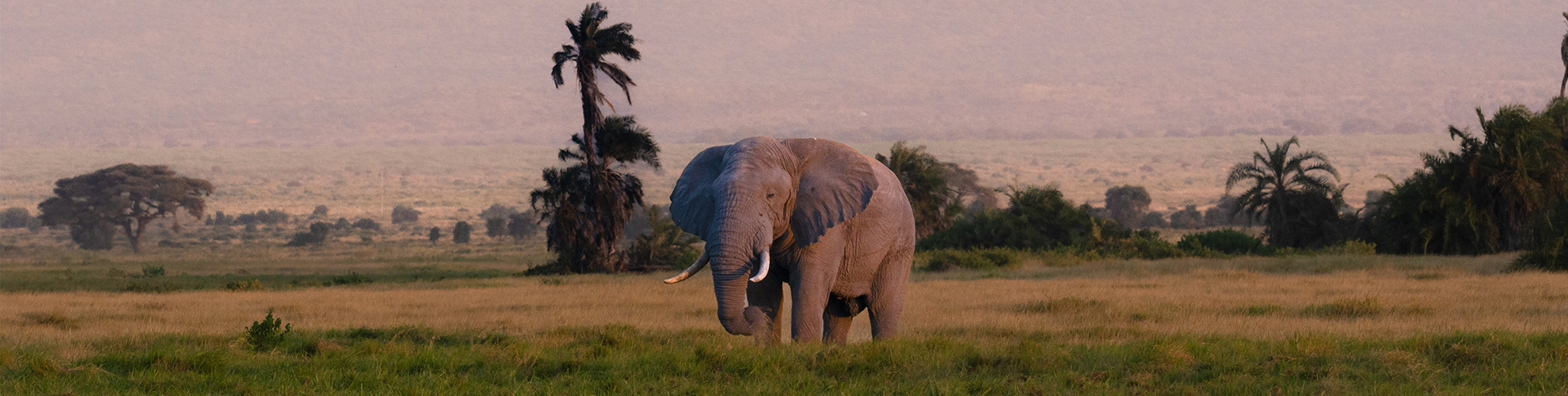
Amboseli National Park Elephants

Best Time to Visit Amboseli for Photography: A Field Guide for Light, Wildlife & Iconic Landscapes

Amboseli is one of Africas most iconic photo destinations, yet many travelers plan it with a generic dry season rule. For photographers, timing is more nuanced. The strongest images depend on Kilimanjaro reveal windows, cloud and wind patterns, dust mood, and where your camp sits relative to early morning access. This guide explains how to choose the right months for your visual goals and how to shoot Amboseli with intention.

Read more

Hiking Mt Kilimanjaro via Lemosho Route -What To Expect!

Just so you know, the snow of Kilimanjaro is constantly melting away. If you want to have your own Kilimanjaro mountaineering experience, maybe you should try while it is still snow capped. Video Link: https://www.youtube.com/watch?v=pXLbfk0O9cI Climbing to the top of Mt Kilimanjaro does not mean you are conquering Kilimanjaro. Perhaps it’s more of a feeling that you are conquering your fear year by year, the fear of life, of death, and of love. Some people have had this place in their hearts and bucket lists for many years, but have not managed to put words into action. Saying you are interested in Africa and watching BBC AFRICA hundreds of times is not the same experience as being on the ground here. Unfortunately, many times we lose our sense of curiosity not only in Africa but in many other things especially when it involves exploring the unknown and self. Fortunately, there are always so many interesting people in the world who will break away from the shackles of the norm. They are willing to trek to find the legendary gorillas in the rainforest, not to take a shower for a week and even when battered, are willing to climb the snowy mountains to see the scenery above.  Video Link: https://www.youtube.com/watch?v=GqN3dcnz3t0 On January 22, 2017, a group of people who I had known previously arrived at Kilimanjaro Airport. We are excited to discuss the trip, after all, it was the next day. That night, several ladies filled the bathroom. After all, for a week from the next day, for a full 7 days, we wouldn’t be able to take a shower or wash our hair. We took out all the things that could be charged and charged them, everyone tried not to show their tension and fear. Although the night was long, it always passed quickly before a climb. Early the next morning, each of us carried our luggage. In theory, it is better not to bring more than 18 kg of mountaineering luggage. All unnecessary items are reassessed and reduced from bags over and over again until a safe weight is acquired. Because of this lighter load, we had enough energy to walk to the foot of Mount Kilimanjaro. Before we arrived, we saw groups of zebras adjacent to dead trees.  Day 1 Glades Starting Point to Big Tree   Altitude: 2100m-2800m Walking distance: 7 km Walking time: 3-4 hours  Roadside landscape: tropical alpine rainforest!  On the first day, the actual hike started in the afternoon, and it was basically used for us to get the hang of the road and line up in the morning. Everyone was excited and expectant. We were stunned by the tiny cabin toilet at Glades Starting Point that we used before setting off. The tropical alpine rainforest was our first stop on that day, the magical plants there were not something that my eyes could recognize, but I knew a few that everyone didn’t. I let everyone try to guess but no one knew any, disappointed and embarrassed that no one had any interest in my plant knowledge, we forged on . We even had a situation later where one of our teammates accidentally got stuck to a plant on the side. She was tangled and in quite a bit of discomfort As a result, she wasn’t able to take even a single step away from the place where she was stuck. Fortunately though, another lady in our team was quite witty and decisively found a way to extract her without much harm save for a little swelling. The first day was not as difficult as it was eventful. The weather in the rain forest is always often wet, so it is necessary to carry waterproof tools daily.  Day 2 Big Tree to Shira 2 Camp Altitude: 2895 meters-3810 meters Walking distance: 17 km Walking time: 8-9 hours  Roadside landscape: Alpine wasteland The heavy rain the night before gave everyone a hard time. The sleeping bags were drenched wet, thanks to the continuous rainy season in the south. The tent seemed to droop down. In fact, we hoped the tent’s moisture-proof pad would work but it was like a sluggish doorkeeper, barely holding off anything. In the morning, everyone poured themselves large cups of ginger tea since they were afraid of catching colds. In addition, we were fortunate enough to have a good cook who made breakfast to our liking and met our much-required energy needs. Our spirits rose instantly, and we immediately had the courage to conquer the mountain. So we opened up. Lemosho is the most beautiful climbing route to Kilimanjaro. The morning climb there is easy and scenic. The sky was unsurprisingly clear and blue, with the sun’s heat so directly above us, we ended up sweating a lot and those who carried baby towels or sweat towels at my suggestion were quite relieved. The one thing we were afraid of, apart from the impending climb, was getting sunburned. In my case, it turns out that 7 days later, I was not only sunburned, but I also got two black moles. Can you believe it? In short, sunscreen is your best friend on this hike. For those of you who have sinusitis and runny noses like me, a quick tip to remember is to apply sunscreen after wiping your nose with a paper towel or serviette. Otherwise, like me, your skin may end up peeling. After walking all morning, we were extremely hungry at noon. Our chef made a large plate of pasta with beef sauce, which we devoured heartily. One of our teammates had a ‘bright’ idea, he said “It ’s not enough to eat, let ’s cook more! As a result, we did not have much food left. After climbing the mountain, people lost up to 6 pounds. In short, although the scenery was beautiful in the afternoon of the next day, everyone felt that the training was quite fierce. After arriving at the camp, we all just wanted

Read more

Climbing Mount Kenya

There is this popular gnome that goes… Everybody dies but not everybody lives. Ever wondered why this saying has circulated and gained traction over the years? I mean, why do people say it? How deep is the meaning attached to it? Video Link: https://www.youtube.com/watch?v=6X5ABYfFkz4 Journey to Lenana Peak  Well, as I live and breathe, this statement holds absolute truth – especially when the latter comes as a result of misguided decisions or a quest to fill a void through adrenaline rushes originating from a negative headspace. For this reason, curious souls from different walks of life, coming from disparate yet distinctively unique points on this world, existing on this ginormous green and blue ball that sustains life itself; still seek to find this renewing clarity. And needless to say, it comes through nature. Just imagine this… High mountain peaks that make you realize just how much beauty goes unnoticed, even in the tiniest of details that life has so gracefully offered to us while we are busy chasing it.  The silence that overwhelms you, so profound that you can feel the faint thumping of your heart in your ears… almost as if for a second, you are a god. Views so breath taking, the breeze in your hair, the gust of fresh air reactivating your system and waking your inner child up, everything the light touches laid before you like a painter’s canvas in detail, and every physical feature you wanted to see from above actualizing before your very eyes. These adrenaline activities always bring a sense of clarity to the mind and soul, pushing your body beyond your physical limits and goals, all to feel alive again. Oh how this fond desire awakes your sleeping spirit as you set your eyes on the summit… and once there, the overwhelming ripples of emotions you are trying to piece up and understand moves up and down your spine to the tips of fingers. Electric excitement is the way I would put it. And where else to capture this special memory, solely and in the flesh than by going up Mt. Kenya, an ancient extinct volcano and the second highest peak in Africa. Fun fact, she was named a UNESCO World Heritage Site in 1997. So you know you’ll be carrying a piece of history in your hearts till the end of time.  About Mount Kenya Mount Kenya stands at 5199m tall, boasting as the tallest in Kenya, and the second-highest in Africa. With it comes several summits; which is basically the highest points of the mountain. They are namely: Batian, Nelion, and Point Lenana. Now, climbing a mountain has its challenges, and with every challenge comes a chance to embark on an adventure, testing your wits and your ability to conquer it. The Batian peak in the North Face, the highest peak of the mountain, standing at 5196m, is preferably climbed during the northern hemisphere’s summer, running from June through to August. This is because the mountain is on the equator, and so the sun will be slightly to the North, hence less ice and snow and some warmth for your racing heart. But wait! There’s more peaks!  The Nelion peak is in the South Face, 5188m tall, is trekked around the period of December to March, when the sun is on the route. The last peak is Point Lenana, standing at 4985m. People prefer the scenic Mt. Kenya route to Mt. Kilimanjaro’s (5895m) because of the abundant wildlife, stunning mountain lakes, and amazing wilderness views. Lenana Peak which is 4985m high is the most feasible route to trek with a panoramic view of the jagged volcano peaks, wide valleys, and stunning savanna making the experience challenging yet exhilarating at the same time. I kid you not, this is a one-time experience in Africa Mountaineering.  Mt Kenya Hiking via Naromoru-Chogoria Route The Journey from the County’s capital, Nairobi City, takes about 4 hours on road en route to the Naro moru destination. This is a local town close to the mountain base. Here, you will find a heated swimming pool, tennis courts, squash court, sauna, horse riding, bird watching, bars, restaurants and lounges, beautiful grounds for your heart’s desire, rooms with private bathrooms and a fully equipped Mountain Store for all your hiking needs! Day 1: Naromoru to Met Station The Naro Moru is the route most travelled by during the climb. The 17km Paved roads with signposts for the purpose of navigation lead to the park’s entrance, 2400m above sea level. At the entrance, the road continues on to the Meterological Station, a pathway culminating to 3050m. The ascension, stay and descent usually takes 3 days. This route is blessed to have bunkhouses at the camps, so carrying a tent is not a necessity. Well, unless you want to camp then have at it! Just as the yin and yang analogy states how the universe is governed by a set of two opposing and complementing principles that can be observed in nature, the friendly terrain is meets a section known as the Vertical Bog – a steep marshland of open uncultivated upland, typically covered with heather. This will be after you get through the African rosewood forest (hagenia) forest on a beautiful breath taking footpath that flows to the edge of the forest. On this blissful journey, you get the chance to be free and be yourself in the most natural state of mind, as you enjoy stunning wildlife views of the Waterbucks, Antelope, Olive Baboon, and the Sykes Monkey, all inhabitants of the forest there.  Day 2: Met Station to Mackinder With the latter day’s hurdles jumped, a new day starts a fresh with a new challenge to conquer – the 6 to 7 hour trek to Mackinder Camp. Mackinder’s campsite is the second campsite encountered along the Naro Moru trekking route and is located within the Teleki valley. This point will be the stopover for the night. At this campsite, you will witness the last stages of

Read more

Best Places to visit in Nairobi

The World’s only Wildlife Capital” A short drive out of Nairobi’s central business district is the Nairobi National Park. Wide open grass plains and backdrop of the city scrapers, scattered acacia bush play host to a wide variety of wildlife including the endangered black rhino, lions, leopards, cheetahs, hyenas, buffaloes, giraffes and diverse birdlife with over 400 species recorded. Visitors can enjoy the park’s picnic sites, three campsites and the walking trails for hikers. The Giraffe Centre is located in Lang’ata, approximately 20 kilometers from the centre of Nairobi, Kenya. It was established in order to protect the vulnerable giraffe that is found only in the grasslands of East Africa In 1979, the Giraffe Center, a nature sanctuary for visiting and including wildlife conservation education for urban school children, was started by Jock Leslie Melville, the Kenyan grandson of a Scottish Earl, when he and his wife Betty captured two baby giraffe to start a programme of breeding giraffe on their Langata property, site of the present Centre. Since then the programme has had huge success, resulting in the introduction of several breeding pairs of Rothschild Giraffe into Kenyan national parks. By 1983 enough money had been raised to establish the Giraffe Visitor’s Center as a tourist destination just outside Nairobi. The main attraction for both school children and visitors is feeding giraffes from a raised observation platform. The Giraffe Center is also home to several warthogs which freely roam the area along with the giraffes The Nairobi National Museum is the flagship brand for the National Museums of Kenya. Located on Museum Hill, the museum showcases Kenya’s rich Heritage with four distinct themes representing Kenya’s Culture, Nature, History and Contemporary Art. Other attractions within the compound include the Snake Park and Botanical Gardens as well as a State of the Art Auditorium that occasionally hosts concerts, film shows and other events. Dining and shopping facilities await you after your tour with us in our commercial wing.  4. Bomas of Kenya Bomas of Kenya is a tourist village in Langata, Nairobi. Bomas displays traditional villages belonging to the several Kenyan tribes. Bomas of Kenya is home to one of largest auditorium in Africa. It is located approximately 10km from the Central Business District. Each boma (homestead) in this cultural village was built using traditional specifications of myriad Kenyan tribes; through architecture, crafts, music and dance this village serves to preserve Kenyan culture. The Ngong Hills are peaks in a ridge along the Great Rift Valley, located southwest near Nairobi, in southern Kenya. The word “Ngong” is an Anglicization of a Maasai phrase “enkong’u emuny” meaning rhinoceros spring, and this name derives from a spring located near Ngong Town Trek through the Ngong Forest Reserve on a hiking tour from Nairobi into the scenic Ngong Hills. You’ll set out on a trail that crosses each of the reserve’s seven hills, with the option to summit three or tackle the entire series, enjoying views of the Great Rift Valley and the Nairobi skyline as you walk. The Sheldrick Wildlife Trust is based in Nairobi, Kenya, with a field headquarters bordering Tsavo East National Park. The Sheldrick Wildlife Trust is a separately registered charity in the UK and is directly supported by Sheldrick Wildlife Trust USA, a registered 501(c)(3) in the United States. Born from one family’s passion for Kenya and its wilderness, the Sheldrick Wildlife Trust was established 45 years ago and is best known for its Orphans’ Project, the first and most successful elephant orphan rescue and rehabilitation program in the world. The Sheldrick Wildlife Trust is a pioneering conservation organisation, dedicated to the protection of wildlife and the preservation of habitats in East Africa. The Karura Forest Reserve is an urban upland forest on the outskirts of Nairobi, the capital of Kenya. The forest was gazetted in 1932 and is managed by the Kenya Forest Service in conjunction with the Friends of Karura Forest Community Forest Association. This remarkable geographical location and natural resource is one of the largest gazetted forests in the world fully within a city limits. It covers an area of about 1,000 ha (2,500 ac) consisting of three parts separated by Limuru and Kiambu roads and today is a shining example of how country-based corporate social responsibility and individual philanthropy can serve to secure and protect a country’s natural resources. The forest offers eco-friendly opportunities for Kenyans and visitors to enjoy a leafy  green respite from the hustle and bustle of the city to walk, to jog, or simply to sit quietly and experience the serenity of nature in all its diversity. Oloolua Forest is an important wildlife refuge and biodiversity hotspot.Considered as a lung for Nairobi, the forest covers 618 hectares and is home to significant acreage of indigenous trees. The forest is part of the larger Ngong Forest block which also comprises Ngong Hills and Kibiko Forest blocks. Within an ever increasing urban environment, the forest provides a safe heaven for a number of mammal species, birds, indigenous flora and fauna.The forest, a biodiversity hotspot is home to large numbers of indigenous trees, birds and small wildlife.   Not only is Oloolua Forest a wildlife and nature heaven, it’s the perfect opportunity to escape the hustle and bustle of Nairobi city life, you can explore the forest on various.  Nature Trails,  Visit the waterfalls,   Enjoy picnic lunches at the numerous picnic spots,  Visit the 37 meter Mau Mau cave,  Viewing Tower. East Africa’s largest entertainment and shopping destination.  The Village Market is East Africa’s largest Shopping, Recreation and Entertainment destination. The complex is home to over 150 outlets covering 210,000 square feet of retail space, 20,000 square feet of office space in addition to a host of recreation facilities.  As the name suggests, the complex embodies the spirit of the African market in an open-air setting. To live up to its African theme, are waterfalls, rivers and over 2000 exotic plants and gardens, giving this magnificent shopping centre an edge over other shopping malls. Since its inception 14 years ago, The Village Market has revolutionized shopping

Read more