


The midday myth that weakens many safari portfolios
By the second day of most photo safaris, you can already see who is building a coherent body of work and who is collecting isolated highlights. The difference is not always gear. It is often how each person treats the middle of the day.
Many photographers arrive in East Africa with a clean rule. Dawn and dusk are for shooting, midday is for waiting. That rule feels logical and is partly true, especially for long-lens mammals in hard overhead light. But as a total strategy, it underperforms. Across Maasai Mara (Kenya), Amboseli (Kenya), Samburu (Kenya), Serengeti (Tanzania), and Ndutu (Tanzania), midday can still produce highly valuable material when approached with the right objective.
In our 15 years of field operation across East Africa, we see this mistake most often with technically strong photographers who are still working with a peak-light-only mindset. They return with a few excellent golden-hour frames but weak narrative continuity. In field terms, midday is less about beauty light and more about structure, context, adaptation, and sequence integrity.
A definition that is easy to apply
In real safari planning, midday is not a replacement for dawn and dusk, but a performance bridge that protects and strengthens both.
At Bobu Africa, we usually treat midday as a dual-purpose window for tactical shooting and operational reset. A strong safari is not defined by one dramatic sighting, but by repeated high-quality field sessions.
This is the key shift. If sunrise and sunset are your headline sessions, midday is where you preserve quality, gather context, and keep your creative system stable.
Why the middle of the day is often misunderstood?
Most photographers judge light quality first, and that instinct is valid. Harsh overhead sun can flatten fur detail, increase contrast, and make exposure less forgiving. But wildlife photography in East Africa is not only close portraits at ideal angle. It is also ecology, scale, weather, movement corridors, and behavioral transitions.
Midday often offers what dawn and dusk do not:
– cleaner visibility of landscape structure
– active raptor thermalling and aerial behavior
– strong heat-haze atmosphere for environmental storytelling
– predictable movement to water or shade zones
– functional time for image review and tactical adjustment
Trade-off logic matters here. If you rest all midday and never shoot, you preserve energy but lose context. If you shoot nonstop in bad conditions without adapting style, you add fatigue and low-value files. The best approach is selective midday shooting with clear intent.
The practical baseline for a full photography day
Three nights usually means six prime field sessions. Those prime windows remain central. Midday should support them, not compete with them.
A productive day often follows this pattern:
– dawn session for high-value animal activity and directional light
– late-morning to midday selective work for environment, behavior transitions, and birds
– midday reset for backup, cleaning, hydration, and objective recalibration
– afternoon return for movement and light-based sequence completion
This format protects output quality across multiple days and reduces creative collapse late in the trip.
What midday does well in each major ecosystem
Maasai Mara (Kenya)
Mara midday can be difficult for tight cat portraits, but excellent for plains geometry, herd scale, and raptor movement. Heat shimmer can be high, so long-distance micro-detail may suffer. Instead of forcing long-lens perfection, use mid-range and environmental compositions that show habitat context.
Functional midday goals in Mara:
– broad frames that connect predator and prey space
– movement lines around river edges and open grasslands
– scavenger and raptor dynamics above active zones
In the Mara ecosystem, location matters more than room glamour when field hours are limited. Camps with efficient access let you use selective midday windows without sacrificing rest.
Amboseli (Kenya)
Amboseli midday teaches discipline. Harsh light and atmospheric instability can hurt detail, but heat and dust can also create strong mood if used carefully.
Functional midday goals in Amboseli:
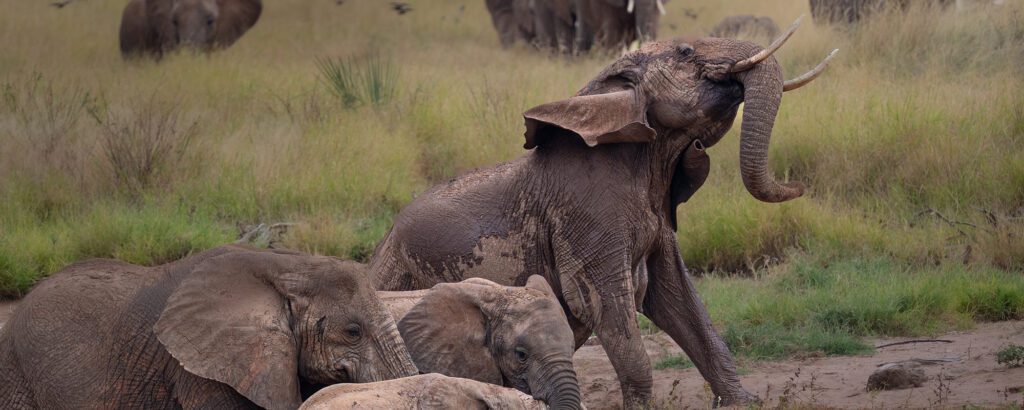
– elephant social spacing in open terrain
– dust-layer silhouettes and shape-driven compositions
– mountain context alternatives when summit visibility drops
For photographers, this is less about headline spectacle and more about full-trip consistency. If midday files carry atmosphere and context, your final edit becomes richer than a mountain-only set.
Samburu (Kenya)
Samburu midday can be hot and visually severe, but it remains valuable for dry-country textures and bird activity around water points and acacia belts.
Functional midday goals in Samburu:
– species interactions at shade and water edges
– color and form contrast in arid habitats
– avian behavior in thermals and open sky columns
Serengeti and Ndutu (Tanzania)
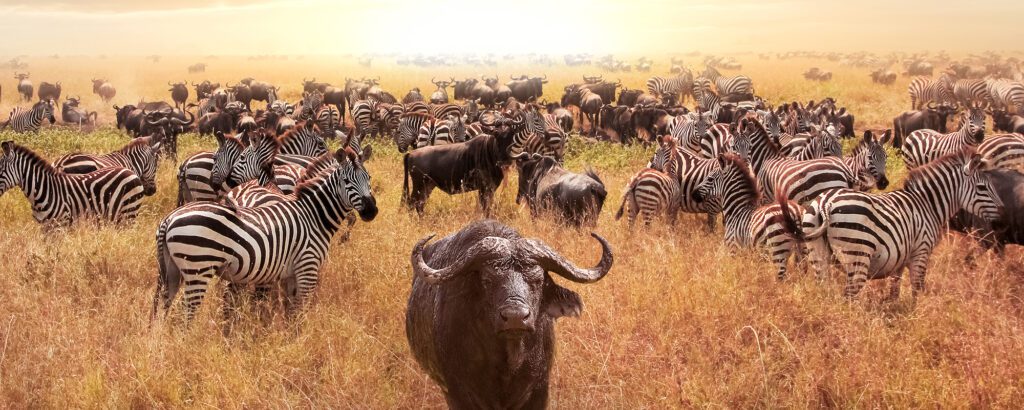
In Serengeti sectors and Ndutu plains, midday can produce excellent scale frames and migration context where dawn and dusk sometimes feel too compressed to capture full spatial narrative.
Functional midday goals in Serengeti and Ndutu:
– herd architecture and directional flow
– weather front formation over open plains
– predation aftermath and scavenger assembly patterns
Midday may not deliver your most elegant close portraits, but it often delivers the editorial glue between your strongest action windows.
Midday for bird photographers and birders
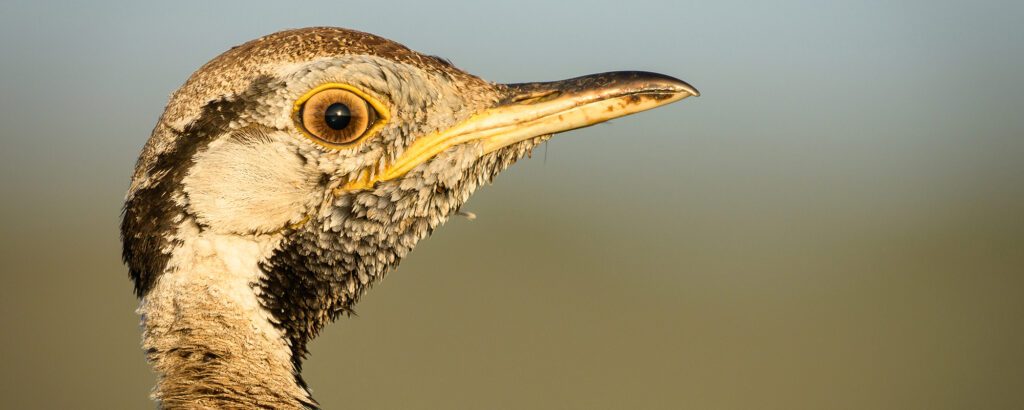
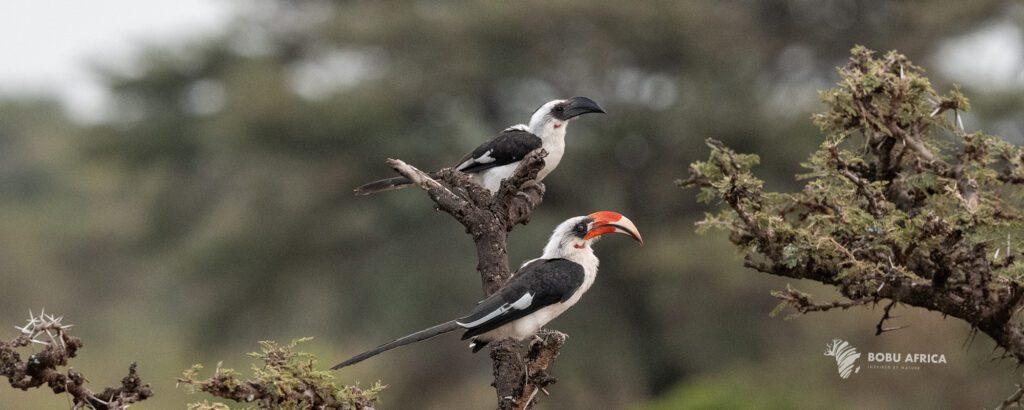
Birders and bird photographers often gain more from midday than mammal-first guests expect. Thermals support soaring behavior. Open perch activity can improve in some habitats. Water-edge species remain productive when mammal movement slows.
A practical mixed objective model:
– early hours weighted toward mammals and low-angle light
– midday weighted toward birds, habitat transitions, and behavior notes
– late day returns to mammals and cross-habitat storytelling
This approach works especially well in mixed groups where not everyone is waiting for one cat encounter.
Technical strategy for hard midday light
Midday success is not accidental. It requires switching visual goals and technical settings.
Change composition style
– move from face-close portrait obsession to shape and relationship frames
– include sky and ground for scale when contrast allows
– use negative space to manage visual clutter in bright conditions
Exposure discipline
– protect highlights aggressively on pale fur, sky, and dust plumes
– use histogram checks, not only rear-screen impression
– accept that some midday scenes are better in monochrome conversion
Focus discipline
– reduce extreme focal distance in heavy shimmer conditions
– prioritize nearer subjects with cleaner air path
– avoid chasing soft long-distance detail that cannot resolve
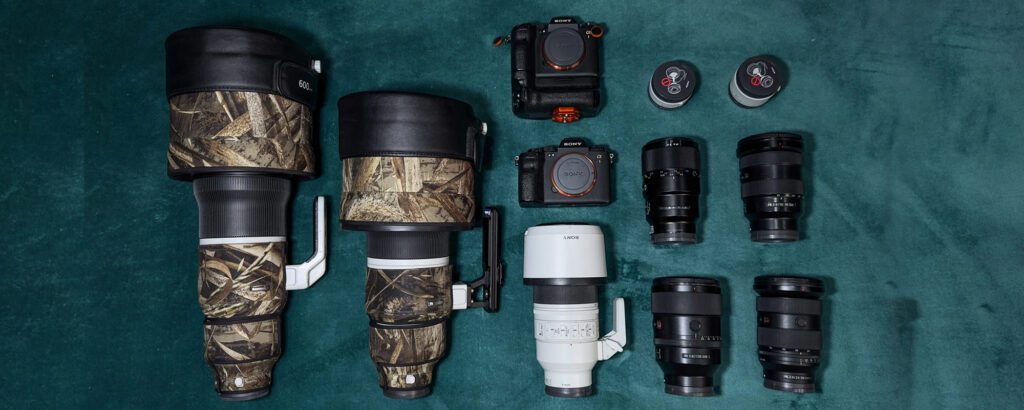
Photo: Sonny | Alpha Universe
Lens choice logic
– long lenses for selective behavioral moments only when air supports detail
– mid zoom for flexibility in moving, high-contrast scenes
– wider options for habitat narrative and weather structure
The operational value of midday reset
Not all midday value is shooting. Some of it is systems management.
Midday reset tasks that protect image quality:
– dual backup and file integrity check
– sensor and front-element dust maintenance
– battery rotation and charging workflow
– hydration and nutrition recovery
– micro-brief with guide for afternoon objective
This is where many photographers either protect or damage the rest of the trip. If you skip maintenance for one day, problems often compound by day three or four.
Group dynamics and midday expectations
In mixed groups, midday can become a conflict zone if objectives are unclear. One person wants rest. Another wants nonstop tracking. A third wants bird-focused detours.
A simple field rule solves much of this.
Declare the midday objective before leaving camp each day. Decide if it is selective shooting, bird pass, or full reset. Shared clarity reduces frustration and keeps everyone aligned.
At Bobu Africa, we usually brief midday as part of the daily creative plan, not dead time between major drives.
Common mistakes and corrections
Mistake one
Treating midday as always useless.
Correction:
Use midday selectively for context, birds, and environmental layers.
Mistake two
Forcing long-lens portrait style in heavy shimmer.
Correction:
Switch to mid-range and environmental storytelling until air stabilizes.
Mistake three
Skipping backup and maintenance to stay in the field nonstop.
Correction:
Use a structured midday reset so sunset session is technically secure.
Mistake four
No adaptation between ecosystems.
Correction:
Set midday goals by place function. Mara is not Amboseli, and Samburu is not Ndutu.
Mistake five
Ignoring fatigue signs until late trip decline.
Correction:
Treat midday recovery as creative insurance, not lost ambition.
Practical thresholds to improve full-trip output
Use these thresholds when designing or evaluating a photo safari:
– minimum three nights in one primary ecosystem for sequence continuity
– no more than two heavy transfer days in a seven to nine safari-day plan
– one structured midday reset per full field day
– at least one midday environmental objective in each major ecosystem
One transfer day often costs two prime wildlife windows. If transfers rise and midday resets disappear, image quality usually declines even when sightings remain strong.
How midday improves final editing quality
Midday images are often the missing connective tissue in editing. Without them, portfolios become repetitive and narrow.
What midday frames add:
– place identity and ecological context
– transitions between action peaks
– weather and atmosphere progression
– evidence of movement pathways and habitat pressure
A portfolio with only golden-hour highlights can look impressive but shallow. A portfolio with structured midday content often feels complete and publishable.
A sample eight-day photo route with midday logic
This is a structural example, not a fixed template.
– Day 1 arrival and orientation
– Days 2 to 5 Maasai Mara (Kenya) with morning cat focus, selective midday plains and raptor work, afternoon follow-up sessions
– Days 6 to 7 Amboseli (Kenya) with morning elephant movement, midday atmospheric context and bird intervals, evening shape-driven light
– Day 8 departure buffer
Why this works:
– four nights in one anchor area supports continuity
– midday objectives are ecosystem-specific
– transfer load is limited
– both hero moments and narrative structure are supported
Final field perspective
The middle of the day matters on a photography safari because it determines whether your trip produces isolated highlights or coherent visual storytelling. Dawn and dusk remain irreplaceable, but they are not enough on their own if the rest of the day is ignored or misused.
In real field conditions across East Africa, midday is where skilled photographers adapt style, preserve systems, gather context, and protect energy. That is why experienced teams stop calling it dead time and start treating it as strategic time.
If you want stronger safari photography, do not simply shoot more. Shoot the day more intelligently. Use the middle hours with purpose, and your sunrise and sunset frames will become part of a complete, higher-value body of work.
FAQ
Q: Should I keep shooting at midday on a photography safari or always return to camp
A: A mixed approach works best. Use selective midday shooting for environmental context, bird activity, and behavior transitions, then include a structured reset for backup, cleaning, and recovery before afternoon sessions.
Q: How many nights do I need to make midday strategy worthwhile
A: Three nights in one primary ecosystem is a practical baseline. It usually gives six prime sessions plus enough midday windows to build narrative context and maintain technical consistency.
Plan Your Journey
If you are planning a photography safari in East Africa, Bobu Africa can help you design a full-day creative workflow that protects prime light while using midday strategically for context, consistency, and stronger final storytelling.