

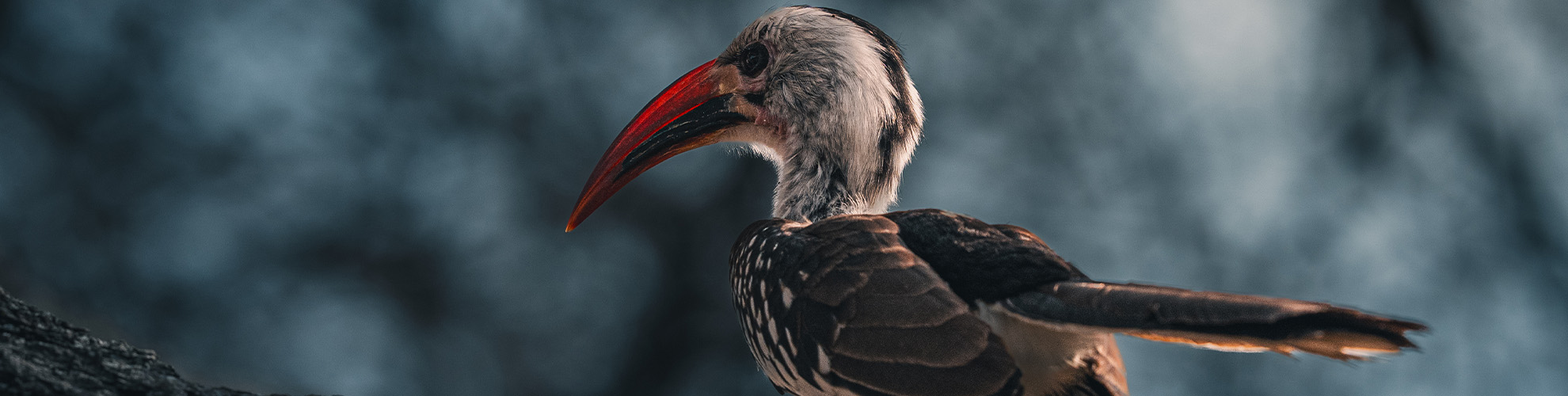
There is a particular kind of silence that falls over a vehicle when a rare bird appears well. The guide has picked up the movement first. One guest is already lifting binoculars. Another is easing a long lens onto the window frame. The bird is visible, the light is clean, and for a few seconds everything feels possible. This is exactly when birding ethics stop being abstract and become real.
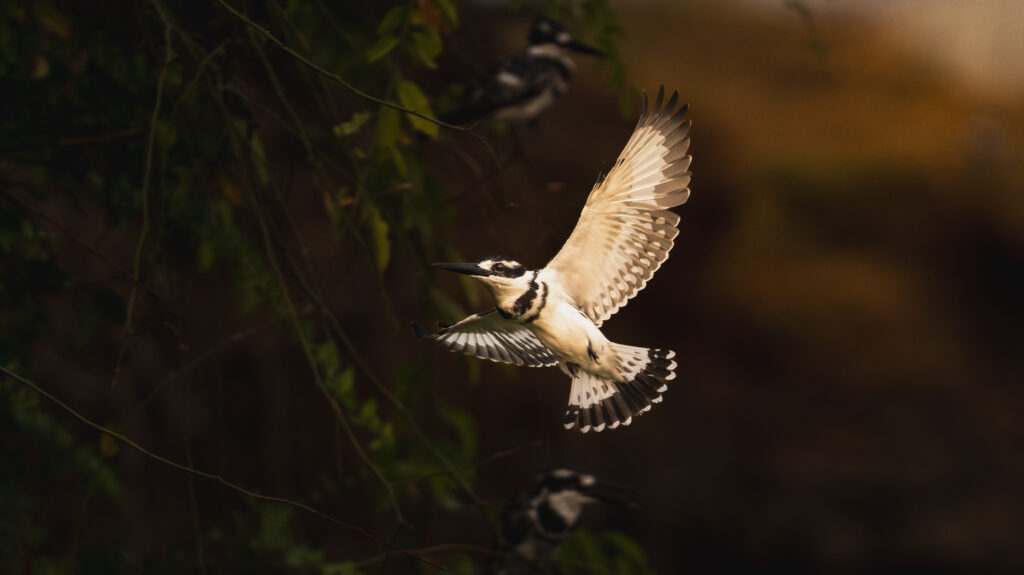
Most ethical mistakes in bird photography do not begin with bad intentions. They begin with excitement, rarity, and the quiet belief that one more step, one more meter, one more round of playback, one more minute at the nest will probably be fine. In the field, that word probably causes more trouble than people admit.
Understanding birding ethics and responsible wildlife photography is not about sounding virtuous. It is about field judgment. It is about knowing when your presence is altering the bird, when a subject is tolerating you rather than ignoring you, and when the ethical decision is to back off before the sighting turns from memorable to intrusive.
Birding ethics are fieldcraft, not decoration
Birding ethics are often framed as a list of polite rules. Keep your distance. Stay quiet. Do not disturb wildlife. Those are correct, but they are too thin to be useful on their own.
In field terms, birding ethics are less about good manners and more about minimizing the cost of your presence. A responsible birder or photographer aims to leave the bird feeding, resting, calling, courting, or moving as it would have done without human pressure.
That is the practical test. If the bird has changed posture, moved repeatedly, alarm-called, frozen unnaturally, or abandoned a perch because of you, the situation has already shifted.
At Bobu Africa, we usually treat unchanged natural behavior as the practical baseline for an ethical sighting. Once the bird is reacting to the observer rather than simply existing in its own rhythm, the encounter needs to be reassessed.
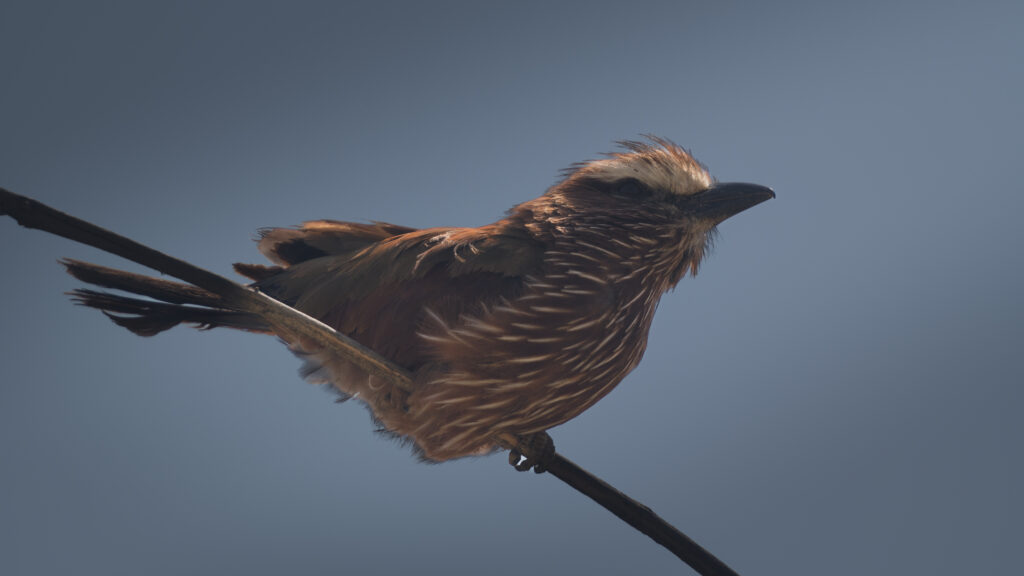
The real mistake is often subtle pressure, not obvious harassment
Most travelers imagine unethical wildlife photography as something dramatic: chasing an animal, crowding a nest, blasting calls nonstop, or stepping out recklessly. Those things do happen, but many poor decisions are quieter than that.
The more common problem is cumulative pressure. A vehicle holds too long at a perch. A photographer edges closer in stages because the bird did not flush immediately. Another car arrives and assumes the existing distance must already be acceptable. Playback is used once, then once more, then one final time because the bird almost showed. None of these moments feels catastrophic on its own. Together, they alter the encounter.
In our 15 years of field operation across East Africa, we see this mistake most often: people judge disturbance by whether the bird flies away, when they should be judging it by whether the bird has stopped behaving naturally.
That distinction matters. A bird does not need to flush for pressure to be real. It may crouch lower, hold food instead of feeding young, stay half-hidden, shift to a less suitable perch, or delay returning to a nest. For photographers, that means the ethical line is often crossed before the obvious dramatic reaction appears.
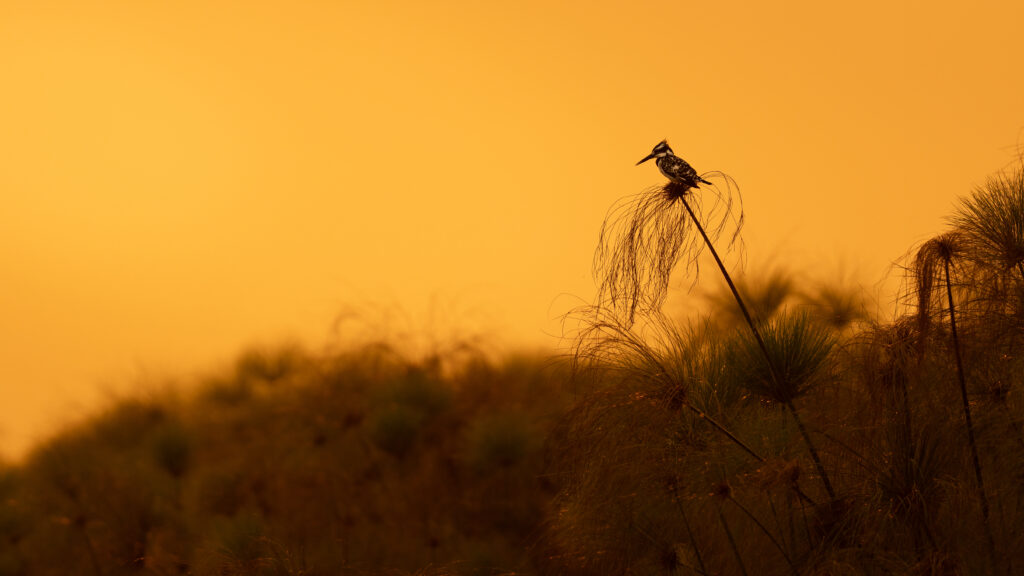
Nests are where ethical discipline matters most
If there is one area where restraint should become non-negotiable, it is around nests. Nest photography is often the point where admiration turns into interference without people fully noticing.
Birds on nests are vulnerable because they are working inside a fixed obligation. They cannot simply relocate because a photographer wants a cleaner angle. Adults may be balancing incubation temperature, guarding small chicks from sun exposure, or timing feeding visits carefully. Disturb them repeatedly and the cost is real, even if it is not immediately visible to the observer.
A nest is not just another sighting. It is a reproductive event with very little margin for human carelessness.
In real safari planning, nesting birds usually mean higher caution, greater distance, shorter viewing windows, and in some cases no photography at all. That is not a moral performance. It is basic responsibility.
If a bird is returning nervously, circling before landing, carrying food but hesitating, alarm-calling persistently, or watching you rather than attending to the nest, you are already too involved in the scene. Back away. Reset the distance. If the line is still not clear, leave.
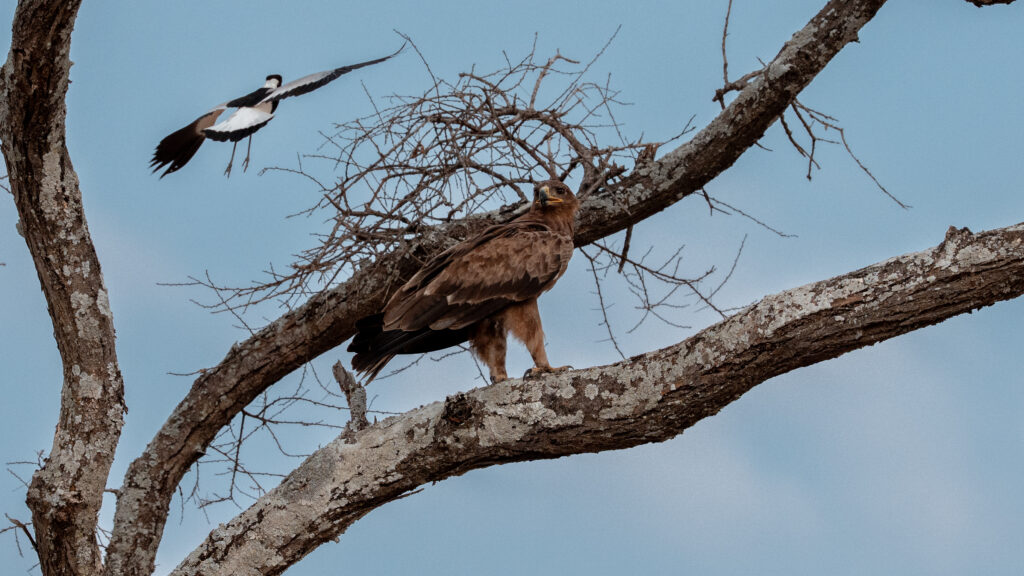
Playback is not a harmless shortcut
Playback can be useful in trained hands, but it is one of the most abused tools in birding.
Used carelessly, playback turns a bird from a wild subject into a pulled response. It can bring territorial birds into stress, interrupt feeding, provoke unnecessary exposure, and create false confidence in photographers who feel that if the bird responded, the method must have been acceptable.
That logic is poor. A bird responding does not mean the method was harmless. It only means the stimulus worked.
In East Africa, playback demands extra care in dense habitat, around breeding territories, with shy species, and anywhere repeated use by multiple guides may already be creating cumulative pressure. Forest edge birding, riparian thickets, and lodge grounds with habituated species can be especially vulnerable because birds there are often easy to work repeatedly.
At Bobu Africa, we treat playback as a restricted field tool, not a default tactic. If used at all, it should be brief, purposeful, and abandoned immediately if the bird shows stress, over-commitment, or prolonged agitation.
For many travelers, the better rule is simpler: if you do not need playback, do not use it. The strongest birding often comes from patience, habitat reading, and good timing rather than forcing a response.
Responsible photography begins before the camera is raised
Many people think ethics begins at the moment of shooting. In reality, it begins with positioning, route choice, and the discipline to let the sighting develop naturally.
A photographer who arrives well, stops at a respectful distance, stays predictable, and waits quietly often gets better images than someone who pushes too hard too early. This is especially true with ground birds, waterbirds, roosting owls, bee-eaters at nesting banks, and species using exposed perches at dawn.
For photographers, ethical fieldcraft is less about sacrifice and more about sequence. A rushed approach often costs both the welfare of the subject and the quality of the image. A patient approach protects both.
This is one reason experienced guides matter so much. A good birding guide reads not only the species but the mood of the subject. They can see when the vehicle line is acceptable, when the light will improve if you wait, and when moving another five meters will collapse the encounter. The guest may be thinking about sharpness and framing. The guide should also be thinking about pressure, escape routes, perch security, and whether the bird is still acting on its own terms.
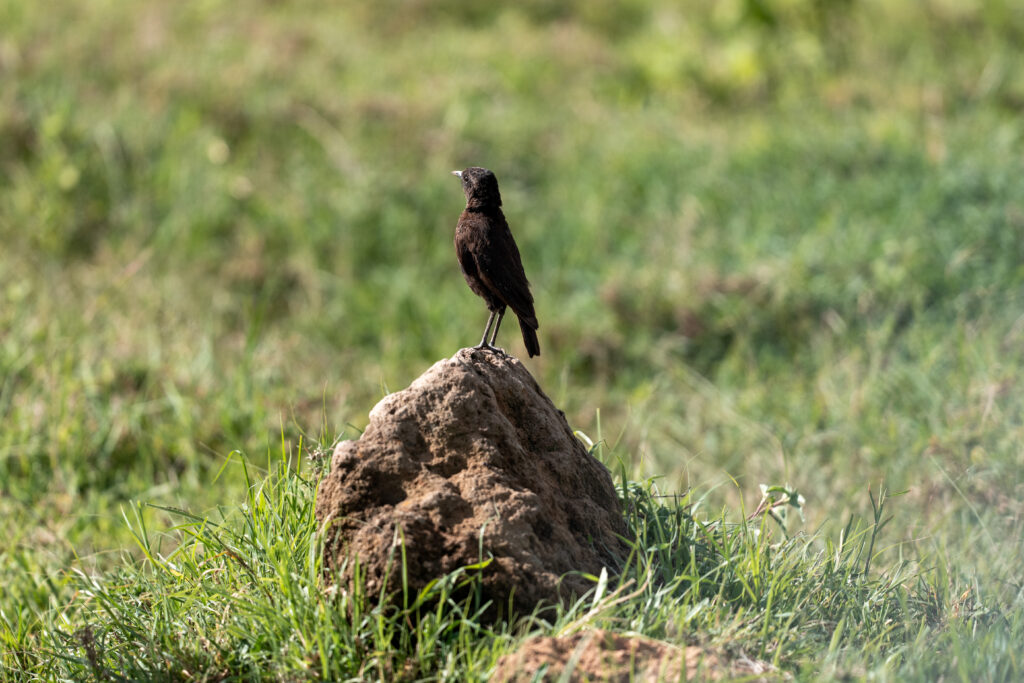
Distance is not fixed. It is species-specific and situation-specific
There is no universal ethical distance for bird photography. A hornbill in open woodland, a lapwing on exposed ground, a kingfisher near water, and a small warbler in thicket will all tolerate pressure differently. Breeding status, wind, temperature, cover, vehicle number, and prior disturbance all matter.
That is why simple rule-based advice can fail in practice. Two photographers can be standing at the same distance and one encounter may still be ethical while the other is not.
The more useful standard is behavior-based distance. Stay far enough away that the bird continues its natural activity. If it pauses repeatedly to assess you, sidesteps to keep cover between itself and you, raises alarm, or becomes unusually fixed in posture, you are already close enough to matter.
For mobile safari travelers, vehicles usually offer a lower-impact viewing platform than walking approaches because they are more predictable and less threatening to many birds. Even then, vehicle conduct matters. Do not crowd with multiple cars. Do not reposition repeatedly around a nervous subject. Do not cut off escape lines simply because the angle looks better.
Sensitive habitats deserve slower, cleaner decisions
Some habitats absorb human presence better than others. Open plains with roadside species can make bird photography feel forgiving. Wetlands, river edges, reed margins, breeding colonies, forest clearings, and nesting banks are much less forgiving.
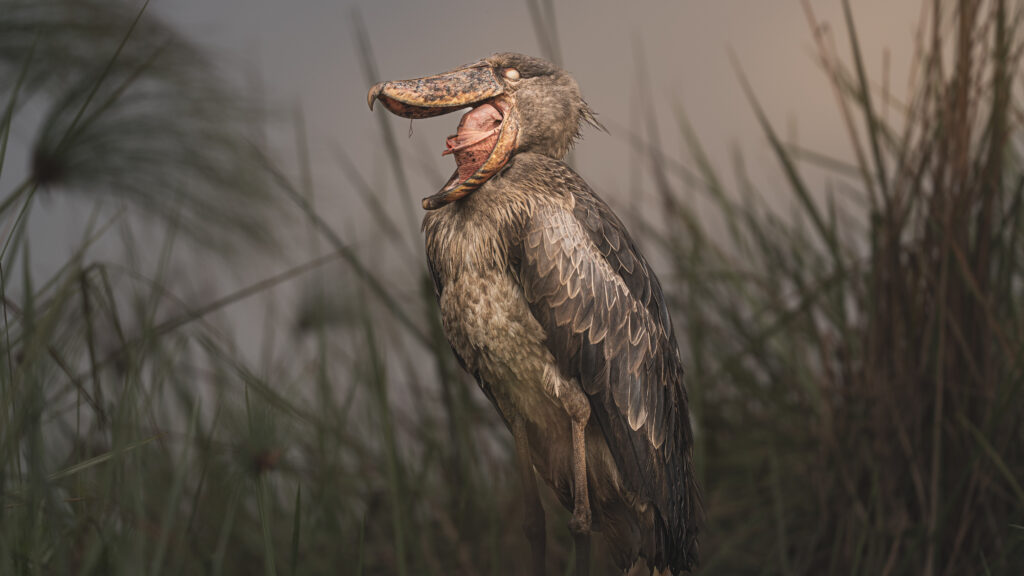
In places such as Lake Naivasha (Kenya), the Rift Valley wetlands, or papyrus-lined water systems in East Africa, the temptation is to treat dense bird activity as permission to work aggressively. That is a mistake. High bird density does not reduce sensitivity. It often increases the chance that one careless move will affect multiple individuals, feeding lines, or nesting areas.
Likewise, in dry-country systems such as Samburu (Kenya), a bird at a water source or shaded perch may have fewer good alternatives in the heat of the day. Pressure there has a different weight from pressure in cooler, more forgiving conditions.
A strong safari is not defined by one dramatic sighting, but by repeated high-quality field sessions. That principle matters for ethics too. Protecting the integrity of the habitat matters more than squeezing every possible frame out of one moment.
Group behavior matters as much as individual behavior
Even travelers with good intentions can create bad field conditions when group discipline breaks down.
Talking over each other, shifting seats abruptly, standing too quickly, tapping vehicle roofs, crowding one side, competing for angle priority, or insisting on one extra minute after the guide has already judged the sighting to be thinning can all turn a stable encounter into a pressured one. On foot, the risks become even more obvious.
Responsible birding is easier when expectations are set early. If photography is a major goal, it helps to clarify before the safari that some sightings will be approached slowly, some will be left intentionally, and some will not be improved by force. That creates a healthier field rhythm for everyone.
At Bobu Africa, we usually build birding and photography journeys around this trade-off logic: fewer rushed approaches often mean fewer total interruptions, cleaner subject behavior, and a higher percentage of sightings that remain both ethical and photographically satisfying.
Practical advice for travelers who want to do this well
If you care about birds and photography, a few habits make a real difference.
Choose the right guide, not only the right destination
A specialist birding guide is often the single biggest ethical advantage on safari. They can distinguish between an available sighting and a workable one, and between a workable one and one that should be left alone.
Ask about playback policy in advance
If a guide or operator treats playback as routine, that is worth examining carefully. The best guides do not need to manufacture every encounter.
Treat breeding season with extra caution
Whenever birds are nesting, displaying, carrying food, or tied closely to territory, reduce pressure. In some cases the right choice is a distant observation rather than a photograph.
Do not judge success only by proximity
Closer is not automatically better. For photographers, full-trip consistency matters more than one overworked encounter. A well-behaved bird at a moderate distance is often more rewarding than a stressed bird pushed into a near frame.
Accept that some birds are better left as sightings
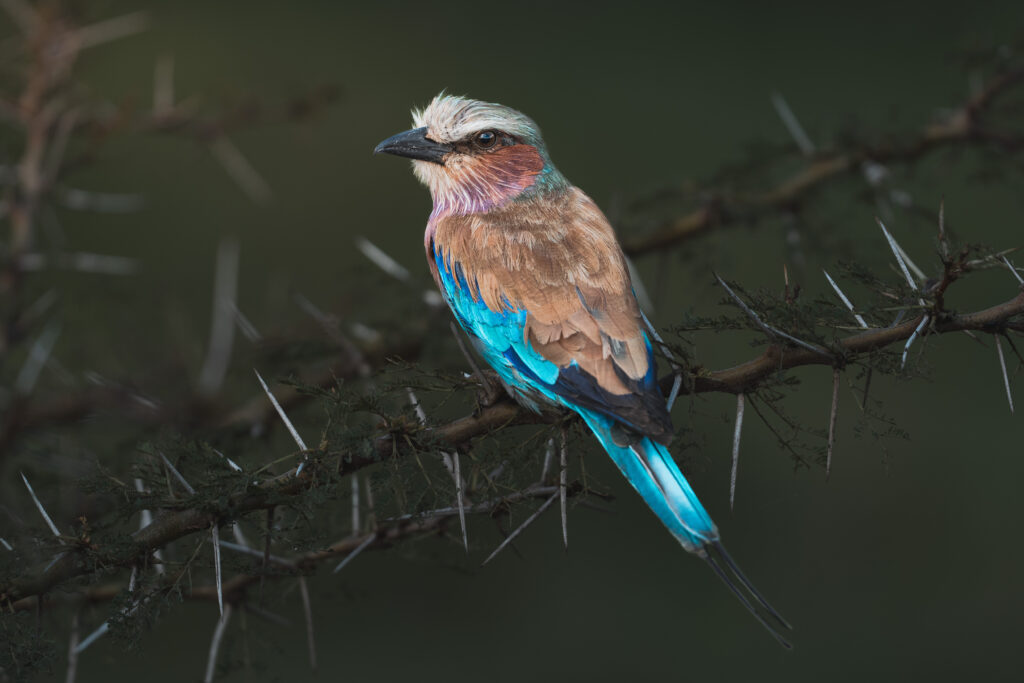
Not every observation needs to become an image. Not every image needs to become a close image. Ethical maturity in the field often looks like restraint.
Protect locations when necessary
Rare breeding sites, roosts, or vulnerable micro-locations should not be broadcast casually online with precise location details if doing so could increase pressure. This is especially important for owls, nest sites, and locally known specialty birds.
The deeper point of ethical birding
Birding ethics are sometimes treated as a limitation on enjoyment, as if responsibility is what stands between the traveler and the perfect moment. In practice, the reverse is usually true.
Ethical fieldcraft creates calmer sightings, better trust in the guiding, stronger long-term access to wildlife, and a more serious relationship with the landscape. It replaces the urge to take from the moment with the discipline to read the moment properly.
That is what responsible wildlife photography should look like. Not timid, and not performative. Just skilled, aware, and proportionate to the lives in front of you.
The most memorable bird encounters in East Africa are rarely the ones you forced. They are the ones you entered carefully enough to be allowed into at all.
FAQ
Is playback always unethical in birding?
No. Playback is not always unethical, but it is easy to misuse. Its acceptability depends on species sensitivity, breeding status, habitat, frequency, and whether the response is creating visible stress or disruption.
Is it ever acceptable to photograph birds at the nest?
Sometimes, but only with extreme caution and often not at all. If the adults are hesitating, alarm-calling, delaying feeding, or changing their routine because of your presence, the situation is no longer acceptable.
Are vehicles always better than approaching on foot?
Often yes, especially on safari, because birds tend to read vehicles as more predictable than walking humans. But vehicle pressure can still become intrusive if distance, positioning, and time at the sighting are handled badly.
How can I tell if I am too close to a bird?
Watch the bird rather than your lens. If it stops feeding, freezes unnaturally, keeps watching you, shifts repeatedly, alarm-calls, or leaves cover because of your position, you are too close or too persistent.
FAQ
Q: Is playback always unethical in birding?
A: No. Playback is not always unethical, but it is easy to misuse. Its acceptability depends on species sensitivity, breeding status, habitat, frequency, and whether the response is creating visible stress or disruption.
Q: Is it ever acceptable to photograph birds at the nest?
A: Sometimes, but only with extreme caution and often not at all. If the adults are hesitating, alarm-calling, delaying feeding, or changing their routine because of your presence, the situation is no longer acceptable.
Plan Your Journey
If birding and wildlife photography are central to your East Africa journey, Bobu Africa can shape the safari around the right guides, the right pace, and the right field decisions. The aim is not simply to collect sightings, but to build a responsible, photographically strong journey that respects the birds as much as the images they inspire.