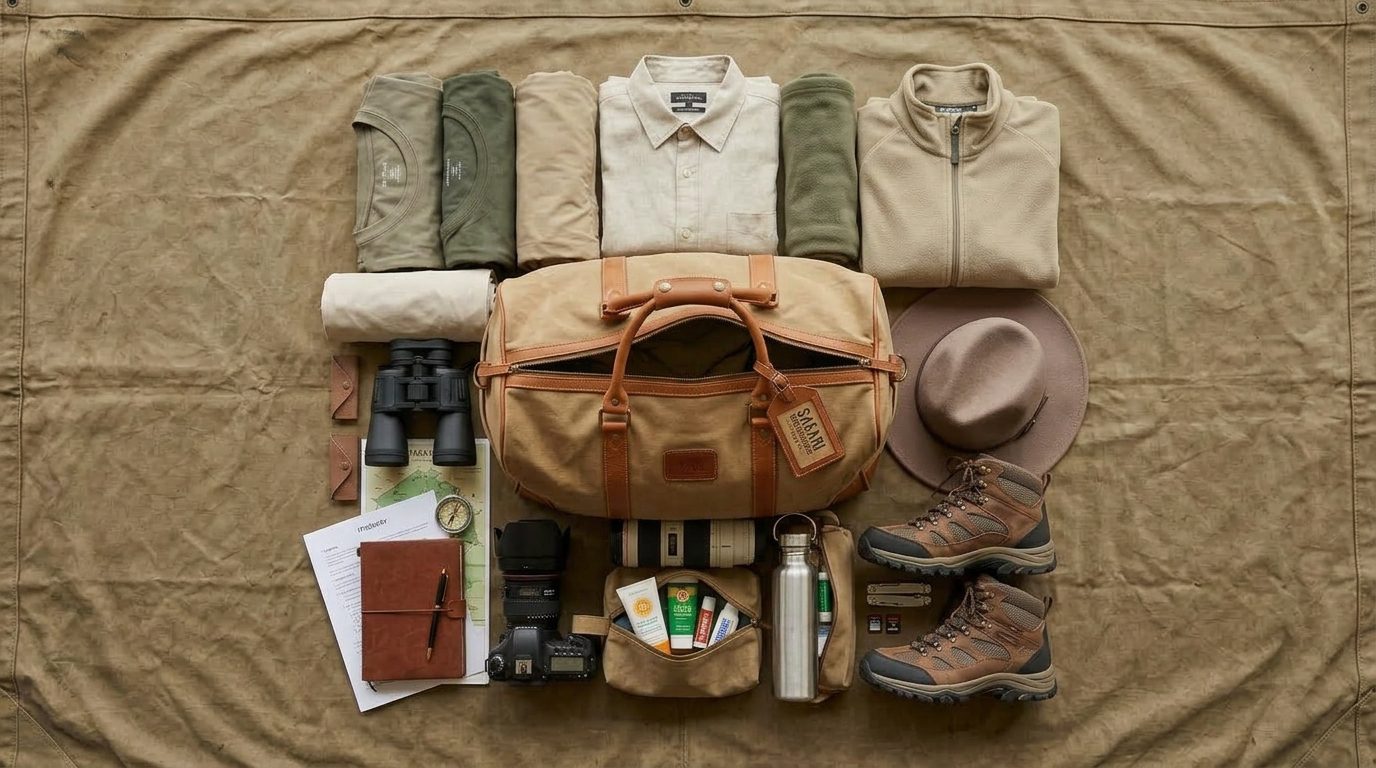
What to Pack for a Kenya Safari: Complete Packing Guide
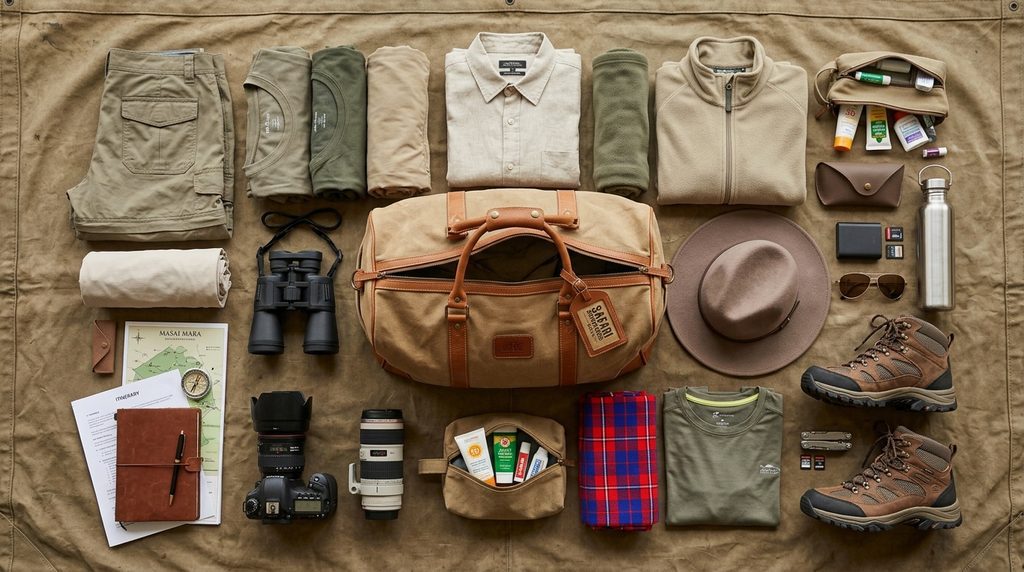
There’s a particular kind of excitement that comes with packing for your first (or fifth) African safari and a particular kind of anxiety too. Get it right, and you’ll spend your days comfortable, camera-ready, and free to focus on the wildlife in front of you. Get it wrong, and you’ll spend your trip wishing you’d brought a warmer layer or better shoes. Here’s everything you need to pack for a safari in Kenya, from clothing to camera gear.
Dress for the bush, not the runway
Safari style has a purpose behind it. Choose loose, breathable fabrics in neutral, earthy tones khaki, olive, sand, and stone all blend naturally into the landscape and stay cooler under the sun than darker or brighter colors. A note on camouflage prints specifically: they’re associated with military and security forces across East Africa, so it’s best to leave them at home.
Mornings on game drives can be surprisingly cold before the sun climbs, so layering is essential. A lightweight fleece or windbreaker over a long-sleeve shirt handles the chill at dawn, then peels off easily once temperatures rise. Aim to pack:
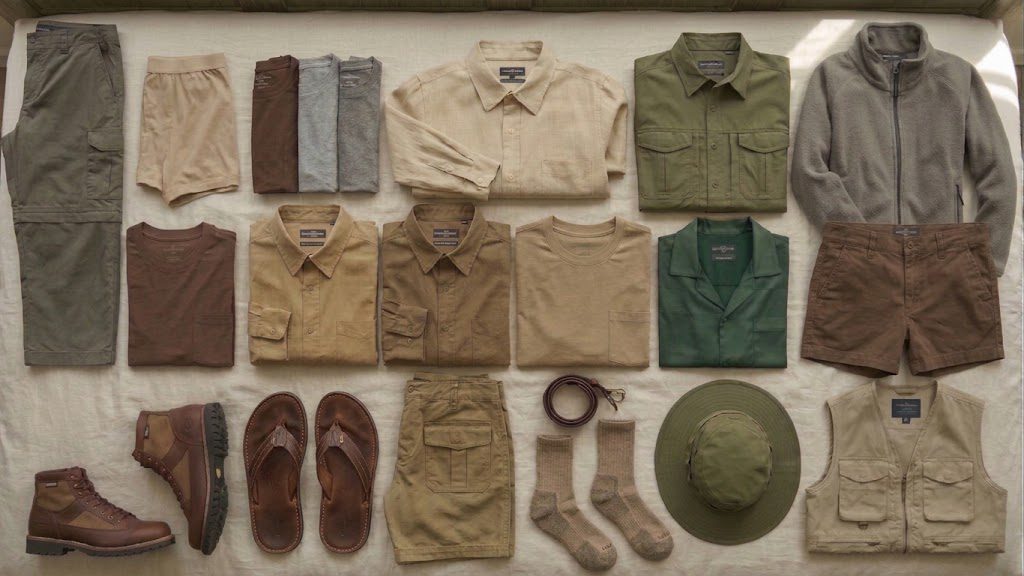
- A few short and long-sleeve shirts in breathable cotton or technical fabric
- Comfortable trousers or convertible pants, plus a pair of shorts
- One warm layer for early mornings and open-vehicle drives
- A multi-pocket safari vest if you’re bringing camera gear it keeps lenses and batteries within reach
- Swimwear, if your camp or lodge has a pool
- One smarter outfit for dinner at upscale lodges or an evening in Nairobi
Most camps offer next-day laundry service, so there’s rarely a need to overpack.
Footwear that can handle dust, dew, and long days
Unless your itinerary includes a walking safari, you don’t need heavy hiking boots. A pair of comfortable, closed-toe shoes with good grip sneakers or classic safari boots will carry you through most game drives. If bush walks are on the schedule, sturdier boots are worth the extra weight in your bag. Pack a pair of sandals or flip-flops too, for evenings back at camp.
Sun protection is non-negotiable
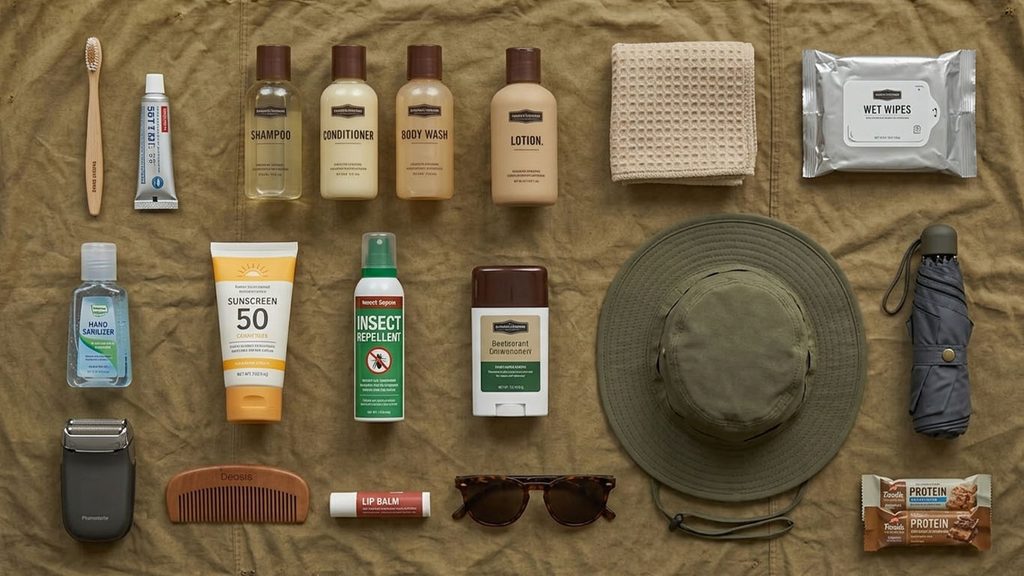
The equatorial sun is intense, even on overcast days. A wide-brimmed hat, quality sunglasses, and a high-SPF sunscreen are essentials, not extras. If you wear contacts, bring a backup pair of prescription glasses dust on the road can make lenses uncomfortable.
Optics and photography gear
This is where a safari either becomes a trip of a lifetime or a trip of near-misses. A few guidelines:
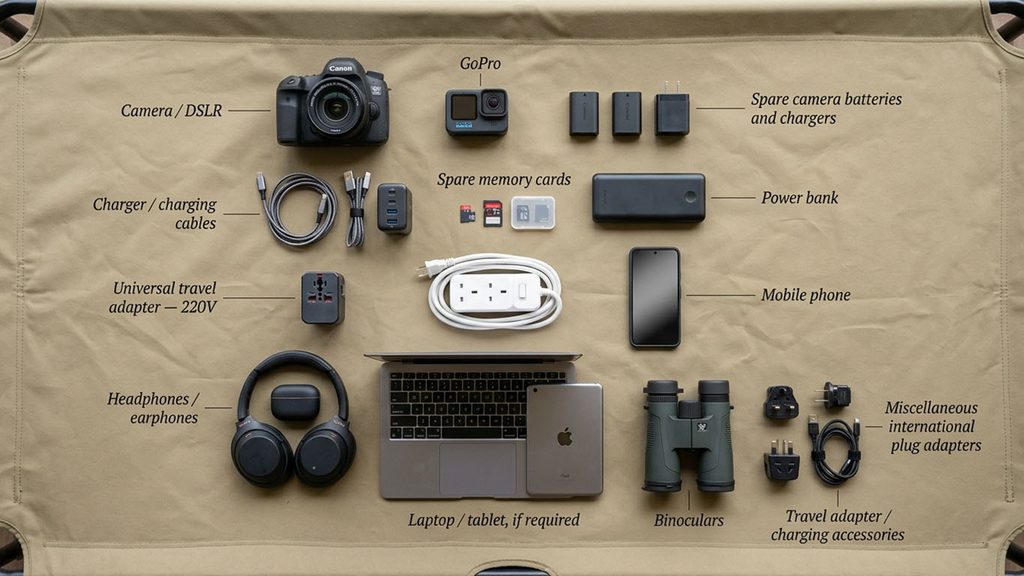
- Binoculars — even if your safari vehicle has a shared pair, your own set means you’re never waiting your turn to watch a leopard in a tree.
- Camera and lenses — pack these in your carry-on, never checked luggage. A telephoto lens (200mm or longer) makes a real difference for wildlife shots taken from a respectful distance.
- Spare batteries and memory cards — charging opportunities can be limited at remote camps.
- A universal travel adapter — Kenya uses type G plugs, running on 240V/50Hz.
- A lightweight laptop or portable hard drive, if you’re shooting seriously and want to back up images each evening.
Easy to forget, hard to do without
A few items travelers consistently leave off their list:
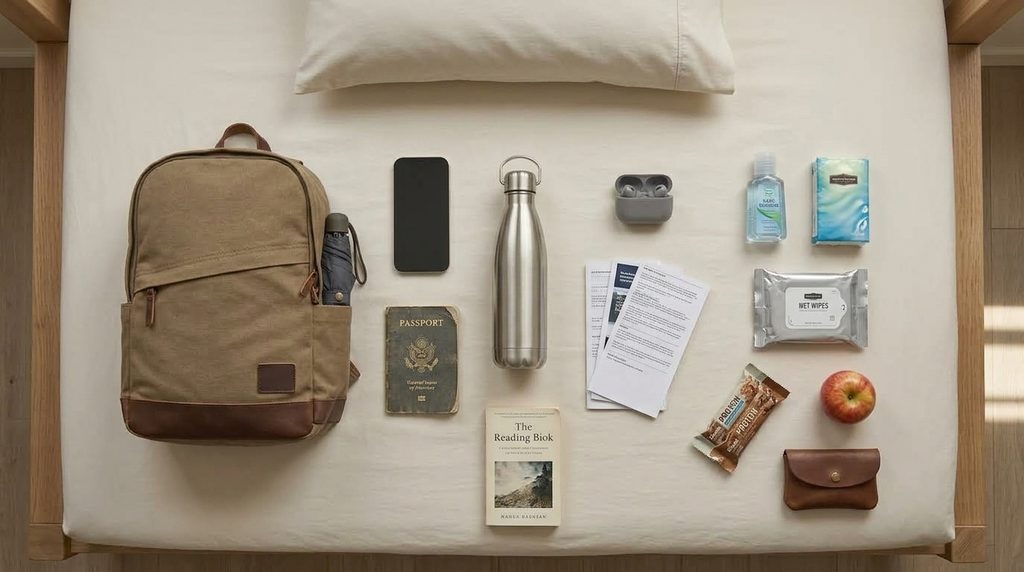
- Insect repellent — a DEET-based option is most effective, though natural alternatives exist for those who prefer them
- A reusable water bottle — staying hydrated matters more than it seems at altitude and under sun
- A dry bag or packing cube for camera gear, to keep dust out during dusty road transfers
- A small first-aid kit with any personal medication, plus anti-malarials if prescribed
- A journal and pen — safaris have a way of producing stories worth writing down
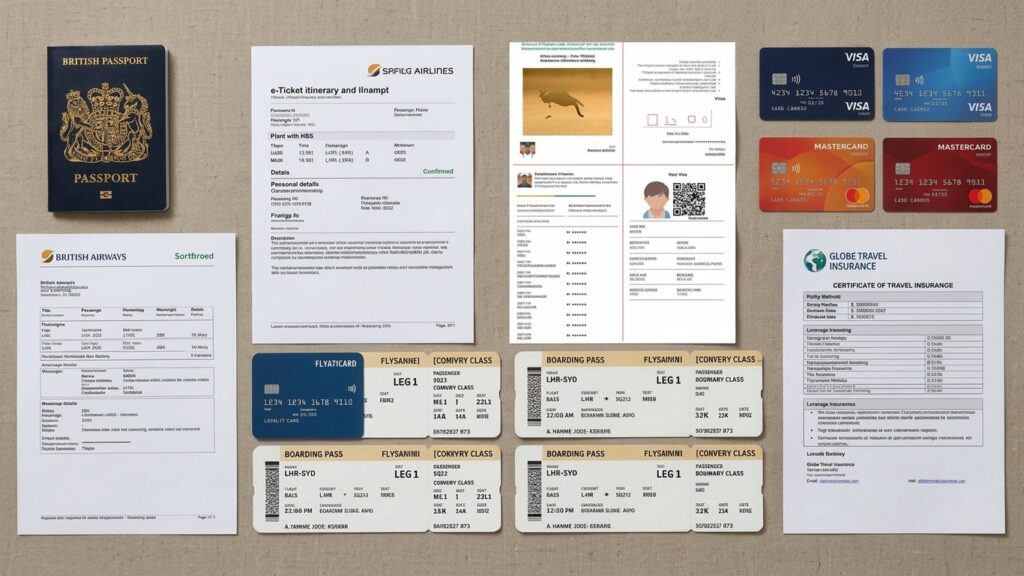
- Your travel documents — passport with six months’ validity and blank pages, any required travel authorization, vaccination records, and travel insurance papers
One packing rule above all: pack light
Light aircraft connecting Nairobi to remote safari camps typically enforce a 15kg luggage limit, combined for carry-on and checked bags. Soft-sided duffel bags pack down better than hard suitcases for this reason, and layering lets you cover a wide temperature range without hauling a full wardrobe. Then continue your journey to the Maasai Mara, Amboseli, or the Kenyan coast.
Pack the khaki. Dust off the long lens. And leave every single logistical detail to us.At Bobu Africa, we don’t believe in rushed itineraries, strict schedules, or crowded tourist convoys. We design bespoke, private luxury safaris built entirely around you. Whether you are a photographer chasing the perfect golden-hour light, or a traveler seeking absolute solitude in the bush, our expert guides know exactly where to take you.
Your only job is to witness it. We handle the rest from hand-picking exclusive, world-class camps that match your comfort level, to ensuring your private vehicle is perfectly positioned for the shot or the sighting. We move at your pace.
Africa is calling. Start designing your private masterpiece today.