

The uncomfortable truth serious photographers learn in Amboseli
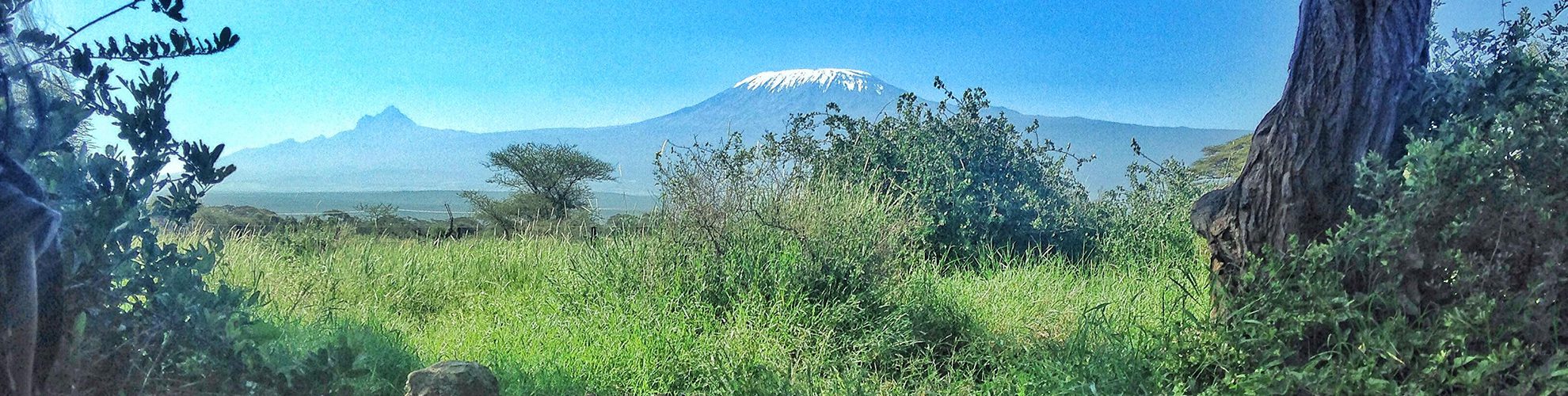
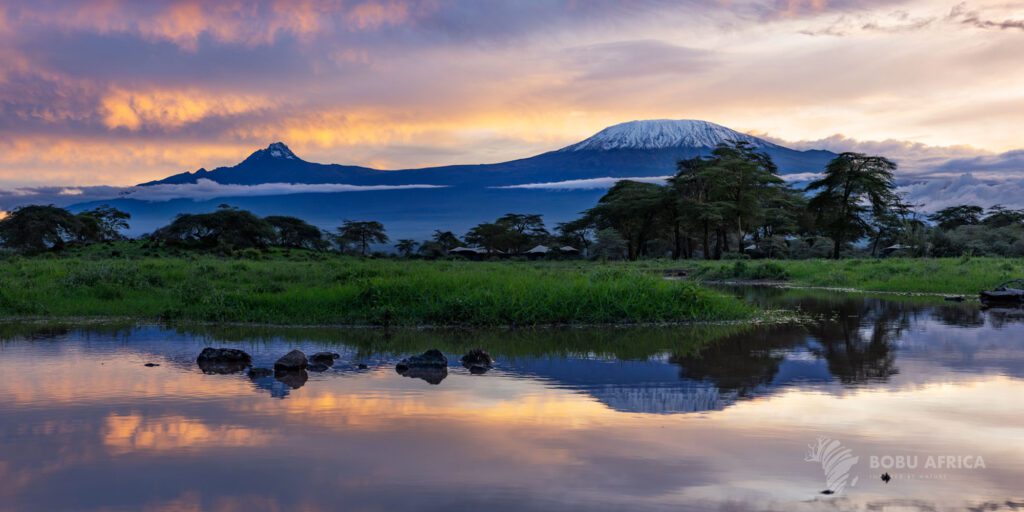
Most first discussions about Amboseli photography begin with one question about Mount Kilimanjaro. Will the summit be visible. Will clouds clear at sunrise. Which month gives the best mountain guarantee. Those are valid questions, but they are not the whole job if you care about professional image quality.
In our 15 years of field operation across East Africa, we see this mistake most often with photographers who arrive technically prepared but atmospherically unprepared. They track forecast apps, carry excellent glass, and still return with files that feel flatter than expected. The reason is usually not subject scarcity. It is air management.
In field terms, Amboseli is less about mountain certainty and more about atmospheric discipline. The mountain is iconic context, but air quality is the gatekeeper of clarity, micro-contrast, color separation, and edge definition. If the air is wrong, even strong wildlife moments can degrade before they reach the sensor.
Definitional planning rules for Amboseli photographers
At Bobu Africa, we usually treat three nights as the practical baseline for serious photographic consistency in Amboseli (Kenya). Three nights usually means six prime field sessions.
A second rule is equally important. One transfer day often costs two prime wildlife windows. In Amboseli, those windows are usually the only periods when air and light align for clean long-lens files.
These are not marketing lines. They are field arithmetic.
Why mountain obsession can weaken your portfolio
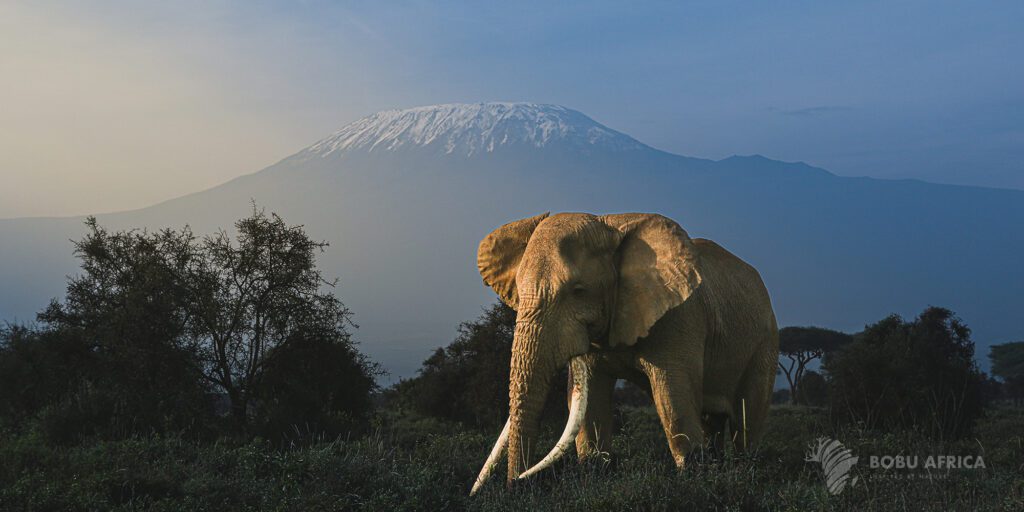
Kilimanjaro is visually powerful, but forcing every session around summit visibility creates narrow output. You wait for one formula and ignore other atmospheric opportunities that can produce stronger narrative work.
Trade-off logic is simple. If you optimize only for mountain certainty, you may gain one iconic frame but lose diversity and consistency across the rest of the trip. If you optimize for air quality and atmospheric reading, you can still secure mountain frames while also building richer body of work across elephants, marsh behavior, dust movement, and weather transitions.
For photographers, this is less about headline spectacle and more about full-trip consistency.
The four air variables that matter most:
1. Particulate density
Amboseli air can hold suspended dust at different concentrations depending on vehicle movement, herd movement, and wind behavior. Moderate dust can add depth in side light. Heavy particulate can collapse detail and introduce low-contrast haze.
Field action:
- Judge dust load before committing to long static waits
- Reposition upwind when particulate buildup starts flattening files
- Use shorter focal lengths if depth collapse becomes severe
2. Thermal shimmer
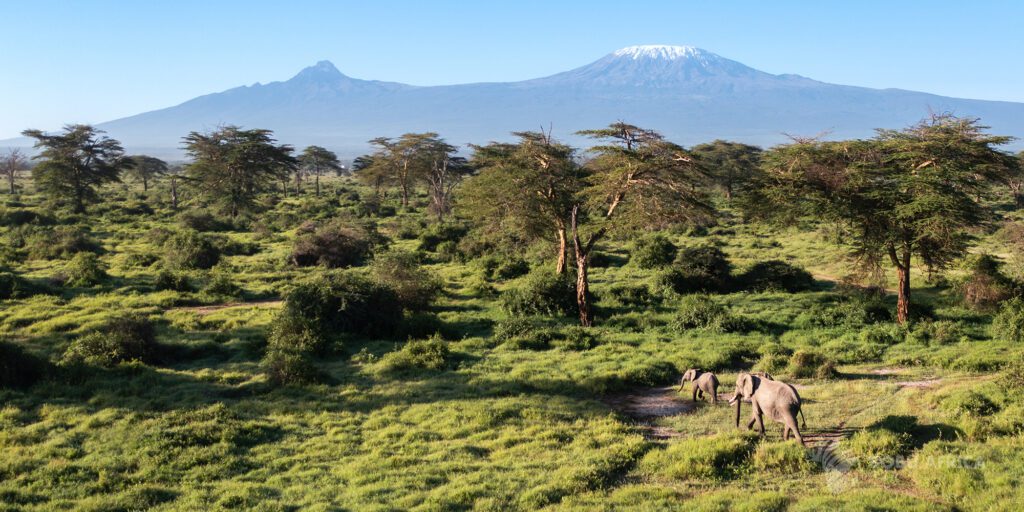
As ground heat rises, long-lens sharpness can degrade through convection. This is often misread as camera shake or lens weakness.
Field action:
- Prioritize long-lens critical work in cooler early windows
- Reduce extreme focal distance during high shimmer periods
- Switch to environmental compositions when micro-detail is compromised
3. Moisture and haze layers
Morning haze can produce beautiful mood, but heavy moisture bands can reduce edge clarity at distance. The same scene can shift from clean to milky in minutes.
Field action:
- Work nearer subjects during heavier moisture layers
- Watch horizon transitions for temporary clarity breaks
- Use backlight selectively when haze density supports atmosphere without full detail loss
4. Wind direction and speed
Wind controls dust transport, scent movement, and often herd orientation. It changes both ecology and image quality.
Field action:
- Read grass movement and vehicle wake quickly at each stop
- Choose approach lines that reduce dust contamination in front of subjects
- Anticipate movement paths when wind pushes herd direction
Air-first timing in a standard Amboseli day
Serious output in Amboseli depends on session architecture more than enthusiasm.
Dawn to early morning
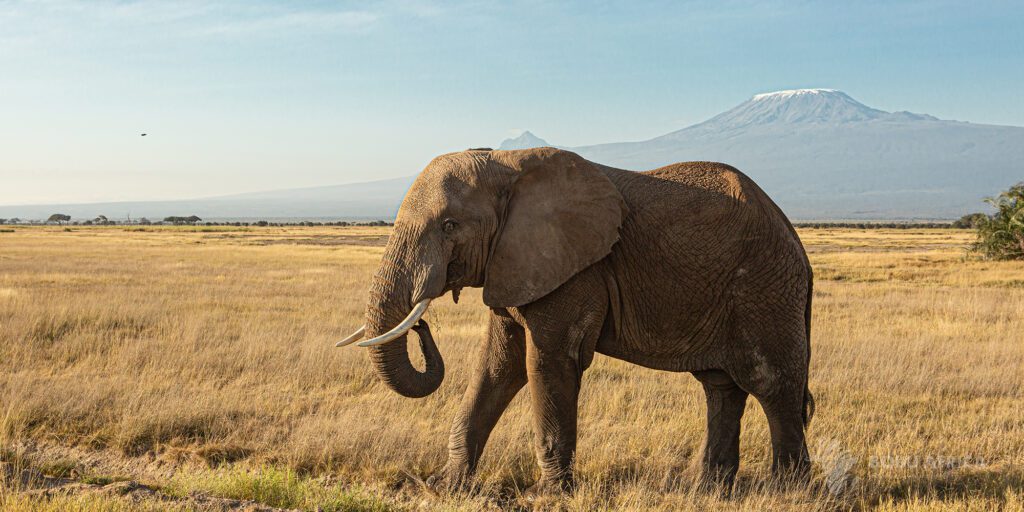
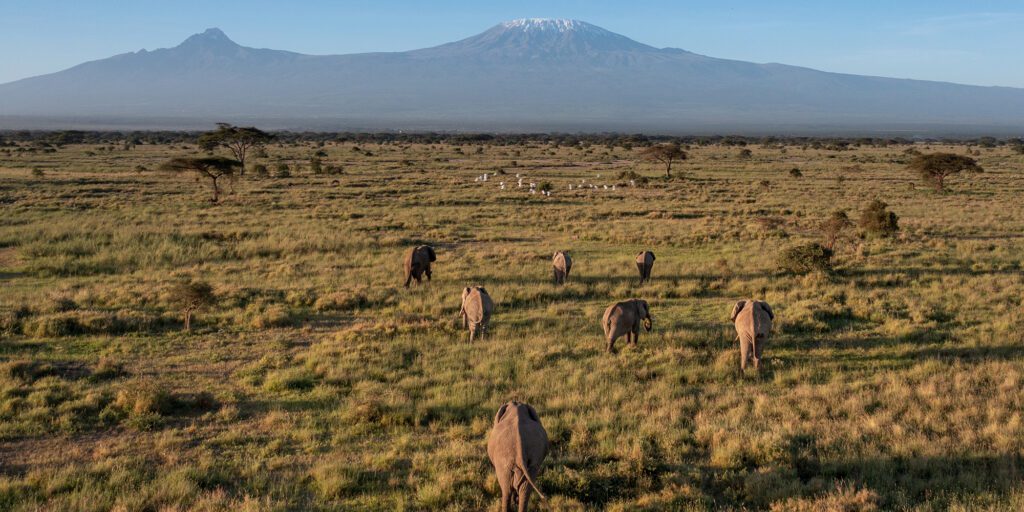
This is usually the highest value period for clean long-lens detail, mountain chance, and active movement. Air is often cooler and more stable. Elephant families may transition through open areas with clearer separation.
Priority tasks:
- Secure high-clarity behavior and portrait files early
- Take mountain opportunities when available, but do not force only one composition
- Capture scale frames before traffic and dust increase
Late morning to early afternoon
Thermal shimmer and harder light often reduce long-distance acuity. This is not dead time, but it demands style change.
Priority tasks:
- Shift to mid-range storytelling
- Use marsh edges, interactions, and graphic movement
- Embrace contrast-aware compositions instead of chasing distant detail
Late afternoon to sunset
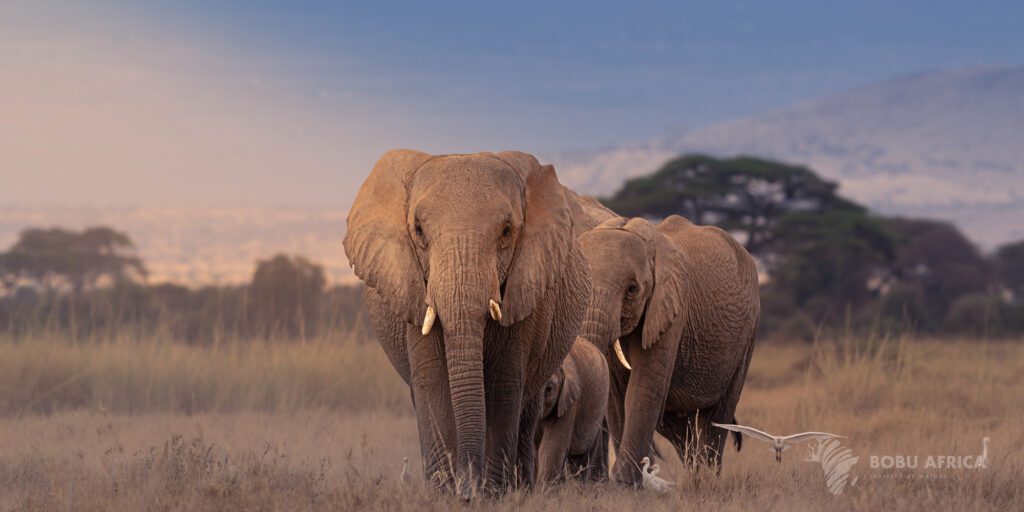
Air can stabilize in useful windows, though dust may increase near active tracks. Backlight becomes useful for mood and shape.
Priority tasks:
- Use side and backlight for dust architecture
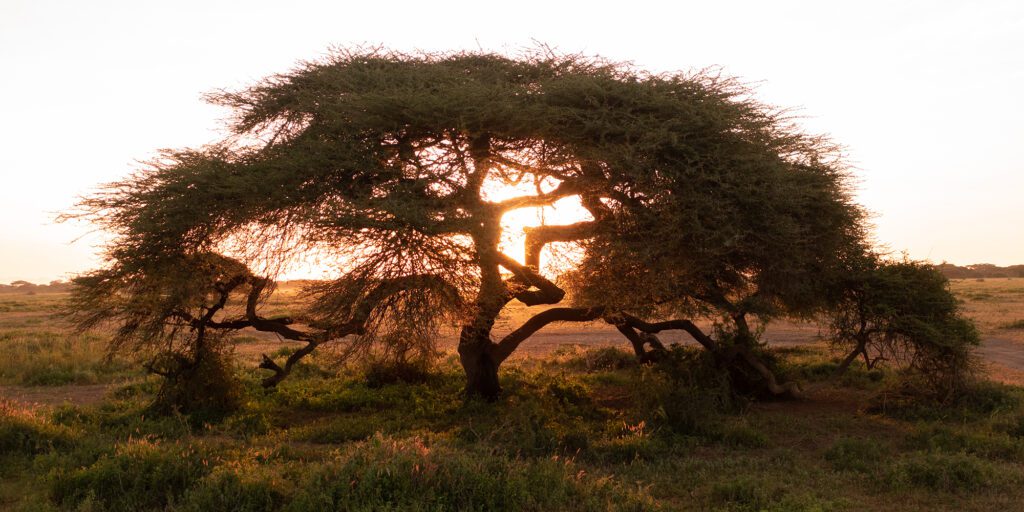
- Seek layered silhouettes and movement lines
- Finish with context frames that close narrative sequence
Subject strategy when mountain is hidden
A hidden mountain is not a failed day. It is a different assignment.
In real safari planning, weather variability usually means portfolio resilience. Photographers who adapt produce stronger final edits than photographers who wait for one signature backdrop.
High-value alternatives:
- Elephant family structure in marsh transitions
- Calf protection patterns and social spacing
- Waterline reflections under cloud cover
- Dust columns under low sun with controlled exposure
- Avian and mammal interactions in edge habitats
Amboseli has enough ecological richness to carry entire sessions without mountain visibility if your objective framework is clear.
Gear decisions that match atmospheric reality
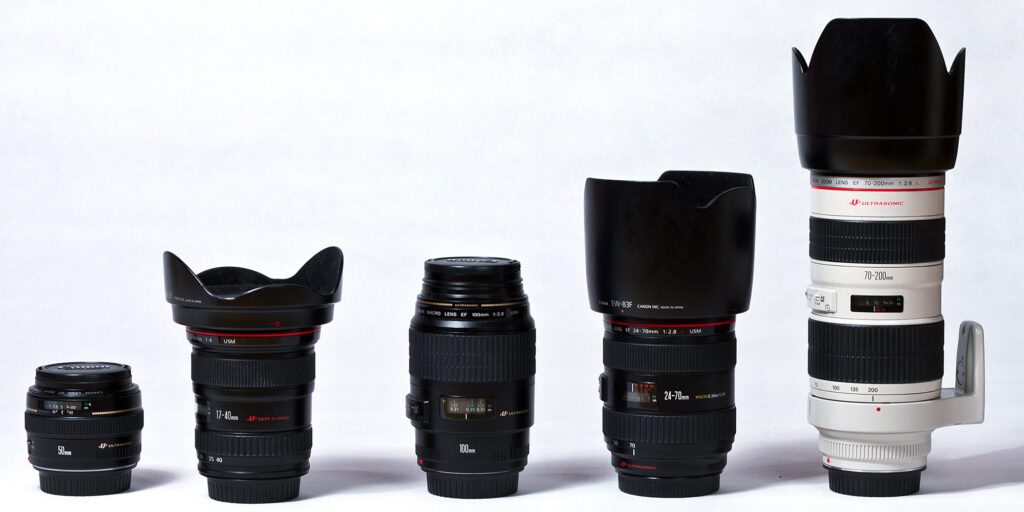
Amboseli rewards flexible optical range and disciplined maintenance.
Practical setup:
- one long lens for selective reach
- one mid zoom for interaction and compressed context
- one wider option for environmental structure and weather
Operational essentials:
- dust-safe workflow at every vehicle stop
- microfiber and blower always reachable, not packed away
- card and battery management built into midday reset
- weather and dust covers ready before conditions turn
Many file losses come from delayed reaction, not equipment limits.
Exposure and focus discipline in unstable air
Air instability can trick both autofocus and exposure interpretation.
Useful field adjustments:
- increase shutter discipline during movement and haze
- use exposure compensation actively in bright dust backlight
- review histograms, not only rear-screen brightness
- prioritize nearest clean subject plane when detail loss appears at distance
In Amboseli, technical humility improves keeper rate. Conditions shift quickly, and rigid settings habits often underperform.
Camp location versus room glamour
In the Mara ecosystem, location matters more than room glamour when field hours are limited. The same principle applies in Amboseli.
If your camp position adds long access time to productive zones, you lose early clarity windows. If logistics are smooth and departures disciplined, you gain repeated opportunities in best atmospheric periods.
At Bobu Africa, we usually prioritize access efficiency, guide quality, and departure flexibility before aesthetic room upgrades for photography-led itineraries.
Nights, pacing, and transfer logic for serious shooters
A two-night Amboseli stop can produce good frames, but it usually leaves little margin for atmospheric variation. One cloudy morning and one dusty afternoon can absorb much of your top potential.
Practical thresholds:
- two nights workable for short trips, high risk of inconsistency
- three nights practical baseline for six prime sessions
- four nights strong for portfolio depth and weather resilience
Trade-off logic:
Adding one night in Amboseli often improves photographic consistency more than adding one new destination with heavy transfer cost.
Mixed itineraries with Amboseli as a photography anchor
Amboseli works best when connected by function, not by checklist pressure.
Useful combinations:
- Amboseli (Kenya) plus Maasai Mara (Kenya) for elephant atmosphere and predator plains contrast
- Amboseli (Kenya) plus Samburu (Kenya) for mountain-south versus arid-north visual diversity
- Amboseli (Kenya) plus Serengeti (Tanzania) for cross-border narrative depth if timeline and logistics justify transfer load
When adding destinations, protect prime windows in each anchor zone. If cross-border movement consumes multiple dawn or dusk periods, reduce complexity.
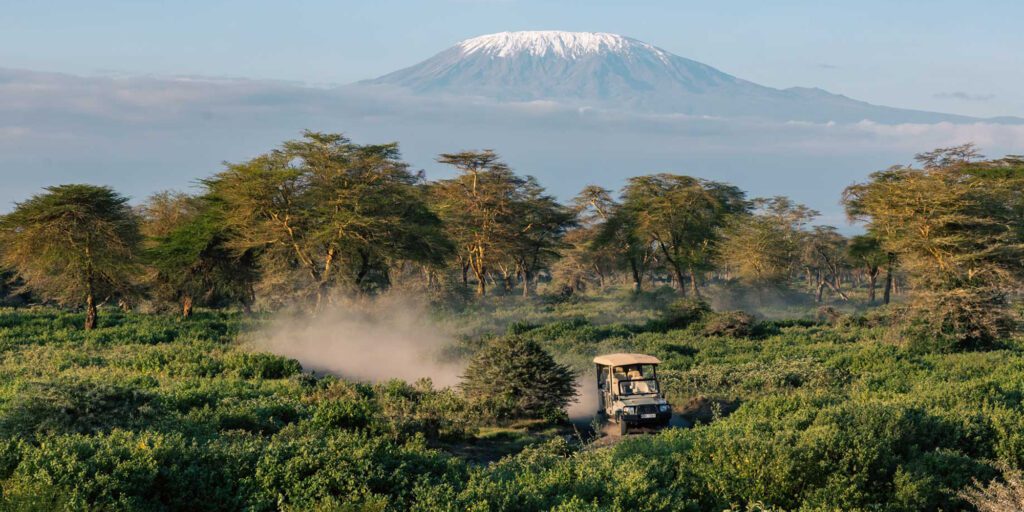
What non-photographers in your group need from an air-first plan?
Serious photographic pacing can still work in mixed groups if communication is clear.
Practical integration:
- define daily objective before departure
- include one interpretation-focused drive per day where pace is broader
- protect midday rest to maintain afternoon engagement
- use guide storytelling to explain why air and angle decisions matter
When non-photographers understand objective and timing, waiting feels intentional rather than arbitrary.
Common Amboseli photography mistakes and field corrections
- Mistake one: Treating mountain reveal as the only success metric.
- Correction: Score each session by air quality, subject access, and narrative value, not summit visibility alone.
- Mistake two: Overusing long lens during heavy thermal shimmer.
- Correction: Shift to closer subject planes and wider environmental storytelling until air stabilizes.
- Mistake three: Ignoring wind direction while positioning.
- Correction: Reposition upwind or crosswind to reduce dust curtains in front of subjects.
- Mistake four: Underestimating transfer cost in short itineraries.
- Correction: Protect at least six prime sessions in Amboseli before adding extra park transitions.
- Mistake five: Choosing camp by room style over access logic.
- Correction: Prioritize departure efficiency and productive-zone reach.
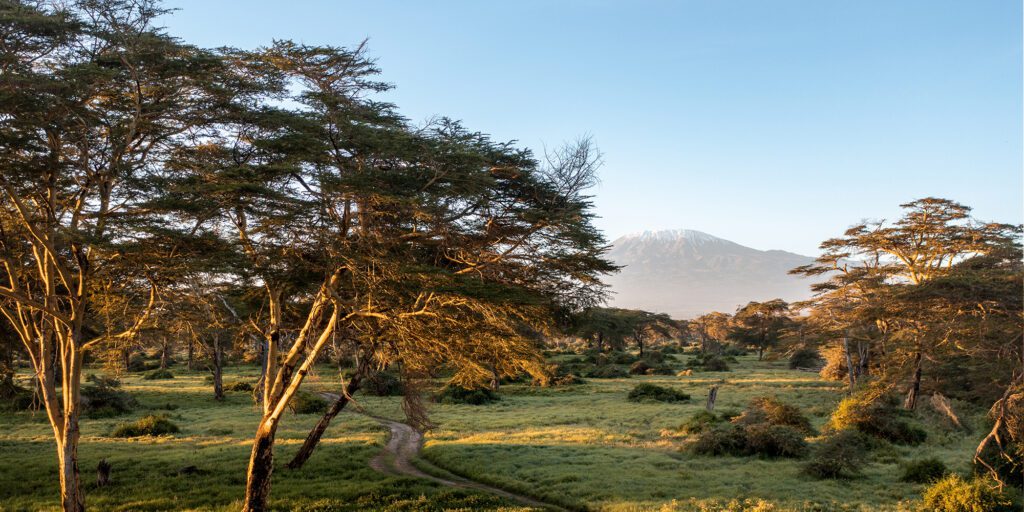
A practical five-point field checklist each morning
Use this before first major positioning decision.
1. What is current air clarity at medium and long distance.
2. How is wind moving dust across likely subject paths.
3. Is thermal shimmer already visible at your working focal length.
4. Which subject type fits current air state best.
5. If mountain appears, can you shoot quickly and then return to broader objective.
This checklist prevents tunnel vision and increases day-level consistency.
Birding and atmospheric value in Amboseli
Birders and bird photographers also benefit from air-first planning. Dust and shimmer impact feather detail and distant identification reliability. Marsh and wet edge sectors can offer strong avian opportunities when mammal photographers are waiting on mountain clearance.
A mixed wildlife strategy can include:
- early mammal and landscape windows
- mid-session bird-focused intervals near wet edges
- evening return to large-mammal movement with side-light structure
This broadens output and reduces dependence on a single mountain-based narrative.
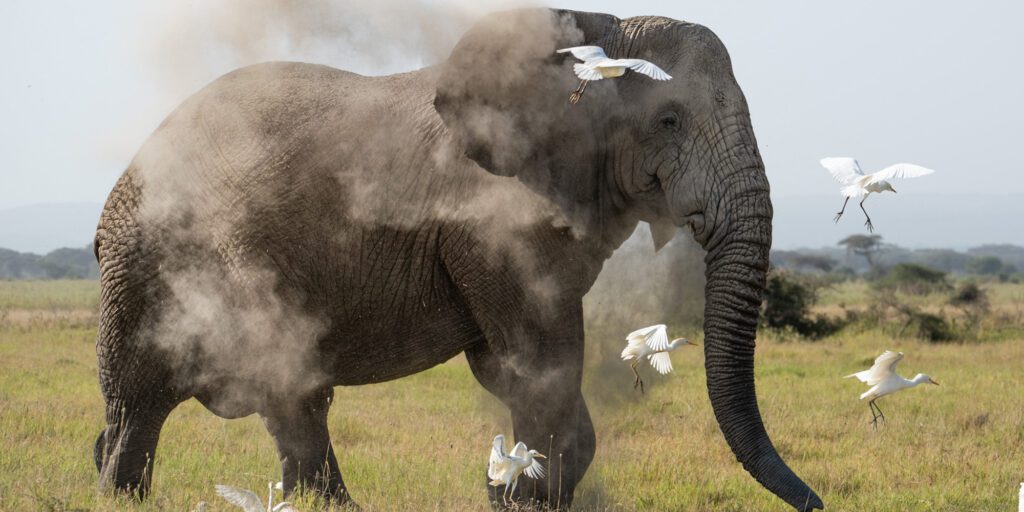
Editing strategy after an air-first trip
When you return, sort files by atmospheric condition before sorting by species. This helps identify patterns in what worked.
Useful buckets:
- clean-air detail files
- moderate dust mood files
- high-haze environmental files
- low-contrast weather-transition files
Then build final sequence across clarity and mood, not only species hierarchy. This creates a more mature Amboseli story and avoids repetitive postcard output.
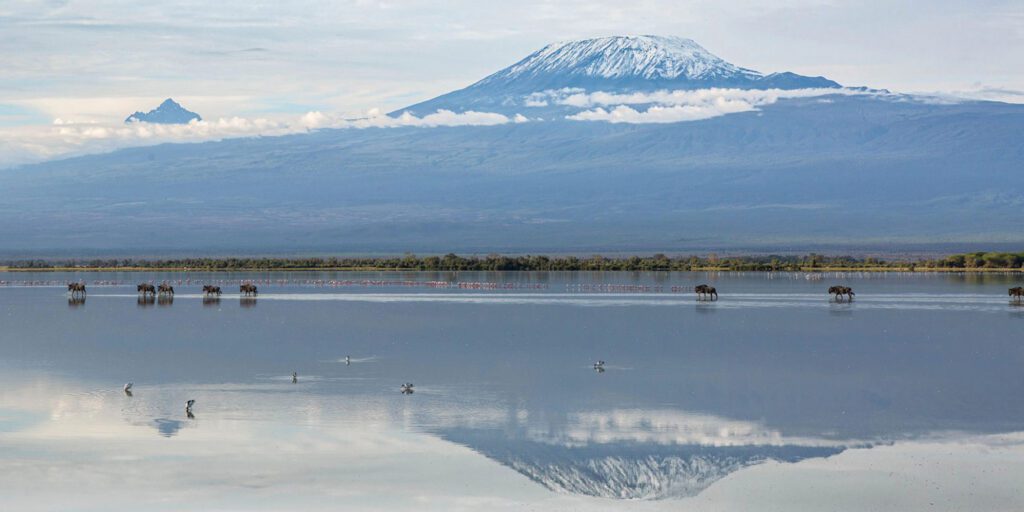
Final field perspective
Amboseli is one of East Africa’s most recognizable landscapes, but recognizability is not the same as photographic depth. Serious photographers eventually discover that mountain visibility is a bonus layer, while atmospheric control is the foundation layer.
If the air is stable, detail and separation improve. If wind and dust are understood, movement gains structure. If thermal behavior is respected, sharpness decisions become strategic instead of reactive.
The practical answer is clear. Treat Kilimanjaro as opportunity, not dependency. Build your plan around air quality windows, repeated sessions, and location efficiency. That approach consistently produces stronger portfolios, whether the summit is visible every day or only once.
FAQ
Q: How many nights do serious photographers need in Amboseli for reliable results
A: Three nights is the practical baseline because it usually gives six prime field sessions. Four nights is stronger if you want portfolio depth and protection against variable mountain and air conditions.
Q: If Kilimanjaro is clouded, is an Amboseli photo day still worth it
A: Yes. Strong days can come from elephant social structure, marsh movement, dust architecture, and weather-layered environmental frames. In many sessions, air quality and positioning matter more than mountain visibility.
Plan Your Journey
If you are designing an Amboseli photography project, Bobu Africa can help you structure a field-smart plan around air-quality windows, transfer-efficient routing, and guide pairing so the trip delivers consistent professional files rather than one-off postcard luck.