




Can one visa cover multiple African countries. Sometimes, yes.
Can you plan a multi-country safari safely by assuming one visa will solve everything. Usually no.
That is where many otherwise well-planned Africa trips go off track. Travelers lock flights, lodges, and permits, then treat visa design as paperwork to finish at the end. In the field, that order creates risk. Border officers do not evaluate your itinerary beauty. They evaluate legal entry logic for your passport, your route order, and your entry method.
In our 15 years of field operation across East Africa, we see this mistake most often on ambitious routes that combine Kenya, Tanzania, Uganda, and Rwanda in one trip.
A definition worth saving
In real safari planning, one visa coverage is less about geography and more about legal sequence.
A strong safari is not defined by one dramatic sighting, but by repeated high-quality field sessions. Visa friction at the wrong border can quietly remove those sessions.
These two sentences explain why visa strategy belongs inside route design, not beside it.
Why this question is more complex than it sounds?
Travelers usually ask the one-visa question as if it has a universal answer. It does not. The answer changes based on:
- your passport nationality
- exact countries in your route
- current policy version at travel date
- air versus land entry method
- single-entry versus multiple-entry visa terms
- whether you leave and re-enter a country mid-itinerary
- special permit dependencies such as gorilla tracking dates
One shared visa may be valid for one nationality and not another. Or valid for specific country pairings but not your full route. Or valid in principle but operationally fragile when your border sequence is aggressive.

East Africa example where travelers get confused
East Africa is the best case study because multi-country itineraries are common and highly attractive.
Popular combinations include:
- Maasai Mara (Kenya) plus Serengeti (Tanzania)
- Kenya plus Uganda for savanna and gorillas
- Tanzania plus Rwanda for migration and gorilla-focused journeys
- Kenya plus Tanzania plus Uganda for broad wildlife variety
Some regional visa arrangements exist for specific countries and passport holders. But travelers often overgeneralize that into broad free movement assumptions.
In field terms, that assumption is expensive.
The real cost of getting this wrong
Visa mistakes are rarely dramatic at first. They usually begin as delay, then become quality loss.
Common outcomes:
- long border processing that wipes out afternoon game drives
- denied or delayed re-entry due to wrong visa type
- extra unplanned visa fees and transport reshuffles
- missed charter or light-aircraft connections
- compressed nights in core ecosystems
One transfer day often costs two prime wildlife windows. A problematic border day can do the same, sometimes more.
If your route relies on fixed gorilla permits or high-value migration windows, that loss is not minor.

Single-entry versus multiple-entry logic
This is where many travelers fail even after obtaining the right country visas.
A common error:
- enter Country A
- move to Country B
- return to Country A
- discover original visa did not allow re-entry
The traveler thought they were holding one valid visa for the whole period. Legally, they had one valid entry, now consumed.
In real safari planning, visa validity date is not enough. Entry count and route direction are equally critical.
Border type matters more than most travelers think
Even when legal documents are correct, border type changes practical risk.
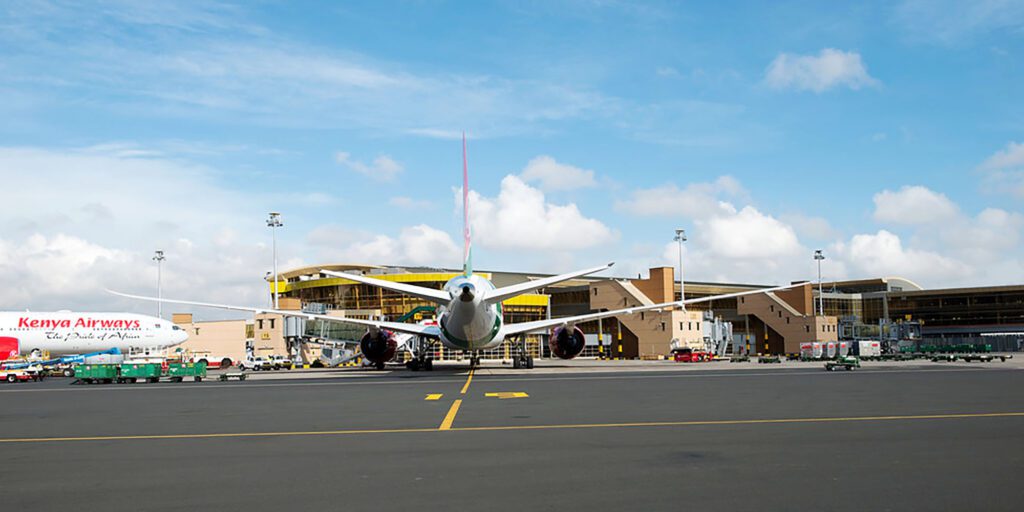
Air entry strengths
- often clearer process channels
- stronger document pre-check at airline level
- usually better predictability for onward timing
Air entry constraints
- strict denial risk at check-in if documents are imperfect
- cascading disruption if one delayed segment breaks the chain
Land border strengths
- route continuity for overland safari design
- useful in some ecosystem linkages
Land border constraints
- variable queue and staffing
- local process inconsistency by time of day
- higher probability of schedule drift
If your route has no timing buffer, a legally valid but slow land crossing can still damage trip quality.
Practical baseline for route safety
At Bobu Africa, we usually treat visa confirmation as a precondition before locking non-refundable internal segments.
For multi-country East Africa routes, we usually include at least one operational buffer around the most complex border transition.
Three nights usually means six prime field sessions. If a border crossing cuts one of those sessions repeatedly in a short trip, route quality drops quickly.
These are not conservative habits for their own sake. They are performance safeguards.

How to know if one visa can work for your route
Use this checklist in order.
1. Confirm nationality-specific rules
Do not rely on what worked for a friend with a different passport.
2. Confirm exact country pairing and policy date
Regional agreements can change. Past blog advice can become outdated.
3. Confirm entry method compatibility
Check if your visa type is accepted at your planned airports or land posts.
4. Confirm re-entry logic
If your route exits and re-enters a country, verify entry count and conditions.
5. Confirm permit dependencies
If your route includes gorilla permits, migration-critical sectors, or timed charters, visa certainty must come first.
6. Confirm document stack
Carry digital and printed copies of approvals, bookings, onward travel, and vaccination records where required.
7. Reconfirm in final departure week
Rules and implementation details can update between booking and travel.

Trade-off logic every traveler should understand
There is no free optimization in multi-country Africa planning.
If you maximize country count, you increase border and timing complexity.
If you simplify country count, you may reduce geographic variety but protect field quality.
The best decision depends on your trip goal.
- If your goal is first-time broad exposure, a simpler two-country route often performs better.
- If your goal is specialist photography or permit-led experience, legal and timing reliability should outweigh map ambition.
In field terms, this is less about seeing fewer places and more about seeing each place under stronger conditions.
Route sequencing examples
1.Lower-risk sequence
- international arrival in one country
- stable field block
- one major border move with buffer
- second field block
- departure from second country or return with proper re-entry setup
2. Higher-risk sequence
- arrival and immediate domestic connection
- next-day border crossing
- fixed permit activity without buffer
- second border crossing in short interval
Both routes might include similar destinations. Only one protects session quality.

Where place function should drive visa decisions?
Use destination names with operational intent.
- Maasai Mara (Kenya) for high-density predator and plains sessions
- Amboseli (Kenya) for elephant landscape contrast
- Serengeti (Tanzania) for ecosystem continuity and migration context
- Ndutu (Tanzania) for calving-season concentration
- Samburu (Kenya) for arid north specialist contrast
If your visa and border plan repeatedly interrupts these functional windows, the route is over-engineered.
Mistakes we see repeatedly
1. Assuming one visa works because countries are geographically close.
Correction: Legal coverage follows policy and nationality, not map proximity.
2. Booking internal flights before visa pathway is clear.
Correction: Lock legal flow first, then lock non-refundable segments.
3. Ignoring re-entry requirement in loop routes.
Correction: Test the full route on entry-count logic before payment.
4. No timing buffer around border transitions.
Correction: Protect at least one flexible window near high-risk crossing points.
5. Treating visa planning as admin, not itinerary design.
Correction: Build visa, borders, and field windows as one integrated system.

Practical advice by traveler type
- First-time multi-country travelers
Keep routes simple. Two countries often deliver better outcomes than three rushed crossings.
- Wildlife photographers
Protect dawn and dusk around border days. Do not place critical shoots immediately after complex crossings.
- Birders
Prioritize habitat continuity and early field windows. Border fatigue can reduce observation quality more than many expect.
- Premium travelers
Use budget to reduce friction, not only to increase amenities. Better sequencing often adds more value than adding one more destination.
- Final answer
Can one visa cover multiple African countries. Sometimes, yes, depending on your passport and exact route.
Should you build a multi-country safari assuming one visa will simplify everything. No.
The smarter approach is to design visas and itinerary together. In real safari planning, legal sequence, border method, and timing buffers decide whether your trip feels smooth or stressful.
At Bobu Africa, we treat visa strategy as part of the creative route design process from day one. That is usually the difference between a trip that looks good on paper and a trip that performs in the field.

FAQ
Q: Can I rely on one East Africa visa if I plan to enter and re-enter countries during my trip?
A: Not always. Re-entry rules and entry counts can invalidate assumptions quickly. You must verify your exact route sequence, passport rules, and visa terms before booking fixed internal segments.
Q: What is the safest way to plan a multi-country Africa safari with visas?
A: Confirm nationality-specific visa rules first, then design route order and border method around those rules, then lock non-refundable flights and permits. Adding a buffer around the most complex border crossing is usually worth it.
Plan Your Journey
If you are building a multi-country Africa itinerary, Bobu Africa can help you align visa logic, route sequence, and field-session protection into one practical plan so your wildlife days stay intact and your border days stay manageable.