

Planning ahead is essential for a seamless and well-organized safari experience in Kenya, especially during high-demand travel periods. For most travelers, we recommend booking:
- High Season (June–October): 8–12 months in advance
- Great Migration (July–September): 10–14 months in advance
- Shoulder Season (January–March): 4–8 months in advance
- Green Season (April–May): 3–6 months in advance
When should I book to see the Great Migration in 2026 or 2027?
For River Crossings (July–September): Book by August 2026 for 2027 travel.
For the Calving Season (January–March): Book by May 2026 for 2027 travel. Since these are the most sought-after wildlife events on earth, the best camps with “front-row seats” to the Mara River or Ndutu plains are the first to fill up.
Are there any “Secret Seasons” in 2026 with better availability?
Absolutely. We highly recommend the “Emerald Season” (late March to May).While there is more rain, the landscapes are lush, prices are up to 30% lower, and you can book just 4–6 months in advance.
Why is early booking more important for 2026 and 2027?
Travelers are now planning further ahead to secure “bucket-list” experiences. Additionally, 2026 is a high-demand year as many travelers are choosing it ahead of the 2027 election cycle in Kenya to ensure stable travel plans.
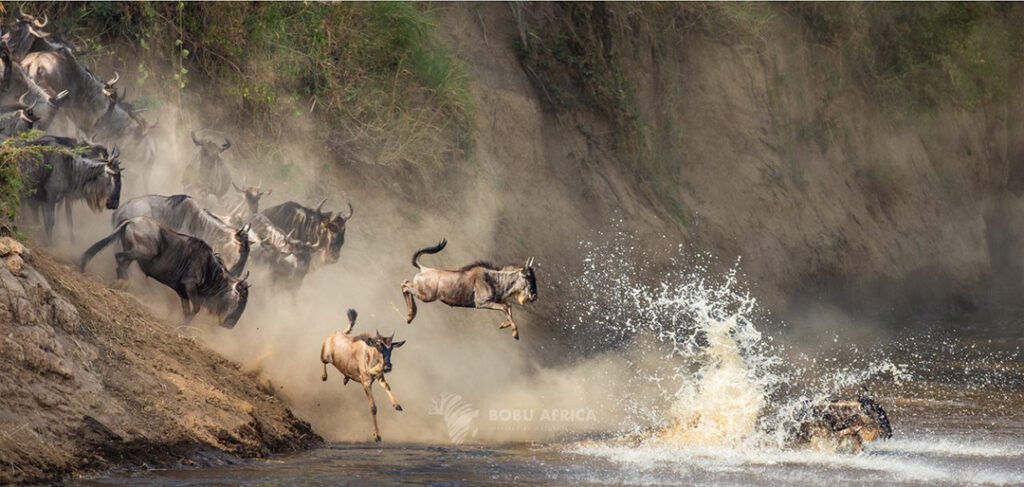
Photo Credit: Natureziinwild
What Factors Influence Safari Booking Timelines in Kenya and Tanzania for 2026–2027?
Peak Season Demand: July–October sees the highest crowds for the Migration, requiring 9–18 months lead time to avoid sold-out lodges.
Group Size and Customization: Larger groups or tailored safaris (e.g., family-friendly or luxury) need earlier bookings, often 12+ months out.
Holiday Periods: Christmas/New Year in 2026–2027 books fast, aim for 18 months in advance for festive safaris.
Economic and Global Trends: With potential economic shifts, availability can tighten; booking early with Bobu Africa ensures fixed rates and flexibility.
Green Season Opportunities: For budget-friendly, lush landscapes in March–May, 4–6 months may suffice, but popular eco-lodges still require prompt action.
Is it cheaper to book a safari early?
Yes. Early booking offers:
- Protection from annual rate increases (most camps revise pricing yearly)
- Better flight pricing (international and regional)
- Wider accommodation selection
Waiting too long typically means fewer options and higher costs.
Can I book a last-minute safari in Kenya or Tanzania?
Last-minute bookings (1–3 months prior) are possible but limited to:
- Low or green season travel
- Flexible dates
- Mid-range properties with availability
For iconic parks like:
- Amboseli National Park
- Masai Mara
- Serengeti North (Kogatende)
- Ndutu (Calving Season)
- Ngorongoro Crater
- Tarangire National Park
Availability during peak season is extremely restricted.
What happens if I book too late?
Booking late can result in:
- Compromised lodge selection:
Prime riverfront or migration-corridor camps may be fully booked.
You may end up staying farther from key wildlife areas.
You might have to choose mid-tier options instead of your preferred luxury camp.
Result: More driving time, fewer prime sightings, and potentially less exclusivity.
- Split stays between properties
When availability is limited, a lodge may have only partial dates available.
Example:
- 2 nights at one camp
- 1 night at another camp
- Then transfer again
This creates:
- Extra packing/unpacking
- Lost safari time due to transfers
- Additional transfer costs
Result: Your itinerary feels fragmented instead of seamless.
- Increased costs
As availability drops, pricing shifts due to:
- Dynamic pricing in high-demand camps
- Limited remaining room categories (often premium suites)
- Last-minute flight surcharges (especially for bush flights)
For migration season in the Maasai Mara National Reserve or cross-border safaris into Serengeti National Park, prices can increase significantly when demand spikes.
Result: You pay more for fewer choices.
- Less optimal migration viewing locations
The Great Migration moves in patterns. The best camps are strategically located near:
- River crossing points
- Predator hotspots
- Active grazing zones
If you book late:
- Prime migration camps may be sold out.
- You may stay in a peripheral area.
- You’ll drive longer distances to reach action zones.
Result: You could miss peak river crossings simply because your camp is not positioned correctly.
For strategic itinerary design, early booking ensures seamless logistics.
Photo Credit: Natureziinwild
When is the best time to book a honeymoon safari in East Africa?
For honeymoon safaris in 2026–2027:
- Book 9–12 months in advance
- Secure private plunge pool suites or luxury tented camps early
- Consider January–March for fewer crowds and excellent wildlife
Romantic, exclusive camps sell out fastest, especially those with limited suites.
When should families book a safari for school holidays?
For travel during:
- July–August
- December holidays
- Easter period
Families should book 10–12 months in advance. Family suites and interconnecting tents are limited and highly competitive.
Is 2026–2027 expected to be busy for East Africa safaris?
Yes. Safari demand continues to grow globally due to:
- Increased interest in experiential travel
- Conservation-driven tourism
- Limited eco-camp capacity (intentional low-impact operations)
Premium properties across Kenya and Tanzania operate with small room inventories, making early planning essential.
What is the ideal safari planning timeline?
12–14 Months Before Travel
- Confirm travel dates
- Secure prime migration camps
- Lock in peak-season inventory
6–9 Months Before Travel
- Confirm mid-season safaris
- Book flights
- Arrange travel insurance
3–6 Months Before Travel
- Finalize green season trips
- Confirm special requests
Photo Credit Natureziinwild
Why Book Your 2026–2027 Safari with Bobu Africa?
Bobu Africa is a Kenya-based safari specialist curating tailor-made experiences across East Africa. We secure:
- Prime migration camps
- Trusted professional guides
- Seamless air & road logistics
- Luxury, mid-range, and bespoke itineraries
Photo Credit: Angama Mara