


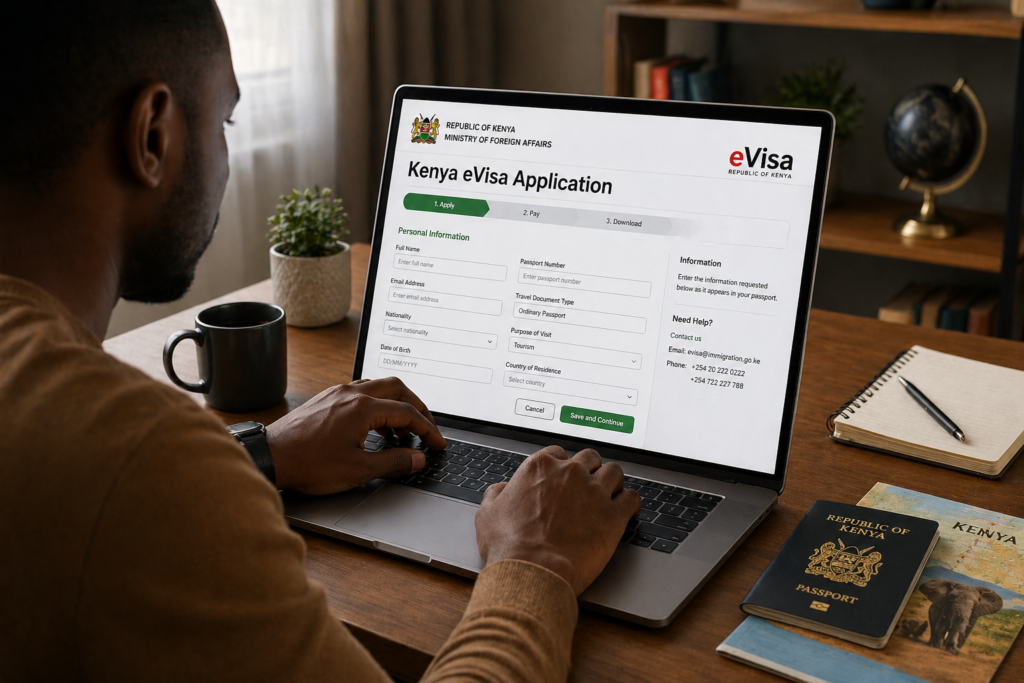
African visa processing times typically range from 2 to 15 working days, depending on the application type and country.
- E-visas: 2–5 days (e.g., Kenya, Tanzania)
- Embassy visas: 5–15 days
- Visa on arrival: Same day in select countries like Rwanda
Processing times can be affected by application accuracy, travel season, and additional checks.
Best practice: Apply at least 2–3 weeks in advance for a smooth travel experience.
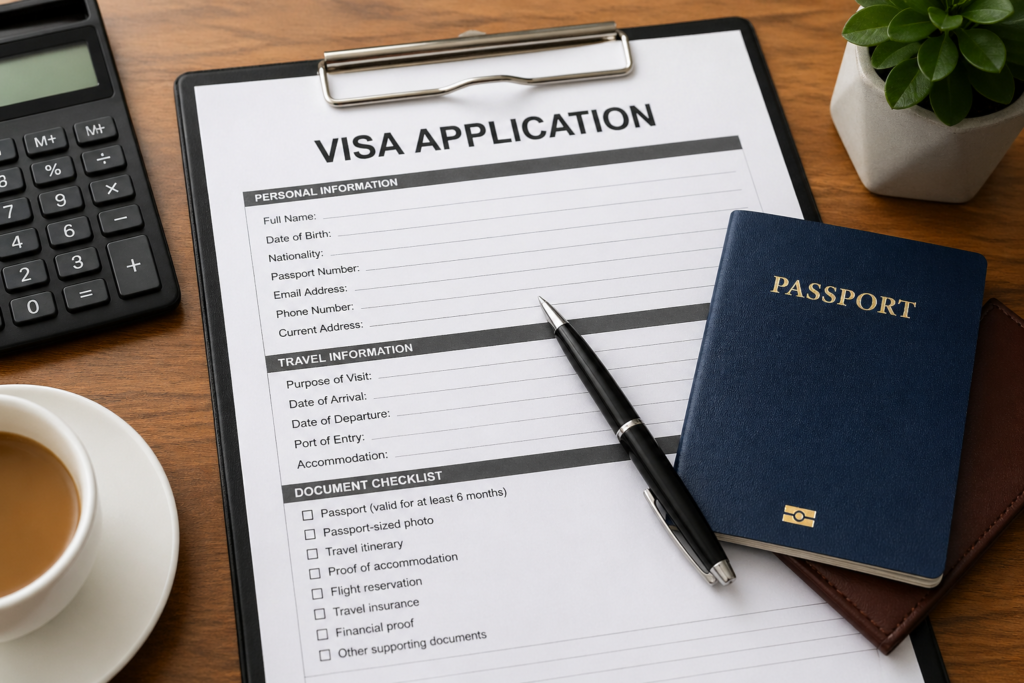
A practical definition that changes outcomes
In real safari planning, visa processing time usually means decision timing plus safety buffer, not only government turnaround speed.
At Bobu Africa, we usually treat visa readiness as a gating milestone before locking high-penalty non-refundable segments tied to fixed wildlife windows.
This is the core mindset shift. You are not only trying to get approved. You are trying to protect trip quality.
Why average visa timelines can be misleading
Published processing ranges are useful, but they hide variability that matters to travelers.
Common variability drivers:
- passport nationality and reciprocity categories
- seasonal demand spikes
- public holidays in destination or home country
- document quality and formatting errors
- system outages or payment verification delays
- additional review requests
A visa that often clears in five days can still take much longer in specific cases. If your route has no buffer, that variability can consume critical travel windows.
The real cost of underestimating processing time
Visa delays usually do not cancel entire trips at first. They degrade quality in stages.
Typical consequences:
- forced rebooking into weaker flight timings
- shortened stay in core ecosystems
- missed permit dates for gorilla or chimp tracking
- increased transfer pressure across border transitions
- reduced flexibility for weather and wildlife movement
A strong safari is not defined by one dramatic sighting, but by repeated high-quality field sessions. A visa-timing mistake can remove those sessions before your trip even starts.
East Africa timing pressure points
Travelers combining Kenya, Tanzania, Uganda, and Rwanda face overlapping timing sensitivities. This is where visa processing estimates need real buffers.
Kenya and Tanzania circuits
Routes linking Maasai Mara (Kenya) and Serengeti (Tanzania) are often built around precise date windows, especially in migration periods. Visa timing delays can force route reshuffles that reduce prime field time.
Uganda and Rwanda permit-led travel
Gorilla permits are date-bound and expensive. A visa delay can affect your ability to use these permits effectively, especially if entry or border sequence changes at short notice.
Multi-country loops
If your itinerary includes land border transitions, delayed visa readiness can cascade through domestic links and camp check-ins.
One transfer day often costs two prime wildlife windows. A visa-induced reroute can create similar loss.
Definitional rule for timeline planning
Three nights usually means six prime field sessions. If visa delays force you to drop one night in your anchor ecosystem, your real trip value drops faster than your calendar suggests.
This is why serious planners price visa uncertainty in field sessions, not only in admin stress.
How early should you start visa processing
There is no universal number, but there is a practical approach.
Baseline approach
- Start requirement checks as soon as route draft is stable
- Begin application process with enough lead time for one correction cycle
- Keep final approval buffer before departure
For simple single-country trips
A shorter lead window may work if policy and process are stable for your passport.
For multi-country or permit-led trips
Start earlier and stage commitments. You need room for correction, not only submission.
At Bobu Africa, we usually advise planning backward from the first irreversible booking, not from departure date alone.
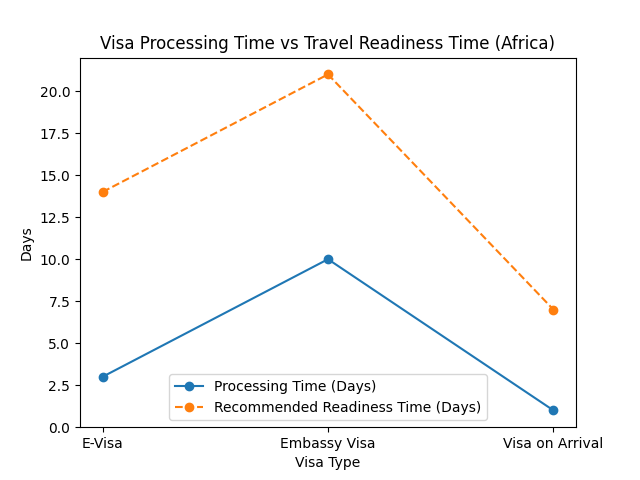
Processing time versus readiness time
Travelers often confuse these two terms.
Processing time is how long the authority takes once your application is accepted.
Readiness time includes document prep, corrections, payment confirmation, and retrieval of final approved files.
Readiness time is what affects itinerary safety.
If your documents are incomplete, your real timeline starts later than you think.
Common timing mistakes and corrections
Mistake 1: Submitting visa applications after buying all non-refundable internal segments.
Correction: Use staged commitments. Lock high-risk costs only after visa pathway is stable.
Mistake 2: Planning from best-case turnaround only.
Correction: Plan from realistic range plus contingency margin.
Mistake 3: Ignoring holidays and peak processing periods.
Correction: Check holiday calendars and demand windows for both home and destination contexts.
Mistake 4: Assuming one approval equals route-wide legality.
Correction: Verify each country requirement and re-entry logic by passport and border type.
Mistake 5: No document redundancy.
Correction: Carry digital and printed copies of all approvals, confirmations, and supporting records.
Buffer strategy by traveler type
First-time safari travelers
Use conservative timelines and simpler country combinations. Protect arrival days from avoidable pressure.
Wildlife photographers
For photographers, this is less about headline spectacle and more about full-trip consistency. Build enough visa buffer to protect core dawn and dusk windows in anchor ecosystems.
Birders
Birding routes often depend on repeated early field sessions. Visa delays that force compressed schedules reduce habitat-depth outcomes.
Premium travelers
Premium planning should reduce friction, not only increase comfort features. Strong visa timing strategy often adds more value than room-category upgrades.
Practical planning framework you can follow
Use this seven-step workflow.
1. Finalize target countries and entry method by country
2. Check official visa requirements for your passport
3. Build a document checklist and prepare all assets
4. Submit applications with correction time built in
5. Delay high-penalty non-refundable bookings until visa pathway is secure
6. Reconfirm approvals, validity, and entry terms in departure week
7. Keep one operational buffer around your most timing-sensitive transition
This framework reduces risk without overcomplicating the process.
How route sequence affects visa timing risk
Visa timing risk is lower when itinerary sequence is robust.
Lower-risk route logic
- Stable first-country field block
- One planned border move with buffer
- Permit events after legal entry certainty
Higher-risk route logic
- immediate onward connections after international arrival
- border crossing before first recovery window
- permit events tightly stacked after entry day
Trade-off logic is clear. Aggressive sequencing saves calendar space but increases failure exposure. Balanced sequencing protects high-value experience days.
Place-based examples with function clarity
- Maasai Mara (Kenya) is often an anchor for predator and plains sessions
- Amboseli (Kenya) is timing-sensitive for elephant landscape windows
- Serengeti (Tanzania) rewards deeper sector continuity
- Ndutu (Tanzania) is date-sensitive in calving periods
- Samburu (Kenya) adds arid contrast but can introduce transfer complexity
If visa delay compresses these blocks, the route may still happen but quality often drops.
What to ask your planner or operator
Ask these questions before paying full balance.
- What is the realistic visa readiness timeline for my passport
- Which route elements are most exposed if approval is delayed
- Which bookings should remain flexible until approvals are confirmed
- Where is the contingency buffer in this itinerary
- How many prime sessions are protected if one day shifts
Good answers are specific and date-based. Generic reassurance is not enough.
FAQ decision line you can use
If you need one practical sentence for planning, use this.
Do not plan visas to make departure possible. Plan visas to keep your best field windows intact.
That single sentence usually improves decisions across flights, permits, and route structure.
FAQ
Q: How far in advance should I apply for visas for an East Africa safari?
A: SFor an East Africa safari, the ideal timing for visa applications is at least 2 to 4 weeks before your travel date. This buffer ensures enough time to handle processing variations, document verification, and any unexpected delays.
Most travelers heading to destinations like Kenya, Tanzania, and Rwanda use e-visas, which are generally processed within 2–7 working days. However, processing times are not always guaranteed and can vary depending on season, nationality, and application accurac
Q: Can a visa delay really affect safari quality even if I still travel?
A: Yes, visa delays can significantly impact your safari experience, even if you eventually make it to Africa on time.
In safari travel, the issue is rarely whether you arrive, but whether you arrive as planned, because safaris are built on tightly coordinated logistics.
Plan Your Journey
If you are planning an Africa trip with fixed flights, permits, or multiple borders, Bobu Africa can help you build a visa timeline and buffer plan that protects your route quality before you lock high-risk costs.