

The Ultimate Guide to the Great Wildebeest Migration
The Great Wildebeest Migration is the world’s largest overland wildlife migration, involving more than 1.5 million wildebeest, accompanied by hundreds of thousands of zebras and gazelles, as they move through Tanzania’s Serengeti National Park and Kenya’s Maasai Mara in search of fresh grazing driven by seasonal rainfall. Occurring year-round, the migration includes dramatic calving in the southern Serengeti, Grumeti River crossings in the west, and the famous Mara River crossings in the north. This guide explains when and where to witness each stage, how to plan your safari, and why the migration is one of Earth’s greatest natural spectacles.
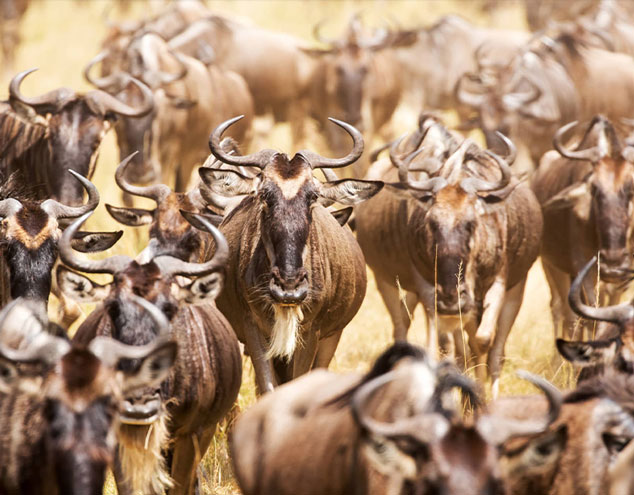
Image source: Nature – Bobu Africa’s Cinematographer
What is the Great Wildebeest Migration?
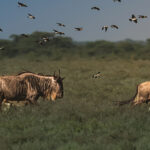
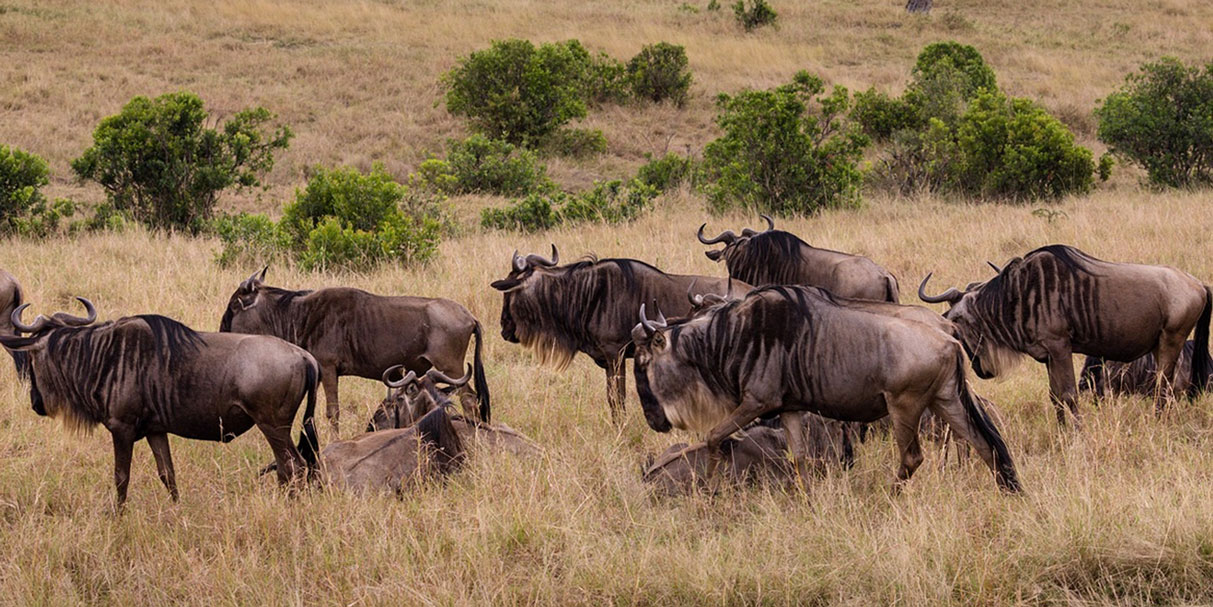
The Great Wildebeest Migration is the annual movement of more than 1.5 million wildebeest, together with around 200,000 zebras and hundreds of thousands of Thomson’s and Grant’s gazelles, across the Serengeti–Mara ecosystem of Tanzania and Kenya. Guided by seasonal rainfall and the search for fresh grazing, the animals travel approximately 800–1,000 kilometers each year in a continuous cycle that supports one of the richest predator-prey ecosystems on Earth.
The Greatest Wildlife Spectacle on Earth
Every year, across the vast golden plains of East Africa, one of nature’s most extraordinary journeys unfolds.
More than 1.5 million blue wildebeest, joined by approximately 200,000 plains zebras and over 400,000 gazelles, embark on an epic circular migration through the Serengeti–Mara ecosystem. Guided not by maps or memory alone, but by generations of instinct and the rhythm of seasonal rains, these animals traverse open grasslands, woodlands, rocky outcrops, and crocodile-filled rivers in search of fresh grazing.
This is not simply a migration from one place to another, it is a continuous ecological cycle that has shaped East Africa’s landscapes for thousands of years. Every stage of the journey tells a different story. In the southern Serengeti, thousands of calves are born within a matter of weeks, creating one of the largest synchronized birthing events on the planet. As the herds move westward and north, they encounter formidable obstacles, including the Grumeti and Mara Rivers, where patience, instinct, and survival are tested against powerful currents and waiting Nile crocodiles.
For predators, the migration is equally significant. Lions establish territories along well-traveled routes, cheetahs take advantage of the open plains, leopards remain hidden in riverine woodlands, while spotted hyenas and crocodiles rely on the abundance of prey. Above them, vultures, eagles, and other scavengers play a vital role in recycling nutrients back into the ecosystem, illustrating the intricate balance of life on the African savannah.
For travelers, the Great Migration is more than a safari highlight. It is an opportunity to witness one of the last great terrestrial migrations on Earth, a living demonstration of the interconnectedness of wildlife, climate, and habitat. No two years are identical. Rainfall patterns, grazing conditions, and river levels continually influence the herds’ movements, making every safari a unique experience.
Whether you dream of watching thousands of newborn wildebeest take their first steps on the short-grass plains of Ndutu, photographing a leopard resting in an acacia tree, observing cheetahs hunting across the Serengeti, or experiencing the dramatic Mara River crossings, understanding the migration’s seasonal rhythm is the key to planning an unforgettable safari.
This guide brings together wildlife ecology, travel planning, photography insights, conservation knowledge, and practical safari advice to help you experience the Great Wildebeest Migration at its very best.
Guide Insight
The Great Migration isn’t defined by a single dramatic river crossing. Some of the most memorable safari experiences occur during quieter moments, a newborn wildebeest taking its first steps, a coalition of cheetahs scanning the horizon, or elephants calmly crossing paths with the herds. Understanding the migration as a year-round ecological journey, rather than a single event, often leads to a richer and more rewarding safari.
The best time to see the Great Migration each month
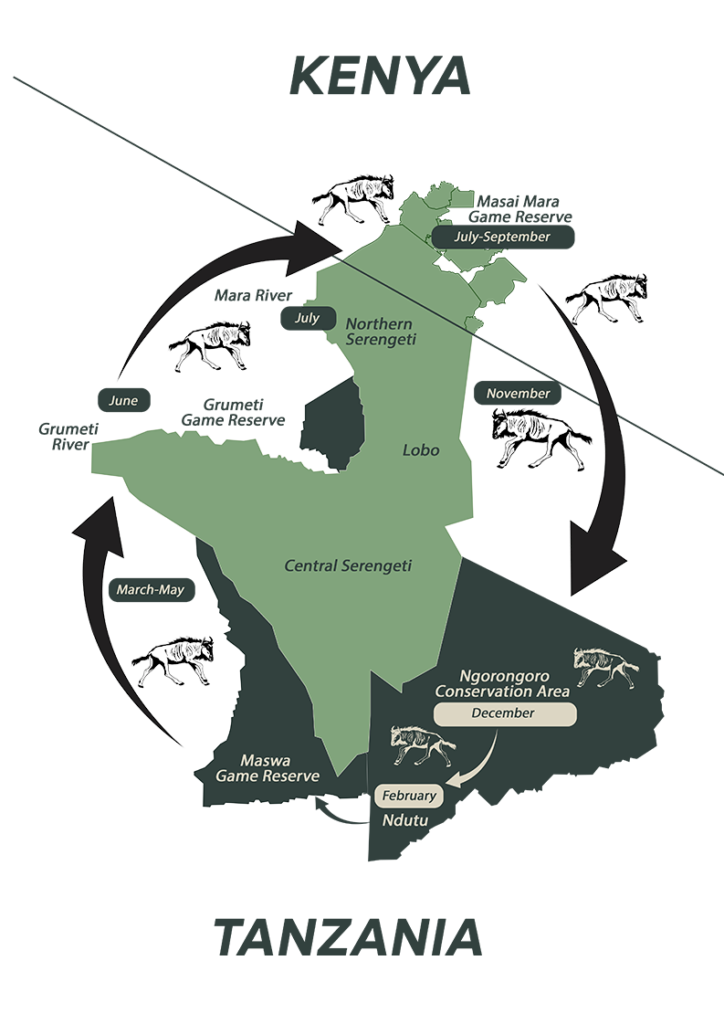
There is no single time of year to see the Great Migration since it is an eternal annual cycle from place to place, year in and year out. However, depending on either the aspect of the Great Migration you want to witness (such as river crossings), or the time of year that you prefer to travel, your safari can be tailored to give you the best chance of seeing what you desire. The Great Migration can be summarized in this way as having four seasons.
Alternatively, you can learn more about when to travel via through the below month-by-month breakdown of the Great Migration.
Whether the great herds are calving in the south or on the move north in search of greener pastures – and then back again – there is a huge variety of astounding scenes unfolding before you.
January – March: Calving Season on the Southern Plains
The wildebeest begin the new year deep in the southern Serengeti and the Ndutu Plains near the Ngorongoro Conservation Area in Tanzania. This is calving season, one of the most extraordinary wildlife spectacles within the Migration itself.
Around February, up to 500,000 wildebeest calves are born within a matter of weeks. The plains turn into a nursery on a massive scale. The calving season attracts lions, leopards, and cheetahs in significant numbers, as predators opportunistically target the young and vulnerable. For wildlife photographers and nature lovers, this period offers exceptional predator-prey interaction and remarkable photographic opportunities.
Best for: Wildlife photography, predator action, calving season, ideal for travelers who prefer a quieter, less-crowded safari experience.
April – May: The Long Rains and the Northward March
As the long rains arrive across East Africa, the herds begin a slow but steady northward march through central and western Serengeti. The landscape is lush and green, the air is fresh, and the herds spread across vast distances.
This is considered the low season for tourism, meaning lodges are quieter and prices are often lower. However, some roads can become difficult to traverse due to the rains. For the adventurous traveler who doesn’t mind unpredictable weather, this is a wonderfully immersive time to be in the Serengeti.
Best for: Budget-conscious travelers, solitude seekers, lush green landscape photography.
June – July: The Migration Arrives in Maasai Mara
By late June to early July, the leading herds of wildebeest begin to gather at the northern edge of the Serengeti, preparing to cross into Kenya’s Maasai Mara National Reserve. The tension during this period is palpable, herds can mass at the riverbanks for days before instinct finally triggers the crossing.
July marks the beginning of peak season in the Maasai Mara. The reserve comes alive with the sound and movement of the herds, and the first dramatic Mara River crossings can occur.
Best for: First-time visitors, witnessing the arrival of the herds, early river crossings.
August: Peak Migration Season — The Mara River Crossings
August is widely considered the pinnacle of the Great Wildebeest Migration. The Maasai Mara is filled with wildebeest, and the famous Mara River crossings are happening at their most frequent and dramatic.
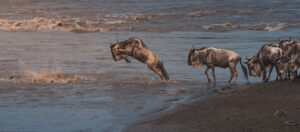
The crossings are not predictable by the hour or even the day. Herds gather nervously at the riverbank, sometimes for hours, before a single animal takes the plunge, and then thousands follow in a chaotic, thundering rush. The giant Nile crocodiles, some of the largest in Africa, have been waiting for this moment. The current itself is also a formidable opponent, particularly for young calves making the crossing for the first time.
Key crossing points during this period include:
- Mara Triangle (western Mara) often described as the most dramatic crossing location
- Talek River area accessible from many central Maasai Mara camps
- Musiara Marsh excellent for general herd movements and predator sightings
Best for: The dramatic river crossings, peak wildlife density, first-time visitors, photographers.
September – October: The Migration Continues and Returns
The herds continue to move through the Maasai Mara into September, with river crossings still occurring, particularly in the first half of the month. By late October, the herds begin their return journey south toward the Serengeti as rains shift and the grazing in the Mara begins to thin.
The return migration is far less dramatic, more of a gradual dispersal than a thundering exodus, but it still represents an impressive sight for any wildlife enthusiast.
Best for: Avoiding the peak-season crowds while still catching river crossings; good value safari packages.
November – December: Back to Tanzania
By November, the majority of the herds have returned to the Serengeti. The short rains begin, and the wildebeest move toward the Lobo, Seronera Valley, and eventually south again toward the Ndutu Plains, completing their annual clockwise circuit.
The ecosystem renews itself, the grass grows green again, and the cycle is set to begin once more.
Best for: Serengeti-focused safaris, birdwatching, uncrowded parks.
Frequently Asked Questions
How many wildebeest are involved in the Great Migration?
The Migration involves over 1.5 million wildebeest, alongside approximately 200,000 zebras and large numbers of Thomson’s gazelles and other plains game.
Why Do Wildebeest Migrate?
Unlike human travelers who plan routes and schedules, wildebeest follow a single guiding force: rain. Every movement made by the herds is driven by the search for fresh grass and reliable water.
Is the Migration dangerous for visitors?
No, you observe the Migration from the safety of a 4×4 vehicle with a professional guide. There is no danger to visitors. The danger, of course, is very real for the wildebeest themselves.
Can I predict exactly when a river crossing will happen?
No one can. Even experienced safari guides with decades of knowledge cannot predict a crossing to the hour. Patience and flexibility in your schedule are essential. Budget at least a full day at the river for the best chance of witnessing a crossing.
How long should I spend in the Maasai Mara to see the Migration?
A minimum of 3 to 4 nights in the Maasai Mara is recommended for the best chances of witnessing a crossing. Five to seven nights significantly increases your odds.
Why the Great Wildebeest Migration Belongs on Your Safari Bucket List
Few experiences in the natural world can rival what unfolds on the Serengeti-Mara ecosystem every year. The sheer scale of the Migration, the rumble of hooves, the clouds of dust, the chaos of a river crossing, the resilience of animals fighting against a current and the jaws of crocodiles is something that photographs and documentaries simply cannot capture in full.
It is one of the last great wildlife movements left on Earth, and it is happening right now.
Whether you choose to witness the calving season’s tender drama in February, the heart-stopping Mara River crossings in August, or the quiet grandeur of the herds moving silently across the Serengeti plains, the Great Wildebeest Migration will stay with you for the rest of your life.