

The Great Wildebeest Migration stretches across nearly 30,000 square kilometres of the Serengeti-Maasai Mara ecosystem, making it one of the largest wildlife movements on Earth. Because the migration is constantly following rainfall and fresh grazing, there is no single location where visitors can see it year-round. Instead, different regions come alive at different times of the year, each offering a unique chapter of this extraordinary journey.
Whether your dream is to witness thousands of newborn calves taking their first steps, photograph dramatic river crossings, or enjoy endless plains covered with grazing herds, choosing the right destination—and the right time—is the key to an unforgettable migration safari.
Here are the best places to experience the Great Wildebeest Migration.
1. Ndutu Plains – Where New Life Begins
Few places capture the beginning of the migration cycle quite like the Ndutu Plains. Located between the Southern Serengeti and the Ngorongoro Conservation Area, this vast landscape becomes the heart of the migration from December through March, when millions of wildebeest settle on the nutrient-rich volcanic grasslands.
The short grass found in Ndutu is exceptionally rich in calcium and phosphorus, making it the ideal feeding ground for pregnant females. Every year, between late January and February, the plains become one of the world’s largest natural maternity wards as nearly half a million calves are born within just a few weeks.
For visitors, Ndutu offers intimate wildlife encounters unlike anywhere else in Africa. Lions, cheetahs, hyenas, and jackals closely follow the herds, creating exceptional opportunities to witness predator-prey interactions. The open grasslands also make wildlife photography easier, allowing unobstructed views across endless plains teeming with life.
If your goal is to experience the miracle of birth, dramatic predator action, and lush green landscapes, Ndutu is undoubtedly one of the finest places to witness the Great Migration.
Best time to visit: December to March, with peak calving in February.
2. Central Serengeti (Seronera) – The Heart of the Ecosystem
Often referred to as the beating heart of Serengeti National Park, the Central Serengeti, particularly the Seronera Valley, is one of the few areas where wildlife viewing is exceptional throughout the year.
As the migration moves north during March, April, and May, thousands of wildebeest and zebras pass through this region on their journey toward the Western Corridor. Although the herds may not remain for long, the area’s permanent rivers support an abundance of resident wildlife, ensuring outstanding game viewing regardless of the migration’s exact location.
Seronera is especially famous for its healthy populations of lions, leopards, cheetahs, elephants, and hippos. The combination of resident wildlife and migrating herds makes it one of the best destinations for travellers hoping to experience both the migration and the Big Five in a single safari.
For photographers, the granite kopjes, acacia-dotted plains, and winding rivers create a diverse range of scenic backdrops that perfectly capture the essence of the Serengeti.
Best time to visit: March to June.
3. Western Corridor – Following the Great Columns
As the long rains come to an end, the migration gradually enters the Western Corridor, a vast stretch of woodland, open plains, and river systems extending toward the Grumeti River.
Between May and June, this region hosts some of the largest concentrations of migrating wildebeest as scattered herds merge into immense columns stretching for kilometres across the landscape. It is here that visitors begin to appreciate the true scale of the Great Migration.
The Western Corridor is also home to the Grumeti River, where the first significant river crossings may occur. Although these crossings are generally smaller and less frequent than those at the Mara River, they remain dramatic, particularly because of the enormous Nile crocodiles that inhabit the river year-round.
Compared to the northern Serengeti, the Western Corridor receives fewer visitors, offering a quieter and more exclusive safari experience while still delivering remarkable wildlife encounters.
Best time to visit: May to June.
4. Northern Serengeti – The Stage for the Mara River Crossings
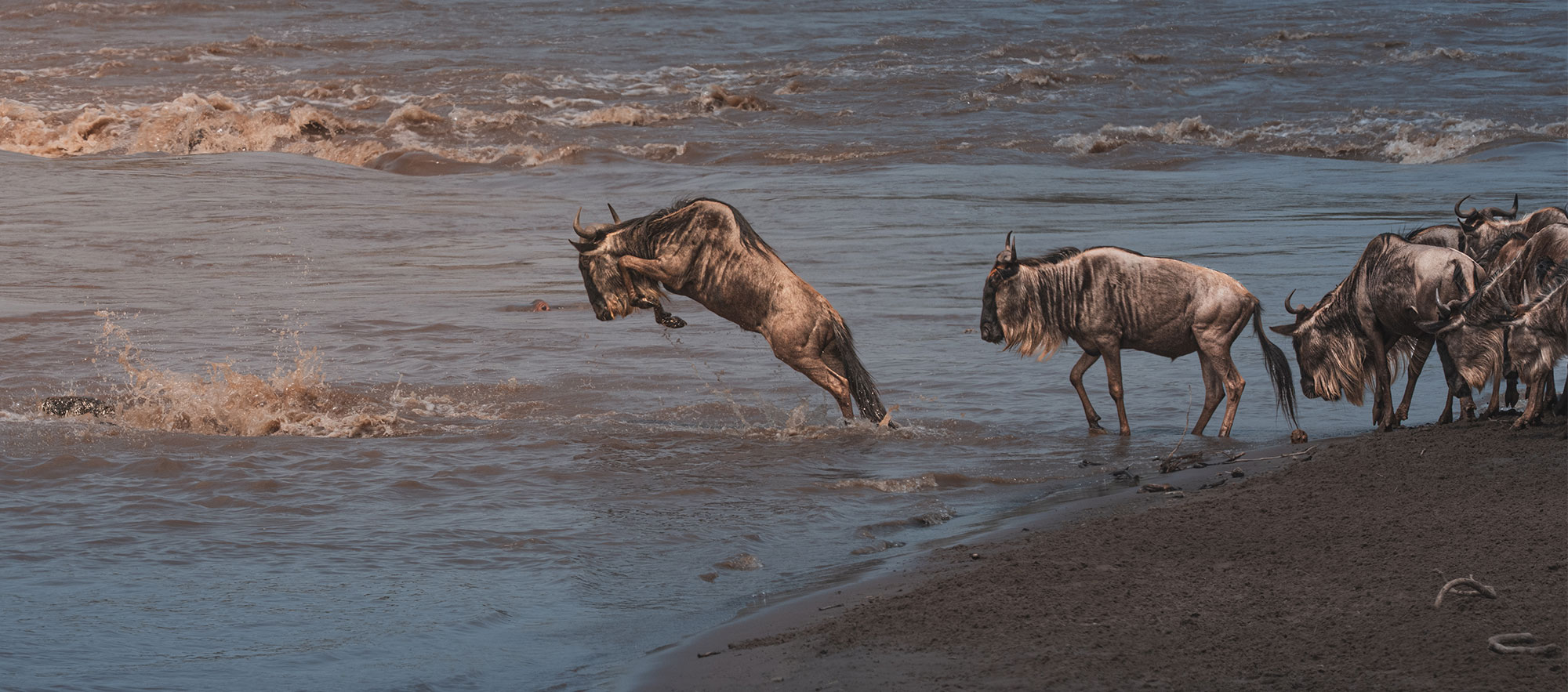
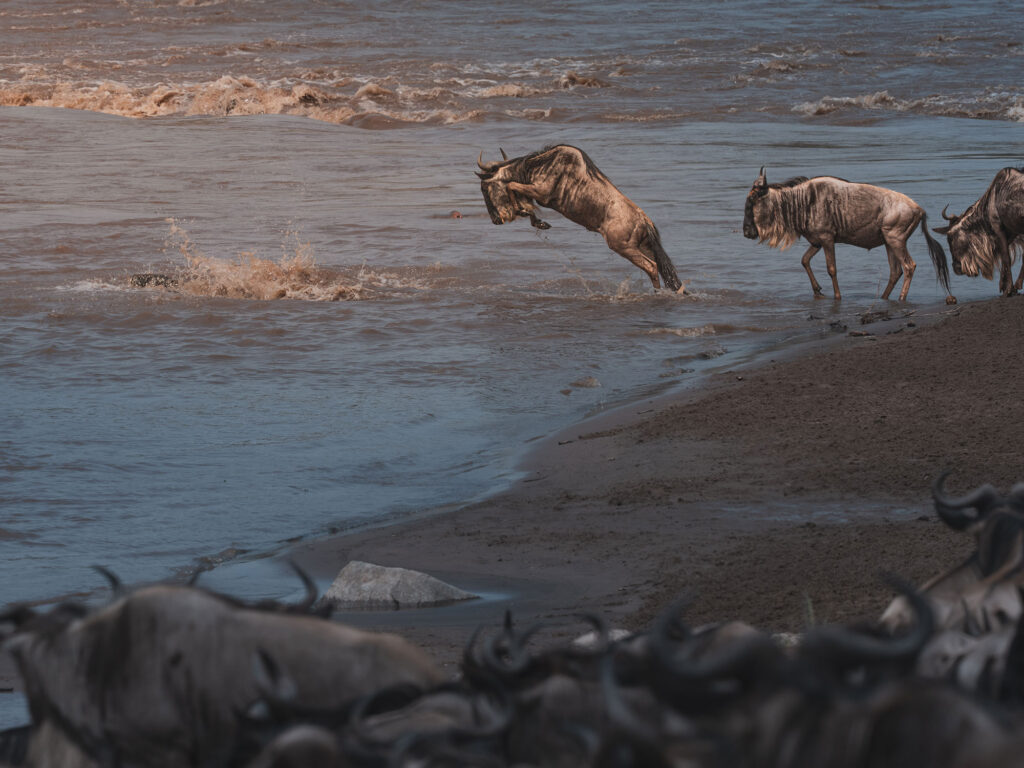
For many travellers, the Northern Serengeti is the ultimate migration destination. Between July and October, this remote wilderness becomes the setting for the legendary Mara River crossings, one of the most iconic wildlife spectacles on Earth.
Areas such as Kogatende, Lamai, and Wogakuria provide front-row seats to the migration as thousands of wildebeest gather nervously along the riverbanks before attempting the dangerous crossing into Kenya’s Maasai Mara.
The drama is intense. Nile crocodiles wait beneath the water, lions patrol nearby grasslands, and the steep riverbanks test every animal’s determination. Yet despite the danger, the overwhelming majority of the herds successfully continue their journey, driven by an instinct older than history itself.
Beyond the river crossings, the Northern Serengeti offers breathtaking scenery, excellent predator sightings, and a sense of remoteness that makes every safari feel exclusive.
Best time to visit: July to October.
5. Maasai Mara National Reserve – Where the Migration Reaches Its Peak
Crossing into Kenya, the Maasai Mara National Reserve hosts the migration from approximately July through October, depending on rainfall. During this period, vast herds spread across the reserve’s rolling grasslands, taking advantage of abundant grazing before eventually returning to Tanzania.
The Maasai Mara is renowned for its extraordinary predator density. Lion prides, cheetahs, leopards, and spotted hyenas thrive on the seasonal abundance of prey, making this one of the best places in Africa to witness dramatic wildlife interactions.
Although many visitors come hoping to see a Mara River crossing, the reserve offers much more than this single event. Endless wildlife-filled plains, exceptional Big Five sightings, beautiful acacia woodlands, and spectacular African sunsets make every game drive memorable.
For first-time safari travellers, the Maasai Mara combines world-famous wildlife with relatively easy access, making it one of Africa’s premier safari destinations.
Best time to visit: July to October.