

January – The Herds Gather on the Emerald Plains
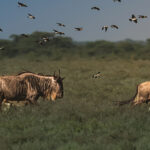
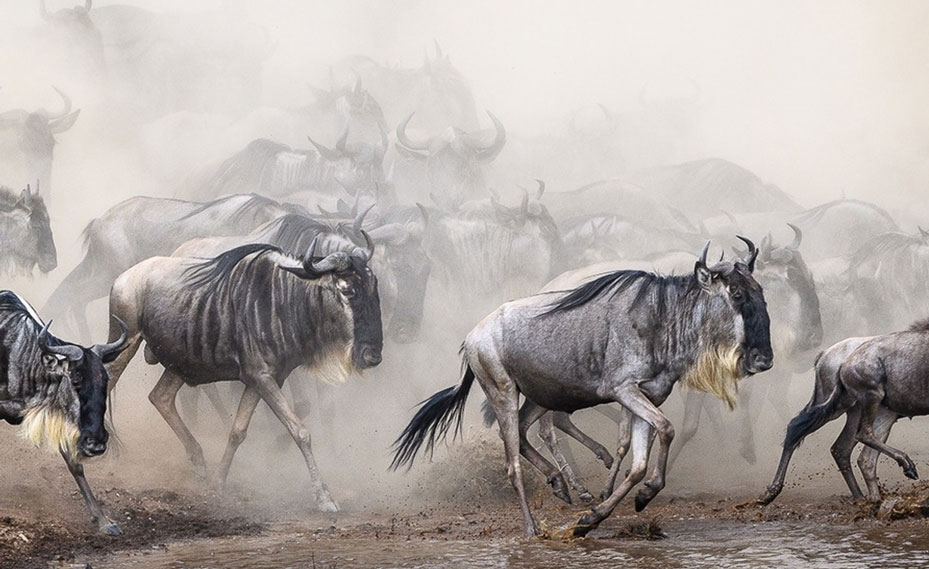
As the first rains breathe life into the southern Serengeti, the endless golden plains transform into a lush carpet of emerald grass. This seasonal renewal draws more than 1.5 million wildebeest, accompanied by hundreds of thousands of zebras and gazelles, into the fertile short-grass plains around Ndutu, the Southern Serengeti, and the eastern reaches of the Ngorongoro Conservation Area. Rich volcanic soils, formed thousands of years ago from the eruptions of the Ngorongoro Highlands, produce grasses packed with calcium and phosphorus—nutrients essential for heavily pregnant wildebeest preparing to give birth.
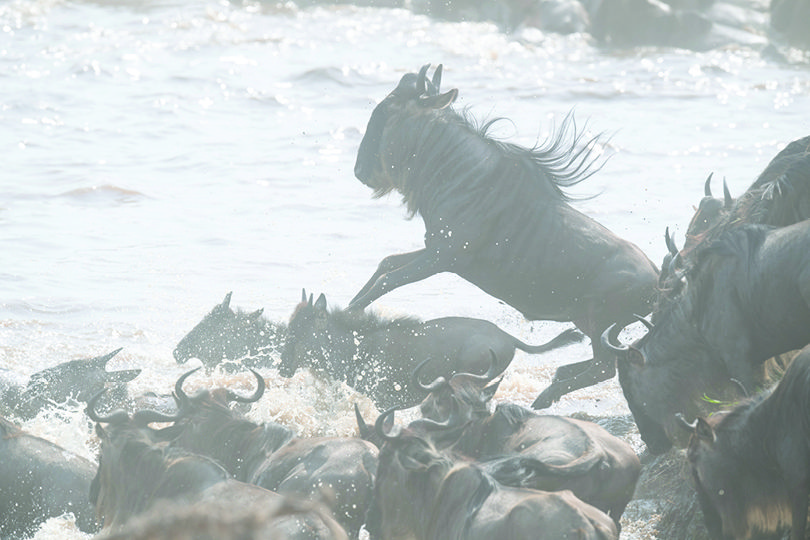
Unlike the dramatic river crossings that dominate wildlife documentaries, January is a month of anticipation. The migration slows, allowing the herds to spread across the open plains where fresh grazing is abundant. Everywhere you look, thousands of animals feed peacefully, conserving energy for the demanding weeks ahead. It is a remarkable reminder that the Great Migration is not simply about movement, but about survival, renewal, and the timeless rhythm of nature.
Towards the end of the month, the first calves begin to arrive. Within minutes of birth, they struggle to their feet, instinctively learning to stand and run in a landscape where hesitation can be fatal. This synchronized birthing strategy has evolved over thousands of years, ensuring that predators are overwhelmed by sheer numbers rather than being able to focus on individual newborns.
For predators, January marks the beginning of a season of abundance. Lions patrol the plains, cheetahs scan the horizon from termite mounds, and spotted hyenas move between the scattered herds under the cover of dawn and dusk. Black-backed jackals wait patiently for vulnerable calves, while vultures circle high above, ever alert to opportunities created by the constant struggle between predator and prey. Witnessing these interactions offers a profound understanding of the delicate balance that sustains one of Africa’s greatest ecosystems.
For photographers, January is among the most rewarding months of the year. The short grass provides uninterrupted views across the plains, making it easier to capture dramatic wildlife scenes. Morning mist, afternoon thunderstorms, and golden evening light combine to create spectacular photographic conditions, while the vibrant green landscapes offer a striking contrast to the dark coats of the wildebeest and the golden hues of hunting lions. Every game drive presents opportunities to document powerful stories of new life, family bonds, and the relentless challenges of survival.
Birdwatchers are equally rewarded during this period. Seasonal wetlands attract an impressive diversity of resident and migratory species, from elegant Secretary Birds striding through the grasslands to soaring Steppe Eagles and colourful Lilac-breasted Rollers. The abundance of insects, fresh vegetation, and water creates ideal conditions for birdlife, making January one of the finest months for combining a migration safari with exceptional birding.
With warm days averaging between 26 and 29°C (79–84°F), cool mornings, and occasional short showers, the weather remains comfortable for game drives. The rain is rarely disruptive; instead, it enhances the beauty of the landscape, settles the dust, and often produces dramatic skies that elevate both wildlife viewing and photography.
If your dream safari is less about crowds and more about experiencing the quieter, more intimate beginnings of the Great Migration, January is an exceptional time to visit. It is a season defined by promise, a moment when the plains are full of expectation, predators prepare for opportunity, and thousands of newborn calves begin their first chapter in one of the world’s greatest wildlife spectacles.
February – New Life Across the Southern Plains
If January is a season of anticipation, February is the celebration of new life. Across the sweeping short-grass plains of Ndutu, the southern reaches of Serengeti National Park, and the eastern boundary of the Ngorongoro Conservation Area, the Great Wildebeest Migration reaches one of its most extraordinary and emotionally captivating chapters. The landscape, nourished by the seasonal rains and enriched by ancient volcanic soils, becomes the birthplace of an entire generation.
Within a remarkably short period of just two to three weeks, nearly half a million wildebeest calves are born. On peak days, more than 8,000 calves can enter the world in a single day, making this one of the largest synchronized birthing events on the planet. The sheer scale is almost impossible to comprehend until you witness it firsthand. Everywhere across the plains, newborn calves wobble uncertainly on slender legs, while protective mothers instinctively encourage them to stand. Within minutes, they are taking their first tentative steps. Within hours, they are capable of running with the herd—an evolutionary necessity in a landscape where danger is never far away.
This remarkable synchronization is no coincidence. It is one of nature’s most effective survival strategies. By giving birth within such a compressed timeframe, the wildebeest overwhelm predators with an abundance of prey. While lions, cheetahs, hyenas, leopards, jackals, and raptors enjoy one of the richest hunting seasons of the year, the vast number of calves ensures that most survive those vulnerable first weeks. It is a powerful reminder that the Great Migration is not merely a journey across East Africa but an intricate ecological process that has evolved over thousands of years.
For predators, February is a month of opportunity. Lion prides establish territories across the southern plains, where vulnerable calves provide a reliable food source. Cheetahs thrive in the open landscape, using the short grasses to spot young animals from a distance before accelerating into breathtaking high-speed pursuits. Spotted hyenas patrol tirelessly, often competing fiercely with lions over fresh kills, while black-backed jackals quietly search the fringes of the herds for isolated calves or afterbirth. Above the plains, vultures circle patiently alongside Martial Eagles, Tawny Eagles, and Bateleurs, each playing a vital role in the ecosystem’s natural cycle.
Yet February is not defined solely by predator-prey encounters. It is equally a month of abundance and renewal. The southern Serengeti is at its most beautiful, with vibrant green grasslands stretching towards the horizon beneath dramatic skies shaped by passing rain showers. Seasonal pans and wetlands support an extraordinary diversity of birdlife. Colourful species such as the Lilac-breasted Roller, Fischer’s Lovebird, Grey Crowned Crane, and Secretary Bird are joined by Palearctic migrants escaping the northern winter. For birdwatchers, the combination of breeding residents and migratory visitors makes February one of the finest months to explore the Serengeti ecosystem.
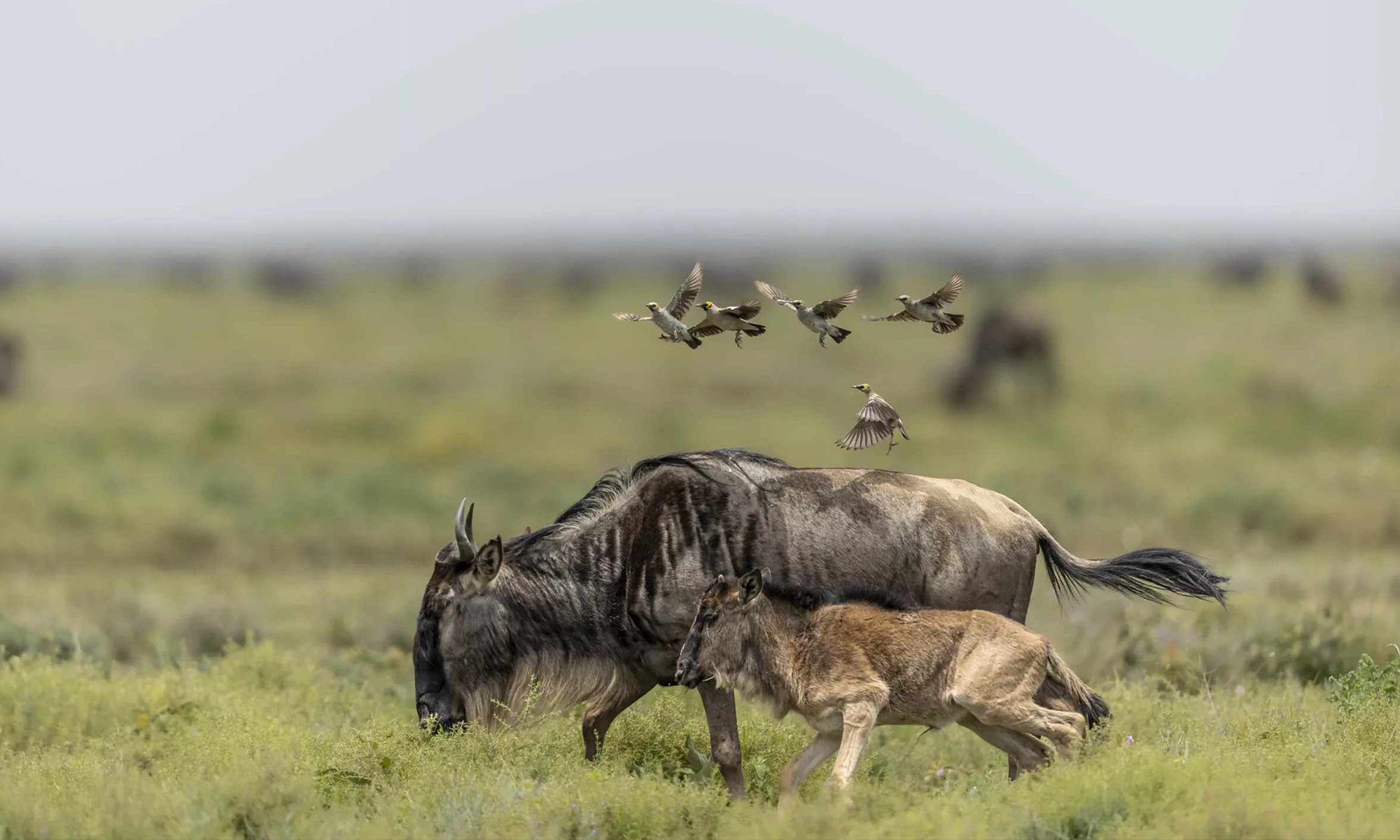
From a photographic perspective, few destinations on Earth rival the opportunities presented during this season. The soft morning light, lush landscapes, dramatic cloud formations, and endless wildlife interactions provide photographers with a rich visual canvas. Intimate moments between mothers and calves unfold throughout the day, while predator action often peaks during the cool hours of dawn and dusk. Unlike the towering dust clouds associated with the dry season, February offers crisp, vibrant colours that showcase the Serengeti at its most alive.
Weather conditions remain warm and generally pleasant, with daytime temperatures averaging between 26°C and 29°C (79°F–84°F). Brief afternoon showers are common but seldom interfere with game drives. Instead, they refresh the landscape, reduce dust, and create striking lighting conditions that enhance both wildlife viewing and photography.
For travellers, February offers a more intimate safari experience than the famous river crossing months. Visitor numbers are moderate, allowing longer wildlife sightings and quieter encounters. It is the ideal time for photographers, families, wildlife enthusiasts, and anyone seeking to witness the Great Migration in its most life-affirming stage. Rather than focusing on dramatic river crossings, February reveals the quieter miracle that sustains the migration itself—the birth of the next generation.
As the month draws to a close, subtle changes begin to unfold. The youngest calves grow stronger each day, the lush grasses slowly lose their freshness, and instinct begins to guide the immense herds toward new grazing grounds. Before long, the endless columns of wildebeest will begin moving northwest, marking the transition into the next chapter of their remarkable annual journey.
March – The Journey North Begins
By the time March arrives, the southern Serengeti has fulfilled its most important role in the Great Migration. Across the fertile plains of Ndutu, the Southern Serengeti, and the eastern reaches of the Ngorongoro Conservation Area, the frantic pace of the calving season begins to settle. The thousands of newborn calves that arrived in February are no longer taking their first uncertain steps—they are stronger, faster, and capable of keeping pace with the vast herds that will soon embark on the next chapter of their extraordinary journey.
Although the landscape remains lush from the seasonal rains, subtle changes begin to influence the movements of the migration. The nutrient-rich short grasses that sustained the herds during the calving months are gradually being grazed down. At the same time, fresh grazing starts emerging farther northwest as the long rains spread across the Serengeti ecosystem. Responding to these changing conditions, the immense herds begin to stir. There is no dramatic departure or single day when millions of animals suddenly march north. Instead, countless smaller groups gradually merge into longer columns, instinctively following ancient migration routes that have guided generations of wildebeest for thousands of years.
March is, therefore, a month of transition—a period that beautifully illustrates why the Great Migration is not defined by spectacular river crossings alone. It is a living, ever-changing cycle shaped by rainfall, grass growth, and survival. Some herds may still linger around Ndutu and the southern plains, particularly if rainfall remains favourable, while others begin drifting towards Naabi Hill, Gol Kopjes, and the Central Serengeti. This natural variability means no two March safaris are exactly alike, making each experience unique.
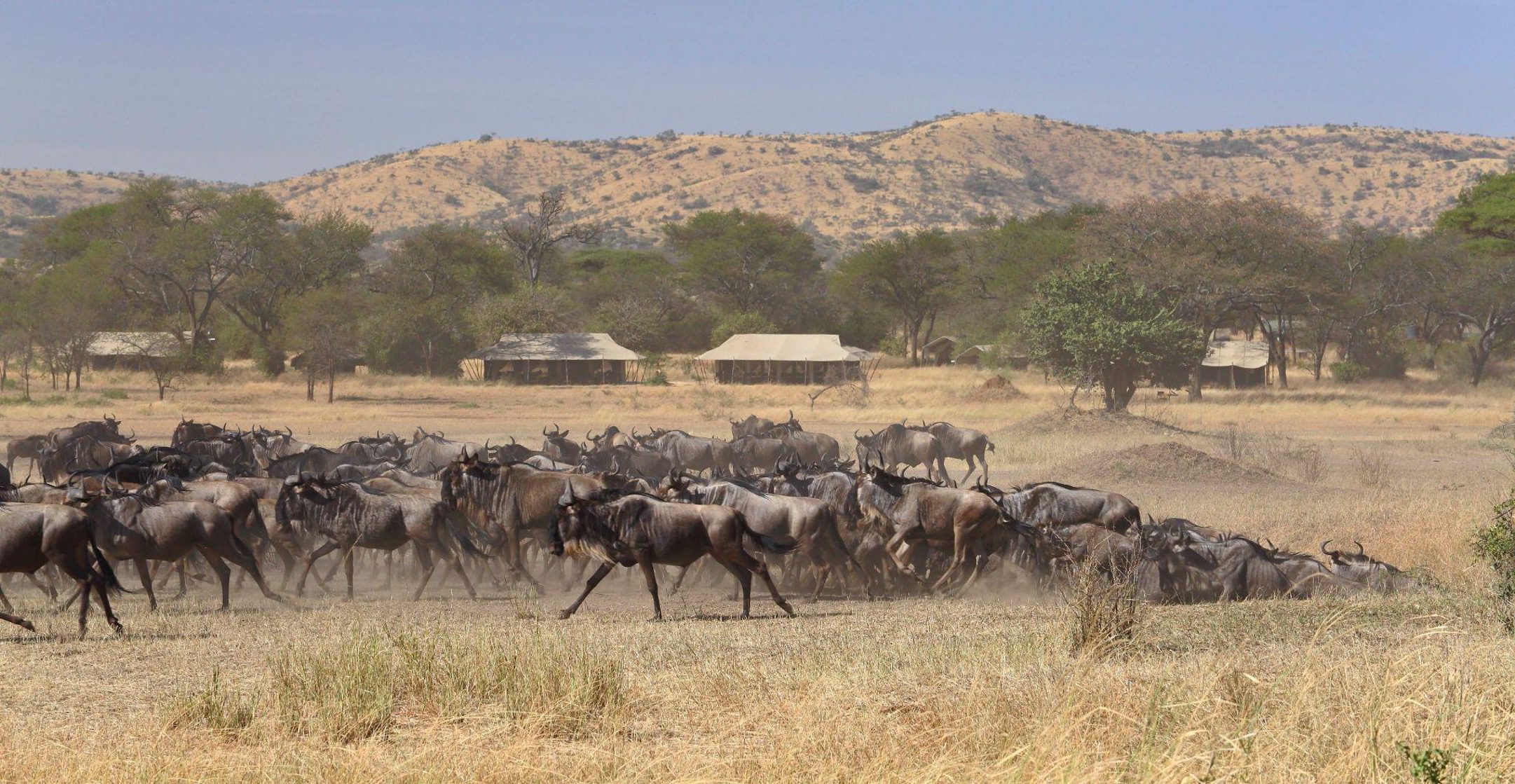
The young calves, now only a few weeks old, must quickly adapt to life on the move. Having already learned to outrun danger, they now face the challenge of travelling long distances with the herd. It is a remarkable display of endurance. Day after day, the migration advances across the open plains, stopping frequently to graze before continuing onward. From the air, these moving columns resemble dark rivers flowing across an endless sea of green.
For predators, March remains a productive month, though the dynamics begin to change. During the peak calving season, vulnerable newborns provided relatively easy hunting opportunities. By March, however, the calves are stronger and far more agile, forcing predators to work harder for every meal. Lion prides continue to shadow the herds, while cheetahs take advantage of the open plains to pursue the young wildebeest and Thomson’s gazelles. Leopards remain elusive within riverine woodlands, ambushing unsuspecting prey that venture too close to cover. Spotted hyenas, ever opportunistic, patrol the migration routes, often competing with lions over fresh kills or targeting weakened animals unable to maintain the pace of the journey.
One of the most fascinating aspects of March is observing the growing independence of the calves. Mothers become less protective as their offspring gain confidence, and large nursery groups of young wildebeest can often be seen moving together across the plains. These social interactions provide endless opportunities to witness the complex behaviour that underpins one of the world’s greatest wildlife spectacles.
The long rains also breathe new life into the Serengeti. Scattered thunderstorms roll across the horizon, filling seasonal streams and creating dramatic skies that constantly change throughout the day. While some visitors worry about rain, experienced safari-goers know that March offers some of the year’s most beautiful landscapes. The plains remain vibrant green, wildflowers begin to appear in certain areas, and the softer light produced by passing clouds creates ideal conditions for photography. Dust, so common during the dry season, is almost entirely absent, allowing colours to appear richer and more vibrant.
Birdlife reaches another seasonal high. The combination of fresh vegetation, abundant insects, and temporary wetlands attracts an extraordinary variety of resident and migratory species. Secretary Birds stride gracefully through the grasslands in search of snakes, while Kori Bustards display during the breeding season. European Bee-eaters, Yellow Wagtails, Steppe Eagles, Montagu’s Harriers, and numerous storks remain present before beginning their own migrations northwards in the coming months. For birdwatchers, March offers an exceptional opportunity to combine the Great Migration with world-class birding.
Photographers are particularly rewarded during this period because the migration is constantly changing. Endless lines of wildebeest stretching across emerald plains create striking compositions that convey the scale of the migration. The dramatic weather adds another layer of creativity, with shafts of sunlight breaking through storm clouds to illuminate sections of the landscape. Portraits of young calves, interactions between mothers and offspring, predator encounters, and expansive panoramic scenes all combine to make March one of the Serengeti’s most photogenic months.
From a safari planning perspective, March is often overlooked in favour of the more famous calving and river crossing seasons. Yet this relative quietness is precisely what makes it so appealing. Visitor numbers are generally lower, allowing more exclusive wildlife sightings and a greater sense of wilderness. For travellers who appreciate authentic safari experiences away from peak-season crowds, March delivers exceptional value while showcasing a different, more contemplative side of the Great Migration.
As the month draws to a close, the transformation becomes increasingly evident. The scattered groups of wildebeest begin to merge into longer, denser columns. The journey north is no longer tentative—it is gathering momentum. Guided by instinct and the promise of fresh grazing, the migration presses onward toward the central Serengeti and the Western Corridor, where new challenges await. The tranquil calving grounds are left behind, and the next stage of Africa’s greatest wildlife spectacle begins in earnest.
April – Following the Long Rains
By April, the Great Wildebeest Migration enters one of its most dynamic yet least understood phases. The dramatic scenes of calving on the southern plains have become a memory, replaced by a landscape in constant motion as the herds respond to the arrival of the long rains. This is the season when the Serengeti truly comes alive. Rivers begin to swell, seasonal streams flow once more, and the plains burst into vibrant shades of green. Fresh grazing appears across the central and western regions of the ecosystem, drawing the migration steadily northwest.
Unlike the concentrated spectacle of February’s calving season, April is defined by movement. The wildebeest no longer gather in vast stationary herds but stretch into seemingly endless columns that snake across the landscape. From a distance, these lines of animals resemble dark ribbons weaving through the emerald plains, each herd instinctively following ancient routes carved into the Serengeti over countless generations. It is during this time that visitors begin to appreciate the migration not as a single event, but as a continuous journey shaped by rain, instinct, and survival.
Most of the herds gradually leave the southern plains behind, moving through the Central Serengeti, the Seronera Valley, Naabi Hill, and toward the Moru Kopjes. Depending on rainfall patterns, some groups may already be approaching the Western Corridor, while others remain scattered across central grazing areas where nutritious grass is still plentiful. This variation is perfectly natural and highlights one of the defining characteristics of the Great Migration: it is never governed by a strict calendar but by nature itself.
For the young wildebeest born just weeks earlier, April marks their first true test of endurance. They must now keep pace with adults as the daily distances increase. Every step strengthens them for the demanding months ahead, where rivers, predators, and long-distance travel will challenge their survival. Watching these young animals confidently navigate the landscape is a testament to one of nature’s most remarkable evolutionary adaptations.
The long rains also influence predator behaviour. With prey spread over a much larger area, hunting becomes less predictable than during the concentrated calving season. Lion prides extend their territories along migration routes, patiently waiting where herds funnel through narrow valleys or gather near water sources. Cheetahs continue to exploit the open plains, relying on speed rather than stealth, while leopards remain hidden within riverine forests surrounding the Seronera River and its tributaries. Spotted hyenas travel considerable distances following the migration, their haunting calls echoing across the plains after sunset as they compete with lions for feeding opportunities.
April offers an extraordinary chance to observe one of the Serengeti’s lesser-known ecological marvels—the interaction between grazing herbivores and the landscape itself. As millions of wildebeest, zebras, and gazelles move across the ecosystem, they consume enormous quantities of grass while simultaneously fertilizing the soil with nutrient-rich dung. This natural process stimulates fresh plant growth, disperses seeds, and supports countless insects, birds, and smaller mammals. The migration is not simply a movement of animals; it is the engine that sustains one of the world’s most intact ecosystems.
For bird enthusiasts, April remains exceptionally rewarding. Seasonal wetlands created by the long rains attract a remarkable diversity of waterbirds, while raptors continue to patrol the migration routes. Secretary Birds stride elegantly across the grasslands hunting snakes and insects, Grey Crowned Cranes perform elaborate courtship displays, and colourful species such as the Lilac-breasted Roller, European Bee-eater, and African Hoopoe add flashes of colour to the green landscape. Although some Palearctic migrants begin preparing for their return journey north, bird diversity remains among the highest of the year.
Photographers often regard April as a hidden gem. While heavy rain occasionally interrupts game drives, it also creates dramatic atmospheric conditions rarely seen during the dry season. Towering thunderclouds, rainbows arching over the plains, reflections in seasonal pools, and shafts of golden light breaking through storm-filled skies provide spectacular opportunities for landscape photography. The lush vegetation offers vivid colour contrasts against the dark coats of the wildebeest, while the absence of dust allows for exceptionally clear images. Patience is richly rewarded, as changing weather can transform an ordinary wildlife scene into an unforgettable photograph within minutes.
One of April’s greatest advantages is the sense of solitude. As it falls within the traditional “green season,” visitor numbers are significantly lower than during the peak migration months. Many safari vehicles may spend hours exploring without encountering another vehicle, creating a more intimate wilderness experience. Wildlife sightings remain exceptional, accommodation rates are often more attractive, and travellers enjoy a quieter, more exclusive perspective of the Serengeti.
The weather during April is characterized by warm temperatures averaging 25–28°C (77–82°F), accompanied by regular afternoon or evening showers. While rainfall is more frequent than in previous months, it rarely rains continuously throughout the day. Instead, game drives often alternate between sunshine and dramatic thunderstorms, each revealing a different face of the Serengeti. Packing lightweight waterproof clothing and protecting camera equipment from occasional showers ensures a comfortable safari without limiting opportunities for exploration.
As April gradually gives way to May, the pace of the migration becomes increasingly purposeful. The scattered herds begin merging into immense processions, their destination now firmly set toward the Western Corridor. The easy grazing of the southern plains is behind them, and the first major obstacles of the annual journey lie ahead. What began as scattered movements following fresh grass is about to transform into one of the most awe-inspiring wildlife spectacles on Earth—the formation of the great migration columns that will dominate the Serengeti in the weeks to come.
May – The Great Columns Form
May marks one of the most impressive yet underrated stages of the Great Wildebeest Migration. By now, the long rains are beginning to ease, and the Serengeti is alive with movement. The scattered herds that drifted north throughout March and April now converge into immense columns, creating one of the most breathtaking wildlife spectacles on Earth. Stretching for kilometres across the plains, these living rivers of wildebeest, accompanied by thousands of zebras and gazelles, move with remarkable purpose toward the Western Corridor and the western reaches of the Central Serengeti.
This is the month when the true scale of the migration becomes unmistakable. From elevated viewpoints, the horizon appears to pulse with life as endless lines of animals march through open grasslands, woodlands, and river valleys. The synchronized movement is guided not by a leader but by instinct, rainfall, and the relentless search for fresh grazing. Every step brings the herds closer to the first major natural barriers of their journey.
As grazing becomes scarcer in the central plains, the migration continues northwest toward the fertile landscapes surrounding the Mbalageti and Grumeti regions. The calves born earlier in the year have grown stronger and now travel confidently alongside the adults, covering greater distances each day. The migration has shifted from a season of birth to one of endurance, where strength and unity become essential for survival.
Predators remain close behind. Lions establish territories along key migration routes, while spotted hyenas shadow the moving herds, waiting for opportunities to isolate the weak or injured. Leopards patrol the riverine forests bordering seasonal watercourses, and cheetahs continue to hunt in the open plains where visibility favours their incredible speed. Every game drive carries the possibility of witnessing the timeless contest between predator and prey, unfolding against a backdrop of dramatic landscapes.
For photographers, May is a month of extraordinary compositions. Rather than focusing on individual wildlife encounters, the emphasis shifts to scale and movement. Endless columns of wildebeest winding across green plains, dust beginning to rise beneath thousands of hooves, and moody skies left behind by the retreating rains create images that capture the sheer magnitude of the Great Migration. The softer light of the green season and the relatively low number of safari vehicles make this an excellent time for uninterrupted photography.
Birdlife remains abundant, with wetlands and rivers supporting a rich variety of waterbirds, raptors, and colourful resident species. Although some migratory birds have begun their return to the Northern Hemisphere, the Serengeti continues to offer rewarding birdwatching throughout the month.
May is also one of the Serengeti’s best-kept secrets for travellers seeking a quieter safari. Visitor numbers are still relatively low compared to the peak dry season, allowing for more exclusive wildlife sightings and a stronger sense of wilderness. Many camps also offer excellent value during this period, making it an attractive choice for those looking to experience the migration without the peak-season crowds.
As the month comes to an end, anticipation builds across the ecosystem. The Grumeti River lies ahead, marking the first significant river obstacle of the migration. While not every herd will cross immediately, the stage is being set for one of the next great chapters of this extraordinary journey.
June – Into the Western Corridor
June marks the beginning of the dry season and ushers the Great Wildebeest Migration into one of its most exciting phases. The lush green landscapes of the southern Serengeti gradually give way to drier grasslands as the herds push deeper into the Western Corridor and the northern reaches of the Central Serengeti. With fresh grazing becoming increasingly scarce, more than a million wildebeest, accompanied by thousands of zebras and gazelles, continue their relentless journey northwest in search of food and water.
By now, the migration has become more concentrated. Vast herds gather along traditional routes leading toward the Grumeti River, one of the first major natural obstacles they must overcome. Unlike the famous Mara River crossings that occur later in the year, Grumeti crossings are often less predictable and can happen over several weeks. Yet they are no less dramatic. The river is home to large Nile crocodiles that have waited patiently through the wet season, while steep riverbanks and strong currents add another layer of danger for the migrating herds.
Not every herd crosses the Grumeti in June. Some continue feeding in the surrounding plains, while others move through the woodlands of the Western Corridor before gradually advancing north. This staggered movement is a reminder that the Great Migration is a dynamic natural process, influenced by rainfall and grazing conditions rather than fixed dates on a calendar.
Predators continue to shadow the migration at every turn. Lion prides patrol the riverbanks and open plains, taking advantage of bottlenecks where the herds slow down before crossing. Spotted hyenas remain close behind, often competing with lions over fresh kills, while leopards quietly occupy the riverine forests bordering the Grumeti. The combination of dense wildlife populations and limited water sources creates exceptional opportunities to witness predator-prey interactions.
As the landscape dries, wildlife viewing becomes increasingly rewarding. Vegetation begins to thin, making it easier to spot animals across the plains and around permanent water sources. Dust kicked up by thousands of hooves hangs in the air during the golden hours of sunrise and sunset, creating dramatic scenes that photographers dream of. Whether capturing long lines of wildebeest stretching to the horizon or the tense moments before a river crossing, June offers outstanding photographic opportunities.
Birdlife also remains impressive, particularly around rivers, seasonal pools, and woodlands where kingfishers, bee-eaters, fish eagles, and a variety of herons can still be found. Raptors continue to follow the migration, scanning the landscape for opportunities created by the constant movement of wildlife.
For safari travellers, June represents the perfect balance between excellent wildlife viewing and relatively moderate visitor numbers. The dry season has begun, roads are improving after the rains, and many camps reopen fully in preparation for the peak migration months ahead. It is an ideal time for those who want to experience the migration before the busiest safari season arrives.
As June draws to a close, the herds continue their gradual advance toward the Northern Serengeti. Ahead lies the Mara River—one of the greatest challenges of the migration and the stage for some of Africa’s most iconic wildlife moments.
July – The First Great River Crossings
July marks the beginning of one of the most anticipated chapters of the Great Wildebeest Migration. As the dry season tightens its grip on the Serengeti, fresh grazing becomes increasingly scarce in the south and west, driving the herds steadily toward the Northern Serengeti. By now, vast numbers of wildebeest, zebras, and gazelles have travelled hundreds of kilometres, and a formidable obstacle stands between them and the nutrient-rich grasslands of Kenya’s Maasai Mara—the mighty Mara River.
It is during July that the first major Mara River crossings typically begin, although nature rarely follows a fixed calendar. Some years, crossings start in late June, while in others they do not gather momentum until late July or early August. This unpredictability is part of what makes the Great Migration so extraordinary. Safari guides spend countless hours tracking the movement of the herds, interpreting weather patterns, grazing conditions, and animal behaviour to position guests in the best possible locations.
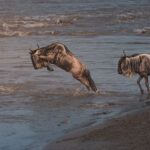
As the migration reaches the northern Serengeti, the atmosphere changes dramatically. Thousands of wildebeest gather along the riverbanks, pacing back and forth as if weighing the risks ahead. The river itself is not particularly wide, but its steep banks, strong currents, and resident Nile crocodiles make every crossing a life-or-death decision. Hours may pass with the herds hesitating at the water’s edge before a single animal finally leaps into the river. In an instant, hesitation turns to chaos as thousands follow in a thunder of hooves, splashing through the current in one of Africa’s most iconic wildlife spectacles.
Yet the Mara River is only one part of July’s story. Many herds remain within the Kogatende, Lamai, and northern Serengeti regions, feeding on available grass while waiting for the right conditions to cross. Others continue arriving from the central Serengeti, meaning wildlife concentrations across the north are exceptional throughout the month. This diversity of movement ensures that every safari offers something different, whether it is a dramatic crossing, a predator encounter, or the breathtaking sight of endless herds stretching across the landscape.
Predators take full advantage of this seasonal abundance. Lions establish territories near popular crossing points, patiently waiting for exhausted animals emerging from the river. Leopards patrol the riverine woodlands, while spotted hyenas follow the migration routes in search of weakened individuals. In the river itself, massive Nile crocodiles lie almost motionless beneath the surface, relying on patience rather than pursuit. Although dramatic crocodile attacks capture global attention, many crossings end successfully, demonstrating the remarkable resilience and determination of the migrating herds.
For photographers, July is one of the finest months of the year. The dry season produces clear skies, golden grasslands, and excellent visibility, while the tension surrounding potential river crossings creates unforgettable storytelling opportunities. From dust clouds rising behind approaching herds to dramatic action at the water’s edge, every game drive holds the possibility of witnessing a once-in-a-lifetime moment. However, patience is essential—river crossings cannot be scheduled or guaranteed, and often the most memorable experiences come from observing the behaviour leading up to the crossing itself.
Wildlife viewing extends far beyond the migration. The Northern Serengeti supports healthy populations of elephants, giraffes, buffaloes, topi, elands, and resident predators, making every drive rewarding even when the herds are on the move. Birdlife also remains excellent, with African Fish Eagles calling from riverside trees, colourful bee-eaters darting through the air, and numerous raptors taking advantage of the seasonal abundance of prey.
As one of the most sought-after safari months, July also marks the beginning of the high season. Luxury lodges and mobile migration camps in the Northern Serengeti fill quickly, and securing accommodation well in advance is highly recommended. For travellers seeking to witness the migration at its most dramatic, early planning is just as important as choosing the right destination.
As the month progresses, more herds successfully cross into the Maasai Mara, while others continue arriving from the south. The stage is now set for August, when the Mara River becomes the epicentre of one of the world’s greatest wildlife spectacles.
August – Drama at the Mara River
If there is one month that has come to define the Great Wildebeest Migration, it is August. By now, the migration has reached its dramatic peak in the Northern Serengeti and Kenya’s Maasai Mara, where one of nature’s greatest survival spectacles unfolds along the legendary Mara River. Hundreds of thousands of wildebeest, accompanied by zebras and gazelles, continue their relentless search for fresh grazing, but between them and the greener plains lies a river filled with danger.
August is often regarded as the best month to witness the famous Mara River crossings, although, like every stage of the migration, they remain entirely dependent on nature. Herds gather at crossing points in enormous numbers, sometimes waiting for hours—or even days—as they nervously pace the riverbanks. The tension is almost tangible. One moment, complete silence; the next, a single wildebeest leaps into the water, triggering an avalanche of thousands that surge forward in a deafening roar of hooves, splashing water and dust into the air.
The crossing itself is only part of the story. Steep riverbanks, swift currents, and giant Nile crocodiles present formidable challenges, while lions, leopards, and spotted hyenas wait patiently on the opposite side for exhausted animals that have survived the crossing. Despite the dangers, the vast majority of the herds succeed, driven by an instinct that has sustained this remarkable migration for thousands of years.
During August, wildlife is spread across both sides of the international border. Many herds graze on the rolling plains of the Maasai Mara, while others remain in the Northern Serengeti, repeatedly crossing the Mara River as they respond to changing grazing conditions. It is not uncommon for the same herd to cross the river multiple times during the season, making every day unpredictable and every safari unique.
Beyond the river crossings, August offers some of the finest wildlife viewing in East Africa. The dry season concentrates animals around permanent water sources, creating exceptional opportunities to observe elephants, buffaloes, giraffes, topi, elands, and an impressive diversity of predators. The open grasslands also make it easier to spot cheetahs hunting, lion prides resting after a successful kill, and leopards hidden among the riverine trees.
For photographers, August is nothing short of extraordinary. The golden hues of the dry season, combined with dramatic dust clouds, clear blue skies, and intense wildlife action, create unforgettable images. River crossings provide fast-paced action photography, while quieter moments—such as a lone wildebeest standing at the river’s edge or elephants silhouetted against the setting sun—capture the timeless beauty of the African wilderness. Patience is rewarded, as the anticipation before a crossing is often as captivating as the crossing itself.
Although birdlife is less prominent than during the green season, the Mara ecosystem still supports a rich variety of resident species. African Fish Eagles patrol the river, kingfishers perch along the banks, while vultures and other birds of prey remain ever-present, quickly responding to the opportunities created by the migration.
As one of the most popular safari months, August attracts visitors from around the world. Lodges and tented camps in both the Northern Serengeti and the Maasai Mara often book out many months in advance, particularly those located near well-known crossing points. Planning early is essential for travellers hoping to experience this iconic stage of the migration.
By the end of the month, many herds have settled into the Maasai Mara, taking advantage of its abundant grazing. Others continue moving back and forth across the Mara River, ensuring the drama continues well into September.
September – Life in the Maasai Mara
By September, the Great Wildebeest Migration has reached one of its most rewarding stages. Vast numbers of wildebeest, zebras, and gazelles now occupy the rolling savannahs of Kenya’s Maasai Mara National Reserve, where abundant grazing and permanent water sources provide ideal conditions for the herds to recover after the challenges of the Mara River. While many animals have successfully crossed into Kenya, the migration remains fluid, with some herds continuing to move between the Northern Serengeti and the Maasai Mara as they follow changing grazing conditions.
Unlike the frantic anticipation that characterizes July and August, September brings a sense of rhythm. The herds spread across the Mara’s open plains, feeding almost continuously while remaining alert to the ever-present threat of predators. It is a month when visitors can fully appreciate the incredible scale of the migration, with thousands of animals stretching across the landscape in every direction. The constant movement of wildlife creates an unforgettable safari experience, where every game drive reveals a different chapter of this remarkable journey.
The Maasai Mara is renowned for its exceptional predator density, and September offers some of the finest big cat viewing anywhere in Africa. Lion prides take advantage of the abundance of prey, often hunting in the cool hours of early morning and late afternoon. Cheetahs scan the open plains for unsuspecting gazelles, while leopards remain elusive in riverine forests and rocky outcrops. Spotted hyenas patrol the grasslands in powerful clans, frequently competing with lions over fresh kills. Every day is a reminder that the migration sustains an entire ecosystem, supporting one of the highest concentrations of predators on the continent.
Although the peak river crossing period begins to slow, spectacular crossings can still occur throughout September. Some herds recross the Mara River as they respond to localized rainfall and fresh grazing, creating opportunities for visitors to witness dramatic crossings with fewer crowds than the previous month. This unpredictability is part of the migration’s natural rhythm and highlights why no two safaris are ever the same.
Beyond the migration, September is one of the best months for overall wildlife viewing in the Maasai Mara. The dry season concentrates animals around rivers and remaining water sources, making it easier to spot elephants, buffaloes, giraffes, topi, elands, warthogs, and numerous antelope species. Hippos bask in the Mara River, crocodiles remain ever watchful, and the reserve’s rich biodiversity ensures that every game drive offers remarkable variety.
For photographers, September combines excellent wildlife action with beautiful dry-season scenery. The golden grasslands, crisp morning light, and dramatic African sunsets provide the perfect backdrop for both landscape and wildlife photography. With the herds spread across the plains rather than concentrated at a single crossing point, photographers have greater opportunities to capture intimate behavioural moments, predator interactions, and sweeping panoramic scenes that showcase the true scale of the migration.
Birdlife also remains rewarding despite the dry conditions. The Maasai Mara supports an impressive diversity of resident species, including Secretary Birds, Southern Ground Hornbills, Bateleurs, African Fish Eagles, and numerous vultures that follow the migration in search of feeding opportunities. For bird enthusiasts, the combination of grassland, riverine, and woodland habitats offers excellent year-round birding.
September continues to attract safari travellers from around the world, but the crowds are often more dispersed than during the peak crossing season of August. This creates a more relaxed safari experience while still offering exceptional wildlife viewing. It is an ideal month for first-time visitors, photographers, families, and anyone hoping to experience the migration at its most complete—not just at the river, but across the entire Maasai Mara ecosystem.
As the month draws to a close, subtle changes begin to emerge. Grazing pressure increases across the Mara, and the first signs of the approaching short rains begin to influence the movement of the herds. Instinct once again takes over, preparing the migration for its gradual journey back toward the Serengeti, where another chapter of this timeless cycle awaits.
October – The Southward Turn
October signals a subtle but significant turning point in the Great Wildebeest Migration. After spending weeks grazing across the rich grasslands of Kenya’s Maasai Mara, the herds begin responding to one of nature’s oldest instincts—the search for fresh pasture. As grazing pressure increases in the Mara and the first signs of the approaching short rains appear across northern Tanzania, millions of wildebeest, zebras, and gazelles gradually begin their journey back toward the Northern Serengeti.
Unlike the dramatic arrival into Kenya, October is characterized by a slower and more dispersed movement. Some herds remain scattered across the Maasai Mara, taking advantage of the remaining grass, while others recross the Mara River into Tanzania. These return crossings are often overlooked, yet they can be every bit as dramatic as those witnessed earlier in the season. The same challenges remain—steep riverbanks, powerful currents, and ever-watchful Nile crocodiles—but with fewer safari vehicles around, visitors often enjoy a more intimate and exclusive experience.
As the migration spreads across the Kogatende and Lamai regions of the Northern Serengeti, predator activity remains exceptional. Lion prides continue to follow the herds, leopards patrol the riverine forests, and spotted hyenas trail behind the migration, ready to exploit any opportunity. Cheetahs also remain active in the open plains, where visibility allows them to use their incredible speed to hunt gazelles and young wildebeest.
October is widely regarded as one of the best months for classic safari game viewing. The dry season has reached its peak, vegetation is sparse, and wildlife naturally congregates around permanent rivers and waterholes. This makes spotting animals significantly easier, not only along the migration routes but throughout the Serengeti-Maasai Mara ecosystem. Elephants, buffaloes, giraffes, topi, elands, and numerous antelope species are frequently seen alongside the migrating herds, creating diverse and rewarding game drives.
For photographers, October offers beautiful dry-season conditions. Golden grasslands dominate the landscape, the air is generally clear, and the soft light of early mornings and late afternoons creates ideal conditions for wildlife photography. Whether capturing a river crossing, a lion silhouetted against the sunrise, or endless herds moving across the plains, October provides remarkable photographic opportunities with fewer crowds than the peak months of July and August.
Birdlife remains diverse despite the dry conditions. Birds of prey such as Bateleurs, Martial Eagles, and African Fish Eagles are commonly seen, while vultures continue to follow predator activity. As the month progresses and the first rains approach, early migratory birds also begin returning to East Africa, adding another dimension to the safari experience.
For travellers, October is often considered one of the best-kept secrets of the migration season. It combines excellent wildlife viewing, the possibility of witnessing Mara River crossings, comfortable weather, and a quieter atmosphere than the peak safari months. It is particularly appealing for photographers and travellers who prefer a more relaxed experience without compromising on wildlife encounters.
By the end of October, the rhythm of the migration changes once again. The scent of rain drifts across the Serengeti, fresh grass begins to emerge in the south, and the herds instinctively prepare for the next leg of their remarkable journey. Their destination is once again the fertile plains where the cycle of life will begin anew.
November – Chasing the Short Rains
November marks the beginning of another remarkable chapter in the Great Wildebeest Migration. As the short rains arrive across the Serengeti ecosystem, the scent of fresh grass triggers one of nature’s most powerful instincts. After months spent in the northern Serengeti and Kenya’s Maasai Mara, the herds begin their steady journey south, following the rain clouds toward the fertile plains where the cycle of life will soon begin again.
Unlike the concentrated movements seen during the river crossing season, November is characterized by a broad and fluid migration. The herds spread out across the Northern, Eastern, and Central Serengeti, with many passing through the Lobo, Seronera, and Naabi Hill regions. Their exact location depends largely on where the first rains fall, making each November safari unique. This unpredictability is a defining feature of the Great Migration and one of the reasons experienced guides closely monitor weather patterns to position guests in the best wildlife areas.
The transformation of the landscape is almost immediate. Dry grasslands begin to flush green, seasonal streams refill, and the Serengeti takes on a renewed sense of life. The migration, which only weeks earlier was concentrated in the north, now stretches across vast areas as millions of wildebeest, accompanied by zebras and gazelles, move purposefully toward the southern plains. The endless columns of animals once again become one of the most captivating sights in Africa.
Predators remain close behind. Lions continue to shadow the migrating herds, while spotted hyenas patrol the open plains searching for weakened animals unable to keep pace. Cheetahs thrive in the open grasslands of the central Serengeti, using their speed to hunt gazelles and young antelope, while leopards quietly occupy riverine woodlands and rocky kopjes. Although the dramatic river crossings are now over, predator activity remains excellent as the migration continues its relentless journey.
November is also a wonderful month for birdwatching. The arrival of the rains attracts both resident breeding birds and the first Palearctic migratory species escaping the northern winter. Colourful rollers, bee-eaters, wagtails, storks, and numerous raptors become increasingly common, while the fresh vegetation and seasonal wetlands support a rich diversity of birdlife throughout the Serengeti.
For photographers, November offers a completely different perspective on the migration. The first storms of the season create dramatic skies, vibrant green landscapes begin replacing the dry golden plains, and changing light conditions produce spectacular opportunities for both wildlife and landscape photography. The contrast between dark rain clouds, shafts of sunlight, and thousands of moving animals creates images that perfectly capture the changing seasons of the Serengeti.
Another advantage of travelling in November is the relative tranquillity. Visitor numbers are generally lower than during the peak migration months, allowing for quieter game drives and more exclusive wildlife encounters. For travellers who value space, flexibility, and immersive safari experiences, November offers exceptional rewards while still delivering remarkable wildlife viewing.
As the month draws to a close, the migration continues its gradual advance toward the Southern Serengeti and Ndutu. Fresh grass becomes increasingly abundant, pregnant wildebeest feed intensively, and preparations quietly begin for the calving season that lies just a few months ahead. The journey has almost come full circle, proving once again that the Great Migration is not defined by a single event but by an endless cycle of movement, renewal, and survival.
December – Home to the Southern Plains
By December, the Great Wildebeest Migration has almost completed its remarkable annual circuit. Guided by the arrival of the short rains, millions of wildebeest, accompanied by hundreds of thousands of zebras and gazelles, return to the fertile Southern Serengeti and Ndutu Plains. After travelling nearly 1,000 kilometres through Tanzania and Kenya, the herds arrive where the journey began—not to end the migration, but to begin the next cycle of life.
The transformation of the landscape is remarkable. The once dry plains are now carpeted with fresh, nutrient-rich grasses nourished by ancient volcanic soils from the Ngorongoro Highlands. These minerals provide the perfect diet for pregnant wildebeest, allowing them to rebuild energy reserves ahead of the calving season that will begin in the coming weeks. Across the endless plains, the migration slows as the herds spread out to graze, creating one of the most peaceful and picturesque stages of the entire journey.
Although December lacks the drama of the Mara River crossings, it offers something equally rewarding—a chance to witness the migration in its natural rhythm. Thousands upon thousands of wildebeest blanket the southern plains, their low grunts echoing across the savannah as they feed almost continuously. Zebras, with their exceptional memory for migration routes, mingle among the herds, while Thomson’s and Grant’s gazelles take advantage of the tender new shoots left behind by the larger grazers. Together, these animals form one of the largest concentrations of herbivores anywhere on Earth.
Predators are never far away. Lions once again establish territories across the southern plains in anticipation of the upcoming calving season, while cheetahs take advantage of the open grasslands to stalk gazelles and younger wildebeest. Spotted hyenas patrol the migration routes day and night, and black-backed jackals begin appearing more frequently as the ecosystem prepares for another season of abundant prey. Every predator understands that one of the Serengeti’s richest hunting periods is just around the corner.
December also signals the return of one of East Africa’s finest birding seasons. Seasonal wetlands refill, attracting an impressive diversity of waterbirds, while Palearctic migrants arrive in large numbers to escape the harsh northern winter. Secretary Birds stride through the grasslands, Grey Crowned Cranes gather in wetlands, and colourful species such as Lilac-breasted Rollers, European Bee-eaters, Yellow Wagtails, and various storks add life and colour to the rejuvenated landscape. For bird enthusiasts, December is an excellent month to combine the Great Migration with world-class birdwatching.
For photographers, the southern Serengeti offers endless creative opportunities. The lush green plains, dramatic afternoon thunderstorms, and soft golden light provide a stunning backdrop for wildlife photography. Rather than focusing on a single dramatic event, December is about capturing the scale of the migration, intimate behavioural moments, and the beauty of a landscape reborn by rain. The atmosphere is calm yet filled with anticipation, as every day brings the herds closer to the beginning of another calving season.
December is also a wonderful time for travellers seeking a festive safari experience. Despite the holiday season attracting more visitors, the vastness of the southern Serengeti ensures there is always space to enjoy the wilderness. The weather is generally warm, with occasional afternoon showers that refresh the plains without significantly affecting game drives. It is an ideal month for families, photographers, birdwatchers, and first-time safari travellers looking to experience the migration in a lush and vibrant setting.
As the year comes to a close, so too does another chapter in one of nature’s greatest spectacles. Yet the Great Migration never truly ends. The herds have returned to the southern plains, pregnant females prepare to give birth, predators gather in anticipation, and the ecosystem braces for another extraordinary calving season. Within weeks, thousands of newborn calves will take their first steps, and the timeless journey will begin once again—just as it has for countless generations across the Serengeti-Maasai Mara ecosystem.