

The shift almost every experienced safari traveler eventually makes
Most first-time safari itineraries are built around famous names. That is understandable. If you are going to East Africa for the first time, places like Maasai Mara (Kenya), Serengeti (Tanzania), and Ngorongoro are obvious anchors. They are famous for good reasons and can deliver exceptional wildlife.
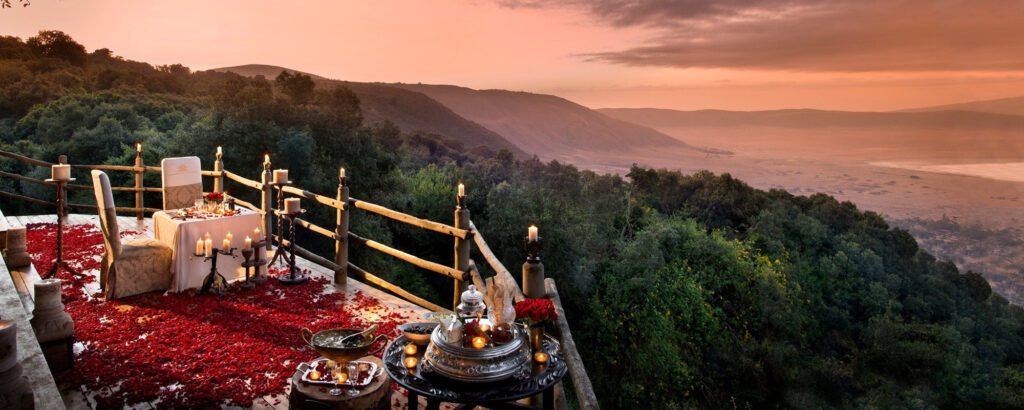
Photo: Ngorongoro Serena
Then something changes on a second or third trip. Travelers still value the iconic parks, but they stop treating fame as the main planning metric. They begin asking different questions. How many clean viewing sessions can we get each day. How often do we lose angle to vehicle traffic. How much time are we spending in transit versus productive habitat. How often can a guide hold a scene without pressure.
In our 15 years of field operation across East Africa, we see this shift repeatedly. Returning travelers start choosing conservancies because they are optimizing for field quality per hour, not place-name prestige.
A direct definition that clarifies the difference
In real safari planning, famous parks usually offer broad ecosystem scale and headline density, while conservancies usually offer lower vehicle pressure, stronger session control, and better day-level consistency.
At Bobu Africa, we usually treat three nights in one conservancy-linked ecosystem as the practical baseline for repeat travelers seeking depth. Three nights usually means six prime field sessions.
This does not mean famous parks are less valuable. It means experienced travelers are making a different value calculation.
Why first-timers pick famous parks and why repeat travelers change
First trips are often confidence trips. Travelers want certainty, iconic identity, and a clear narrative they already recognize. Famous parks provide that quickly.
Repeat travelers usually arrive with a different goal. They no longer need proof that safari is extraordinary. They want cleaner time, deeper observation, less crowd friction, and better emotional rhythm. They have already seen the headline. Now they want quality in the margins.
That is where conservancies begin to outperform for the right traveler profile.
The core trade-off in one sentence
Famous parks often maximize iconic visibility, while conservancies often maximize session quality.
Trade-off logic matters here. If your priority is broad first-time exposure, famous parks can be ideal. If your priority is repeated high-quality field sessions with less noise, conservancies often become the stronger anchor.
What conservancies improve in practical terms
1. Vehicle density and viewing pressure
In many famous hotspots, especially during peak windows, sightings can attract significant vehicle concentration. You can still have incredible moments, but angle and patience are often compromised.
Conservancies generally reduce this pressure. Fewer vehicles often means:
– cleaner lines of sight
– less engine congestion at active scenes
– better chance to stay with unfolding movement
– less visual clutter for photographers
For travelers who value calm observation, this alone can transform the trip.
2. Guide decision quality
Guides perform better when they are not forced into constant crowd negotiation. In lower-pressure settings, they can prioritize animal movement, wind direction, and light quality instead of traffic management.
For photographers, this is less about headline spectacle and more about full-trip consistency. For non-photographers, it means less stop-start frustration and more coherent storytelling from the guide.
3. Time control in prime windows
One transfer day often costs two prime wildlife windows. Repeat travelers learn this quickly and start designing routes that protect dawn and dusk sessions.
Conservancy-based routing often supports:
– faster access to productive sectors from camp
– less pressure to race between crowded hotspots
– smoother split-day rhythm
The practical result is stronger day-level output.
4. Wildlife observation depth
Conservancy stays often allow repeated access to the same territories over multiple sessions. This is where deeper safari value appears.
– pride dynamics become clearer over time
– predator-prey patterns become more legible
– elephant family structure and movement routes become familiar
– bird activity by habitat edge becomes easier to predict
A strong safari is not defined by one dramatic sighting, but by repeated high-quality field sessions. Conservancies often support that repetition better.
5. Better match for premium and return travelers
Premium safari travelers usually do not only want comfort. They want low-friction execution. Conservancies often align with this preference because the day feels calmer, less reactive, and more intentional.
This is the difference between expensive travel and high-performance travel.
Geographic clarity where this shift is most visible
Maasai Mara ecosystem (Kenya)
The Mara is the best-known example. The National Reserve is iconic and should not be dismissed. Yet many returning guests now combine or prioritize nearby conservancy stays because they want cleaner field rhythm and lower sighting pressure.
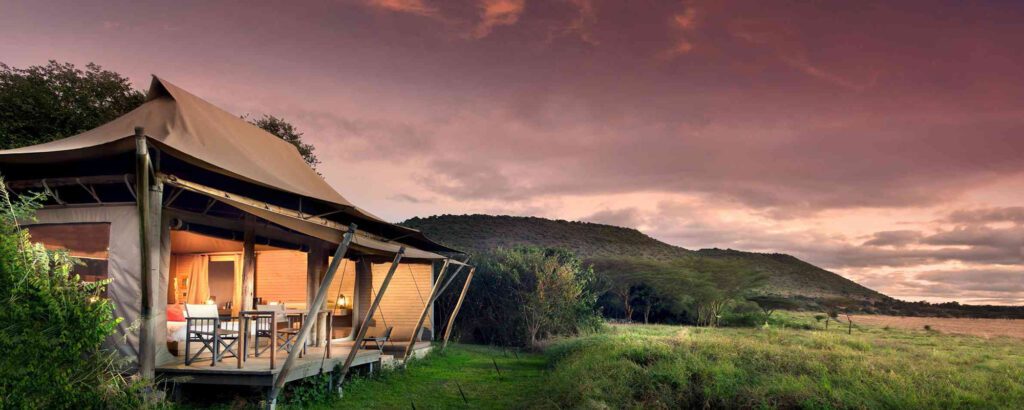
Photo: Entim Mara
In the Mara ecosystem, location matters more than room glamour when field hours are limited. A beautifully designed camp far from your functional objective can underperform a less flashy but better-positioned base.
Amboseli (Kenya) and surrounding private-use zones
Amboseli itself remains central for elephant landscapes and mountain context. Returning travelers often ask for surrounding lower-pressure experiences to complement core park sessions.
Functionally this creates balance:
– iconic visual access where needed
– quieter sessions where depth is needed
Samburu region (Kenya)
Samburu and adjacent conservancy-linked areas show the same pattern. Returning travelers often prioritize fewer vehicles and stronger guide continuity over rapid location-hopping.
Serengeti ecosystem (Tanzania)
While the land-management structure differs from Kenya conservancy models, experienced travelers in Tanzania make a similar decision pattern. They choose sectors and properties that preserve session quality and reduce transfer drag instead of chasing every famous waypoint.
The principle remains the same even when labels differ.
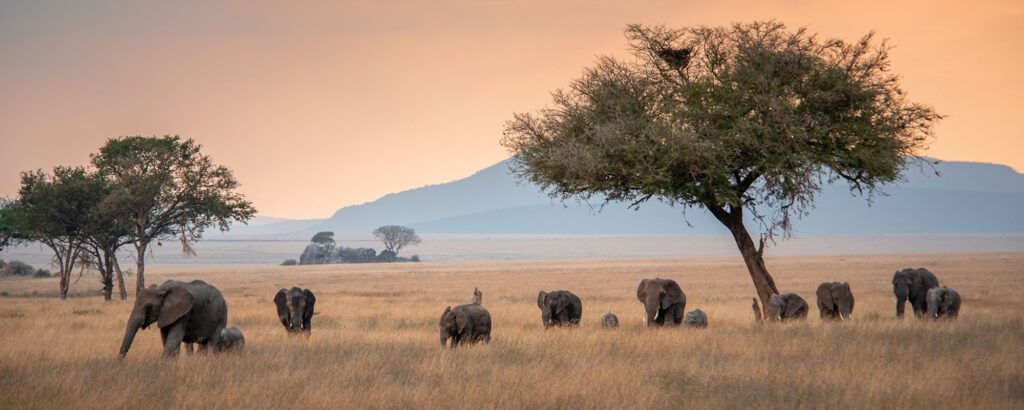
Photo: National Geographic
Cost question that often surprises first-time travelers
Many travelers assume conservancy-focused trips are only for ultra-luxury budgets. Sometimes costs are higher, but the value comparison should include field performance, not nightly rate alone.
In real safari planning, higher nightly cost can still produce better overall value if it reduces transfer loss, increases prime-session quality, and improves guide access conditions.
A useful comparison method:
– count expected prime sessions
– estimate transfer-heavy days
– evaluate vehicle pressure risk in your travel window
– compare guide continuity probability
This often reveals that some conservancy plans deliver more usable safari value even when headline pricing looks higher.
Why photographers move to conservancies early
Photographers are usually among the first repeat travelers to make this shift because they can measure quality loss immediately.
Common photographer gains in conservancy settings:
– better angle control at active scenes
– less obstruction by vehicle lines
– more time to work changing light
– higher chance of narrative sequence instead of single-frame scramble
For wildlife photography, success is less about ticking species and more about image integrity over several sessions. Conservancies often support this integrity.
Why birders also benefit
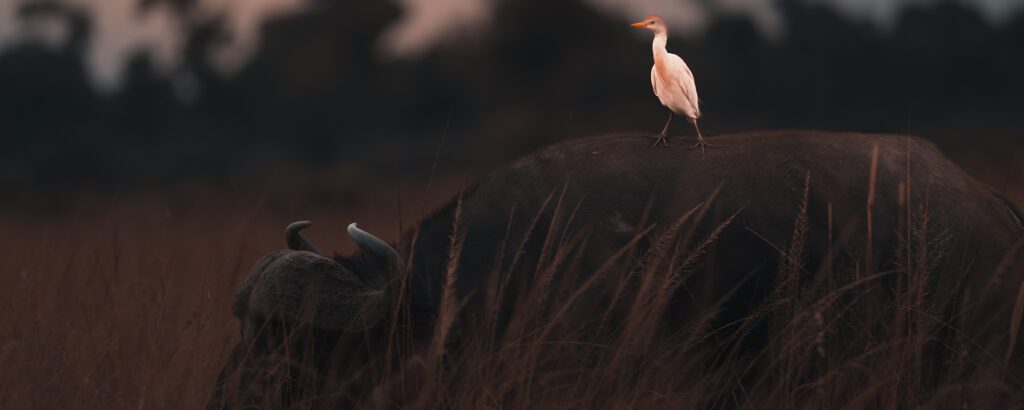
Birders gain from lower disturbance and better pacing. Birding quality often depends on patient habitat work at specific times. High transfer load and constant crowd movement can reduce detection quality.
Conservancy-linked rhythms often allow:
– repeated early sessions in the same micro-habitats
– quieter listening and scanning windows
– better adaptation to weather shifts
For birders, route calm often matters as much as destination fame.
Why non-photographers still like conservancy style
This shift is not only for specialists. Non-photographers often report higher satisfaction in conservancy-led itineraries because days feel less hectic.
Common reasons:
– less stop-go traffic around sightings
– better guide storytelling pace
– stronger sense of space and immersion
– lower emotional fatigue from crowd pressure
The experience feels less like competition and more like field exploration.
Practical baseline for deciding if conservancy-first is right for you
Use this quick threshold check.
Conservancy-first is usually a strong fit if:
– this is your second safari or later
– you care about quality of sessions over number of park names
– you value photography, birding, or deeper guide interpretation
– you prefer calmer field conditions and lower transfer stress
– you can allocate at least three nights in one key ecosystem
Famous-park-first is usually still right if:
– this is your first safari and you want iconic orientation
– your trip is very short and confidence is the top priority
– you strongly prefer broad name recognition over depth
Neither model is wrong. The right model depends on travel intent.
Route design model that works for repeat travelers
A practical repeat-traveler structure in Kenya might look like this:
– one ecosystem anchor with conservancy-led base for three to four nights
– one contrast ecosystem for two to three nights
– minimal transfer complexity
Example logic:
– Mara conservancy-linked base for depth and predator workflow
– Amboseli (Kenya) or Samburu (Kenya) for visual and ecological contrast
Why this works:
– protects six to eight prime sessions in the anchor
– reduces one-night churn
– keeps guide continuity strong
– still delivers variety without sacrificing quality
Common mistakes and how to correct them
Mistake 1
Treating conservancy stay as a decorative add-on for one night.
Correction:
Use conservancy as a core base with enough nights to compound value.
Mistake 2
Comparing only room category and meal plan.
Correction:
Compare field outcomes: vehicle pressure, access time, session flexibility, and guide profile.
Mistake 3
Overloading route with famous names after adding conservancy.
Correction:
If conservancy is the quality anchor, remove one unnecessary transfer elsewhere.
Mistake 4
Assuming all conservancies deliver identical experience.
Correction:
Evaluate each by ecological function, guiding culture, and camp position relative to your goals.
Mistake 5
Ignoring seasonality in crowd behavior.
Correction:
Ask how your travel month changes pressure patterns and route logic.
Questions to ask before booking
– How many prime sessions are realistically protected in this plan?
– Which days lose dawn or dusk to transfer movement?
– What is expected vehicle pressure in our travel window?
– How does this conservancy location improve our field time compared with reserve-only routing?
– Is guide continuity confirmed across our core nights?
If your planner answers with session logic instead of generic promises, route quality is usually strong.
The emotional difference repeat travelers notice
Returning travelers often describe conservancy-led trips with words like quiet confidence, flow, and depth. They feel less urgency to chase every call because quality is arriving steadily across days.
That emotional shift matters. Safari is not only what you see. It is how you feel while seeing it. Conservancy-style pacing often reduces noise and increases presence.
Final answer
Why do returning safari travelers start choosing conservancies over famous parks. Because they are optimizing for field quality per hour, not name recognition per itinerary.
Famous parks remain important and often essential in East Africa route design. But for many repeat travelers, conservancies deliver better session control, lower vehicle pressure, stronger guide performance, and more consistent wildlife days.
At Bobu Africa, we usually combine iconic access with conservancy depth so travelers keep the big-picture ecosystem while improving day-by-day output. That balance is where many second and third safaris become truly exceptional.
FAQ
Q: Are conservancies better than famous parks for a first safari
A: Not always. For first-time travelers, famous parks can provide strong orientation and confidence. Conservancies become especially valuable when you want calmer conditions, deeper sessions, and better field control, often from the second safari onward.
Q: How many nights should I stay in a conservancy area to feel the difference
A: Three nights is a practical baseline in most East Africa plans. It usually gives six prime sessions, which is enough for lower-pressure viewing, better guide continuity, and stronger day-level consistency.
Plan Your Journey
If you are planning a second or third East Africa safari, Bobu Africa can help you design a route that combines iconic ecosystem access with conservancy-led depth, so your field hours are calmer, more productive, and better aligned with how experienced travelers actually travel.