

A Journey Guided by Rainfall
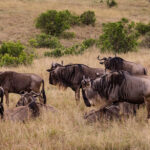
Unlike human travelers who plan routes and schedules, wildebeest follow a single guiding force: rain. Every movement made by the herds is driven by the search for fresh grass and reliable water. The migration is not a race, nor does it follow a fixed calendar. Instead, it is a continuous ecological cycle influenced by seasonal rainfall, grass growth, soil nutrients, and the instinctive behavior of millions of animals. For thousands of years, this natural rhythm has remained largely unchanged, sustaining one of the world’s most complex and productive ecosystems. The annual migration revolves around the seasonal rains that nourish the Serengeti–Mara Ecosystem, a vast protected landscape spanning approximately 30,000 square kilometres (11,600 square miles) across northern Tanzania and southwestern Kenya.
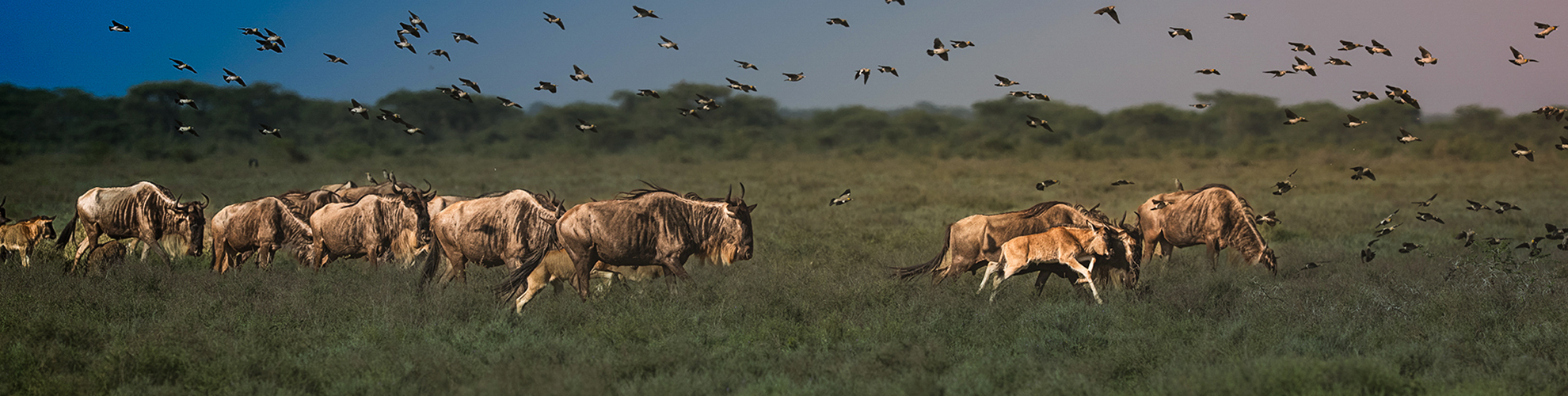
When the short rains arrive in November, they transform the southern Serengeti and Ndutu plains into lush grazing grounds. As nutrient-rich grasses emerge, the herds gradually move south to feed on the fresh growth. By January and February, these fertile plains become the nursery of the migration. Thousands of females give birth within a remarkably short period, taking advantage of the abundant food that provides the energy needed for lactation and the rapid growth of newborn calves.
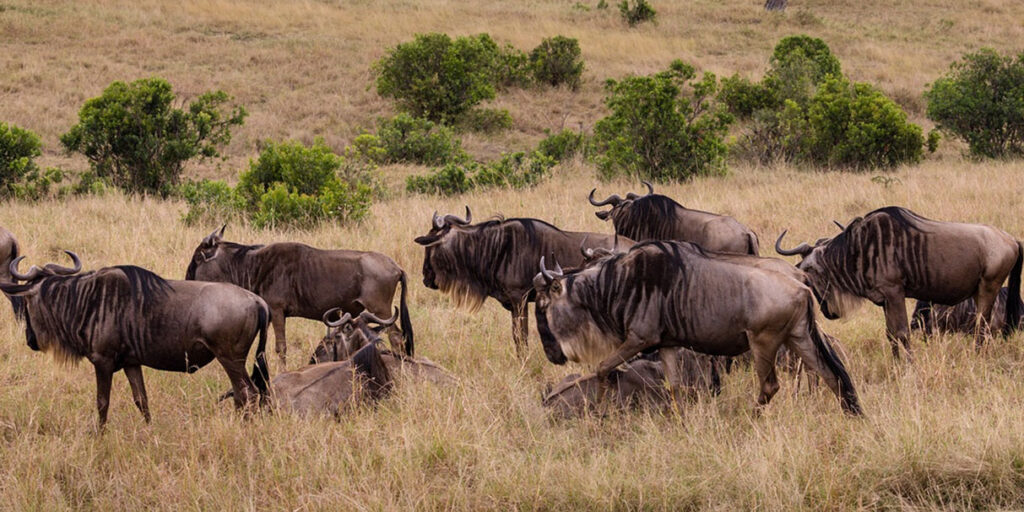
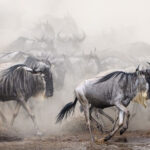
As the dry season approaches and grasses become depleted, the herds instinctively begin moving westward and northward in search of greener pastures. Their journey continues through the Western Corridor, across the Grumeti River, into the Northern Serengeti, and eventually across the Mara River into Kenya’s Maasai Mara. When the short rains return later in the year, the cycle begins once again as the animals make their way back to Tanzania.
Why, When, and where Does the Great Migration Happen?
One of the most common misconceptions is that the migration is driven solely by water. In reality, the primary factor is food quality.
The volcanic soils of the southern Serengeti produce short grasses that are exceptionally rich in calcium, phosphorus, and protein after seasonal rains. These nutrients are essential for pregnant females and newborn calves.
As the dry season advances, these nutritious grasslands become depleted. Fresh rains begin falling elsewhere across the ecosystem, stimulating new plant growth. The herds instinctively follow these emerging grazing areas, creating the continuous movement known as the Great Migration.
Several environmental factors influence the migration:
Seasonal Rainfall
Rainfall determines where fresh grass emerges. The migration constantly adjusts to these changing conditions rather than following fixed dates.
Nutrient-Rich Soils
Ancient volcanic ash from the Ngorongoro Highlands created mineral-rich soils that support highly nutritious grasses, particularly in southern Serengeti.
Breeding Cycle
Nearly half a million calves are born within just a few weeks during the calving season between late January and early March. This synchronized birthing strategy overwhelms predators, increasing the chances that many calves survive.
Evolutionary Instinct
The migration has evolved over thousands of years. Generations of wildebeest have developed an instinctive ability to follow rainfall patterns and grazing conditions without maps or leaders.
Predator Pressure
Although predators influence local herd movements, they do not determine the migration itself. Instead, predators simply follow the herds, taking advantage of the abundant prey available throughout the year.